I used to think how to choose the right foundation shade was as simple as picking the bottle that looked closest to my skin. Then I learned the hard way that foundation can look perfect in store lighting and completely wrong once I step outside. Sometimes it turns orange.
Sometimes it looks too pale around the mouth. Sometimes it matches my face but makes my neck look like a different person. The real secret is not guessing from the bottle. It is understanding skin tone, undertone, lighting, formula, and how foundation changes after it settles.
Start with your skin tone depth
Your skin tone is the visible depth of your complexion. It may be fair, light, medium, tan, deep, or rich. This is the first step because foundation shades are usually grouped by depth before undertone. A light warm shade and a light cool shade may look close in the bottle, but they can appear very different on the skin.
When shopping at Sephora, Ulta Beauty, Target, Walmart, CVS, or Walgreens, do not pick a shade only because it looks similar to your face in the aisle. Store lights can be bright, yellow, or cool-toned, which can change how the color appears. Instead, narrow your range to two or three shades that match your skin depth first, then test for undertone.
Understand your undertone before buying
Undertone is the color beneath your surface skin tone. It usually falls into warm, cool, neutral, or olive. Warm undertones can look golden, peachy, or yellow. Cool undertones can look pink, red, or bluish. Neutral undertones are balanced between warm and cool. Olive undertones often have a greenish or muted golden cast.
One common mistake is assuming fair skin is always cool or deep skin is always warm. That is not true. A fair complexion can be warm, and a deep complexion can be cool, neutral, or olive. This is why undertone matters so much. If the undertone is wrong, the shade may look orange, pink, grey, or ashy even if the depth is close.
Try simple undertone tests at home

The vein test can help. Look at the veins on your wrist in natural light. Blue or purple veins may suggest a cool undertone. Greenish veins may suggest a warm undertone. If you see both, you may be neutral.
The jewelry test is another easy clue. If gold jewelry looks more flattering, you may lean warm. If silver looks better, you may lean cool. If both work well, you may be neutral.
The white shirt or white paper test can also help. Hold a clean white fabric near your face in daylight. If your skin looks golden or peachy, you may be warm. If it looks rosy or bluish, you may be cool. If it looks muted, balanced, or slightly green, you may be neutral or olive.
Swatch on your jawline, not your hand
Testing foundation on your hand is one of the fastest ways to buy the wrong shade. Hands often get more sun exposure than the face, and they may be darker, redder, or more textured. The best place to swatch is along the jawline because it helps you compare your face, neck, and chest together.
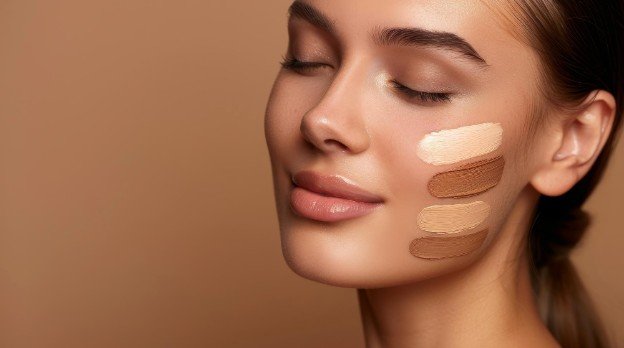
Apply three thin stripes of foundation from your lower cheek to your jawline. The best shade should disappear into the skin without leaving a clear line. If one shade matches your face but looks too dark against your neck, try a slightly lighter or more neutral option. If your chest is more exposed and naturally warmer, choose a shade that makes your face blend with your overall body tone.
Check the shade in natural light
Never judge foundation only under bathroom lights or store lights. Step near a window, go outside, or check your face in your car mirror during the day. Natural light shows undertone problems more clearly.
A shade that is too warm may look orange near the nose, chin, or jaw. A shade that is too cool may look pink or grey. A shade that is too light can make the face look flat or chalky. A shade that is too dark may create a mask-like line around the jaw.
Wait for oxidation
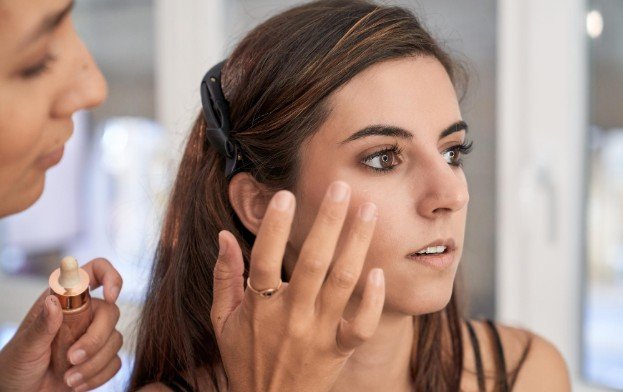
Foundation can change color after it mixes with skin oils and air. This is called oxidation. Some formulas become darker, warmer, or slightly orange after a few minutes. After swatching, wait at least 10 to 15 minutes before deciding.
This step is especially helpful if you have oily or combination skin. A foundation that looks perfect immediately may become deeper after it settles. If that happens, choose a slightly lighter shade or try a formula that is known for better color stability.
Choose the right formula for your skin type
Shade is important, but formula affects how natural the color looks. If your skin is oily, a soft matte or long-wear foundation can help control shine. If your skin is dry, a hydrating or satin formula may look smoother. If your skin is mature or textured, a lightweight buildable foundation often looks better than a heavy full-coverage one.
For acne-prone or sensitive skin, look for non-comedogenic options and avoid formulas that feel heavy or greasy. If your skin changes with the seasons, you may need one shade for winter and another for summer. Many people also mix two shades during spring and fall.
How to shop for foundation online
Online foundation shopping is tricky because phone screens, filters, and product photos can change color. Start by checking the brand’s shade descriptions. Words like golden, honey, caramel, beige, ivory, porcelain, sand, chestnut, espresso, cool, warm, neutral, and olive can give undertone clues.
Use virtual try-on tools, shade finder quizzes, and comparison tools when available. If you already have a foundation that matches well, use it as a starting point. Read reviews from people who mention your skin tone, undertone, and skin type. When possible, buy from retailers with flexible return options or sample sizes.
Frequently asked questions
1. Should foundation match my face or neck?
Foundation should create a smooth blend between your face, neck, and chest. If your face is darker or redder than your neck, matching only your face can create a visible line. Testing along the jawline helps you find a more balanced shade.
2. What is the easiest way to learn how to choose the right foundation shade?
Start by finding your undertone, then swatch three close shades on your jawline. Check them in natural light and wait a few minutes to see if the formula oxidizes. The shade that disappears into your skin is usually the best match.
3. Why does my foundation look orange?
Foundation often looks orange when the undertone is too warm or when the formula oxidizes after application. Try a more neutral shade, use less product, and wait before buying to see how the color changes.
4. Can I mix two foundation shades?
Yes, mixing shades can help when your skin tone changes between seasons. Many people use a lighter shade in cooler months and add a deeper shade during warmer months.
Final thoughts
When I choose foundation now, I no longer trust the bottle, the store light, or a quick hand swatch. I look at undertone, test along the jawline, check natural light, and wait for the formula to settle.
That simple routine makes the difference between makeup that sits on top of the skin and makeup that looks like it belongs there. Once you know what to look for, finding your perfect foundation shade becomes much easier, smarter, and less frustrating.