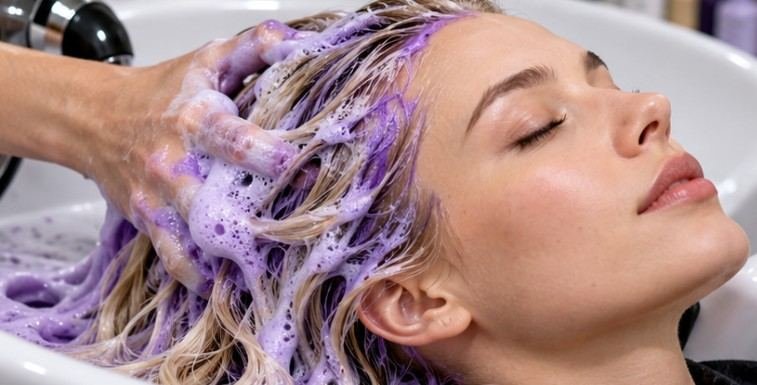
Purple shampoo works best when you use less of it than you might expect. For most blonde, platinum, gray, silver, or highlighted hair, how often should you use purple shampoo comes down to roughly once or twice a week—not every time you shower.
The reason is simple: purple shampoo is a maintenance product, not an everyday requirement. Violet pigments temporarily counter yellow tones, but repeated use can deposit more color than your hair needs. On highly porous blonde hair, that can quickly turn bright highlights dull, grayish, or faintly lavender. The smarter approach is to let your hair’s tone—not the calendar—tell you when another wash is needed.
Why Purple Shampoo Works in the First Place
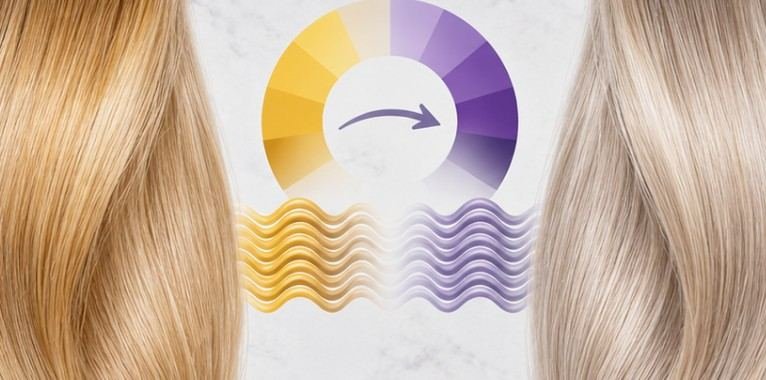
Lightened hair often develops yellow or golden tones between salon appointments. Bleaching removes natural pigment, while washing, heat, environmental exposure, and gradual toner loss make underlying warmth increasingly visible.
Purple shampoo uses violet pigments because violet sits opposite yellow in basic color theory. Depositing a small amount of violet makes yellow appear more neutral and cooler. Redken describes purple shampoo as a color-maintenance tool rather than a replacement for ordinary shampoo and currently recommends it roughly once or twice weekly for many blondes.
It is important to understand what purple shampoo cannot do. It does not actually lighten hair, bleach darker strands, or permanently recolor blonde hair. If your hair looks orange rather than yellow, a blue-toned product or professional color correction may be more appropriate.
So, How Often Should You Really Use It?
A good starting point is once a week. After two or three weeks, judge the result.
If yellow tones are returning before the next purple-shampoo wash, move up to twice weekly. If your blonde starts appearing smoky, darker, lavender, rough, or unusually dry, scale back to every other week.
L’Oréal Paris similarly advises that once or twice weekly is usually sufficient, noting that very light or porous hair is particularly susceptible to unwanted violet buildup.
| Hair condition | Useful starting frequency | What to watch for |
| Natural blonde with slight warmth | Every 1–2 weeks | Use only when yellowing appears |
| Highlighted blonde | Once weekly | Increase only if brass returns quickly |
| Platinum or icy blonde | Once weekly | Porous sections may grab pigment rapidly |
| Gray or silver hair | Once weekly | Helps control yellow tones |
| Very porous or damaged hair | Every 1–2 weeks | Watch closely for lavender or dull patches |
| Persistent brassiness | Up to twice weekly | Strong orange tones may require another solution |
These are starting points rather than strict rules. Formulas vary considerably in pigment concentration, cleansing ingredients, and recommended processing time.
Your Hair’s Porosity Matters More Than Most People Realize
Two people can use the same purple shampoo for the same number of minutes and get noticeably different results.
Bleached hair often has a more altered cuticle structure than untreated hair. Research reviewing chemical hair processing has found that bleaching and permanent coloring can change cuticle structure, reduce strength, and increase susceptibility to damage.
That matters because highly porous areas may accept temporary pigments faster. Ends that have been highlighted several times, for example, can turn lavender while healthier roots remain warm.
A simple practical test is to inspect your hair after it dries. If the lightest sections look noticeably cooler than the rest, shorten the next application or dilute the purple shampoo with regular shampoo.
Don’t Start Using It Just Because You Left the Salon
Fresh blonde hair does not automatically need purple shampoo.
Professional toner has already adjusted the unwanted warmth. Immediately piling more pigment onto freshly toned hair may be unnecessary and can make a carefully balanced blonde appear too cool.
Instead of following a rigid rule such as waiting exactly three weeks, watch for the first meaningful return of yellow. Current Redken guidance suggests purple shampoo may be introduced roughly one to two weeks after professional toning or whenever brassiness begins to show.
Your colorist’s recommendation should take priority because toner formulas, blonde levels, and processing history vary.
The Brassiness Test: Decide in 30 Seconds
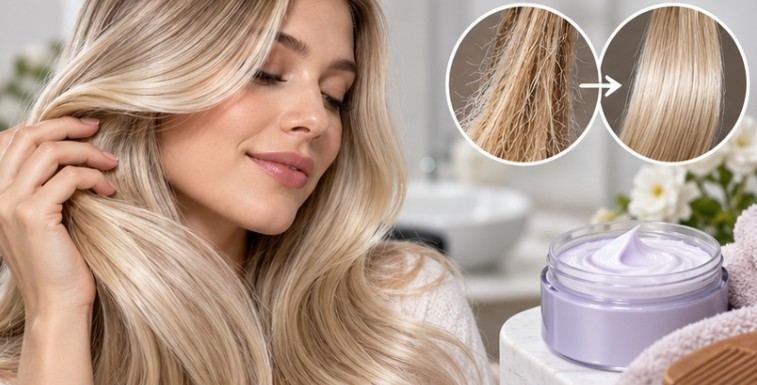
Before reaching for the purple bottle, look at your hair in indirect natural daylight.
- First, identify whether the unwanted tone is actually yellow. Violet is most useful against yellow and pale gold, not deep orange.
- Next, inspect the palest sections. If your ends already appear silver, violet, or gray, they probably do not need another dose.
- Then feel the hair. If strands seem rough, brittle, tangled, or unusually dry, prioritize conditioning and a gentle color-safe cleanser before additional toning.
- Finally, consider when you last used purple shampoo. If it was only a wash or two ago, waiting is usually safer than adding more pigment.
This tone-first approach answers how often should you use purple shampoo more accurately than automatically assigning it to a particular day of the week.
How Long Should Purple Shampoo Stay on Your Hair?
More processing time does not necessarily mean a better blonde. Most formulas are designed to remain on wet hair for only a few minutes. Nexxus, for example, recommends roughly one to two minutes for warmer blondes, three to four minutes for neutral blondes, and up to five minutes for cooler results. Individual directions should always override general advice.
For a first application, start at the shortest recommended time. Apply evenly, concentrating on visibly yellow areas rather than automatically saturating every strand. Rinse thoroughly and follow with conditioner.
Why Conditioner Matters After Toning
Purple pigment itself is not inherently what makes hair dry. The cleansing system in a particular shampoo, combined with already-processed hair, can make dryness more noticeable.
Dermatology literature notes that chemical coloring and bleaching alter the hair fiber and can leave it more vulnerable to mechanical and chemical stress. The American Academy of Dermatology consequently recommends conditioning after shampooing, particularly when trying to minimize damage to processed hair.
Use a moisturizing conditioner after purple shampoo and occasionally substitute a richer mask if your ends feel brittle.
If dryness, flaking, itching, or product sensitivity extends beyond your hair shaft to the skin itself, review these signs of an unhealthy scalp rather than assuming brass-control products are simply making your hair dry.
What Happens If You Use Purple Shampoo Too Often?
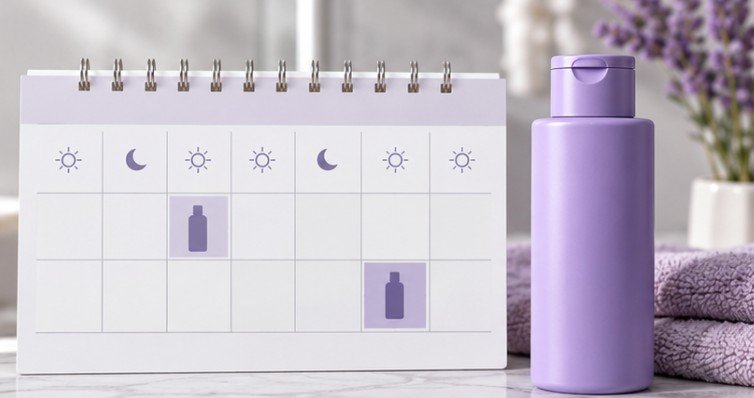
The most obvious warning sign is color buildup. Blonde hair may begin looking muted rather than bright, with the palest pieces developing a violet, gray, or slightly darker cast.
Dryness is another clue, especially if you are repeatedly cleansing fragile, bleached hair. Medical literature on shampooing notes that overly aggressive cleansing can remove protective oils and increase dryness or irritation.
If you have overdone it, stop purple shampoo temporarily and return to your normal color-safe routine. Several ordinary washes will often reduce superficial violet pigment.
Do not aggressively clarify already fragile hair simply because you see a little lavender. Strong cleansing may correct the color faster but can leave heavily processed hair feeling rougher.
What If Purple Shampoo Irritates Your Scalp?
Burning, persistent itching, redness, scaling, or swelling is not a normal sign that purple shampoo is “working.” Shampoos and other hair products can occasionally cause irritant or allergic contact dermatitis. MedlinePlus identifies shampoos among potential irritants, while Harvard Health notes that taking a break from irritating hair products may help an itchy, dry scalp.
Stop using the suspected product if irritation develops. Significant swelling, blistering, breathing difficulty, or a persistent rash warrants medical evaluation.
Frequently Asked Questions
1. Can I use purple shampoo every day?
Usually, no. Daily use is unnecessary for most people and increases the likelihood of pigment buildup, dullness, dryness, or a temporary lavender cast.
2. How often should you use purple shampoo on highlighted hair?
Start once weekly. Increase to twice weekly only if yellow tones return quickly and your highlights remain healthy, hydrated, and free of excess violet buildup.
3. Can purple shampoo fix orange hair?
Usually not effectively. Purple mainly neutralizes yellow. Orange brassiness generally responds better to blue-based toning products or professional color correction.
4. Should I use normal shampoo between purple-shampoo washes?
Yes. A gentle, color-safe shampoo is appropriate for your other wash days and helps prevent unnecessary pigment accumulation.
The Best Schedule Is the One Your Hair Earns
The useful rule is not “purple shampoo every Tuesday.” It is to use it when yellow tones return and stop when they disappear.
For most people, that works out to once or twice a week. Porous platinum hair may need less; stubborn yellowing may justify slightly more. Keep application times conservative, moisturize afterward, and alternate with a gentle color-safe cleanser.
Purple shampoo should quietly maintain a good blonde—not become the reason you need to correct it. If your hair still looks clean, bright, and balanced, resist the temptation to keep toning simply because another week has passed.