After a long shift, a packed travel day, or hours of standing on hard floors, tired feet can make your whole body feel worn out. I know that heavy, aching feeling that starts in the soles and moves into the calves, ankles, and lower back.
That is why spa treatments for tired feet are more than a beauty upgrade. They are a smart way to relax overworked muscles, soften rough skin, support circulation, and help your feet recover after a demanding day.
For many people in the US, foot fatigue is part of everyday life. Nurses, teachers, retail workers, warehouse employees, servers, hairstylists, delivery drivers, fitness professionals, and busy parents spend hours on their feet.
When shoes lack support or workdays run long, the feet absorb pressure again and again. A targeted foot spa treatment can help you feel lighter, cleaner, and more comfortable by combining soaking, exfoliation, massage, hydration, and cooling or warming therapies.
Why Do Your Feet Feel So Tired After a Long Day?
Tired achy feet usually happen when your muscles, joints, and soft tissues work harder than they should. Long hours of standing, walking on concrete, wearing tight shoes, skipping arch support, dehydration, and poor circulation can all make your feet feel sore by evening.
Your calves also play a major role. Tight calf muscles pull on the heels and arches, which can increase strain in the feet. That is why the best professional foot spa treatment often includes the lower legs, not just the soles. When your calves relax, your feet usually feel better too.
Dry skin and calluses can add to the discomfort. Thick skin around the heels or balls of the feet creates pressure points. A complete relaxing foot treatment should address both muscle fatigue and skin buildup.
What Are the Best Spa Treatments for Tired Feet?
The best foot spa for tired feet combines warmth, pressure relief, exfoliation, and hydration. Some treatments work better for sore muscles, while others help dry heels, swelling, or throbbing arches. A professional spa may combine several services in one session, but you can also recreate many of them at home with the right routine.
Reflexology for Deep Foot Tension
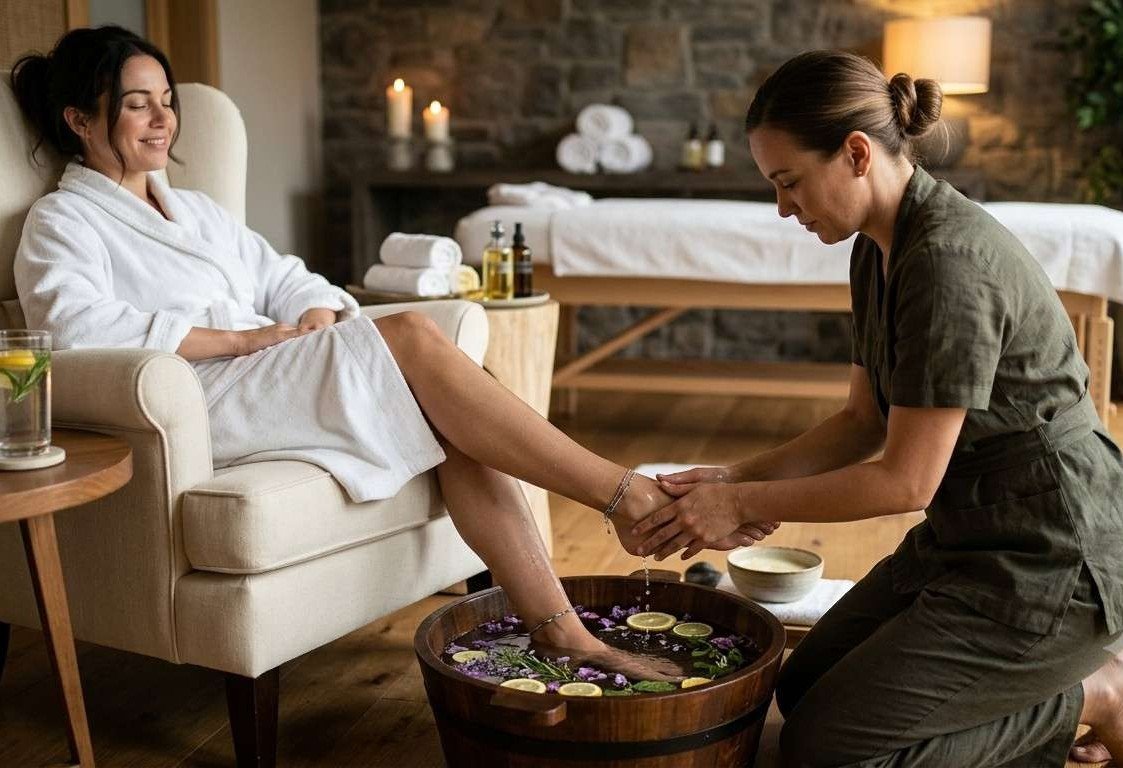
Reflexology-style pressure work is one of the most popular spa treatments for tired feet because it focuses on specific pressure points across the soles, arches, heels, and toes. A trained therapist applies controlled pressure to areas that often hold tension after standing or walking all day.
While reflexology should not be treated as a cure for medical problems, it can create a deeply relaxing experience. Many people choose it when their feet feel tight, heavy, or overstimulated after long work hours. The key is comfort. Pressure should feel firm but not painful.
Detox-Style Foot Soaks for Sore Soles
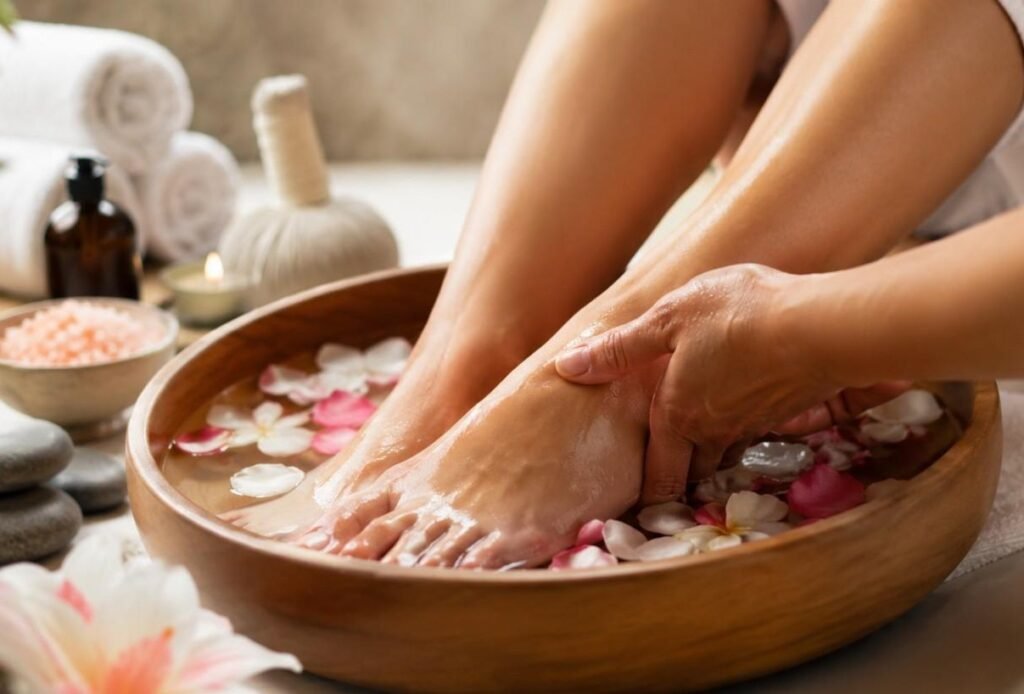
A warm foot soak is one of the easiest ways to calm tired feet. Many spas use Epsom salt, essential oils, charcoal-based products, or mineral blends to create a detox-style foot bath. These ingredients can make the feet feel cleaner, softer, and more refreshed.
An Epsom salt foot soak is especially popular for tired achy feet relief. Warm water helps loosen tight muscles, while the soak softens dry skin before exfoliation. Peppermint essential oil can add a cooling sensation, but it should be used carefully because essential oils may irritate sensitive skin.
If your feet are swollen, red, injured, or inflamed, avoid hot water. A cool soak or cooling gel may feel safer and more comfortable.
Paraffin Wax Dips for Dry Heels and Stiff Feet
Paraffin wax treatments are excellent for dry, rough, or cracked feet. During this spa service, warm melted wax coats the feet and helps lock in moisture. Once removed, the skin usually feels softer and smoother.
This treatment works well during colder US months when indoor heating can dry out the skin. It can also help people whose heels crack from sandals, closed shoes, or long hours of standing. However, people with diabetes, numbness, poor circulation, open cuts, or skin infections should ask a healthcare professional before using heated paraffin wax treatments.
Hot Stone Calf Massage for Foot Strain
A hot stone calf massage is a smart addition when foot pain comes from tight lower legs. Smooth heated basalt stones glide over the calves, ankles, and sometimes the arches. The warmth helps relax muscle tension, while the massage movements loosen knots that may be pulling on the feet.
This treatment is especially helpful after workouts, long commutes, travel days, or standing shifts. If your feet feel tired but your calves also feel tight, this may be one of the most effective spa upgrades to request.
Exfoliating Scrubs for Rough and Heavy Feet
Exfoliating scrubs help remove dead skin and stimulate the surface of the feet. Spas may use sea salt, sugar, coffee grounds, or gentle exfoliating creams to smooth rough heels, toes, and soles.
This step matters because calluses and dry skin can make the feet feel heavier and more uncomfortable. A good scrub should polish the skin without aggressive scraping. Over-filing can make your feet sensitive, so gentle exfoliation is always better than harsh removal.
Cooling Foot Gel for Throbbing Arches
When your feet feel hot, swollen, or overworked, a cooling foot gel can feel better than heat. Many over-the-counter gels contain menthol, peppermint, aloe, or arnica-style ingredients that create a refreshing sensation.
A cooling gel massage works well after summer walks, workouts, travel, or long shifts in closed shoes. I like this option for throbbing arches because it feels light, quick, and easy to add to a nighttime routine.
At-Home Foot Spa Routine After Work
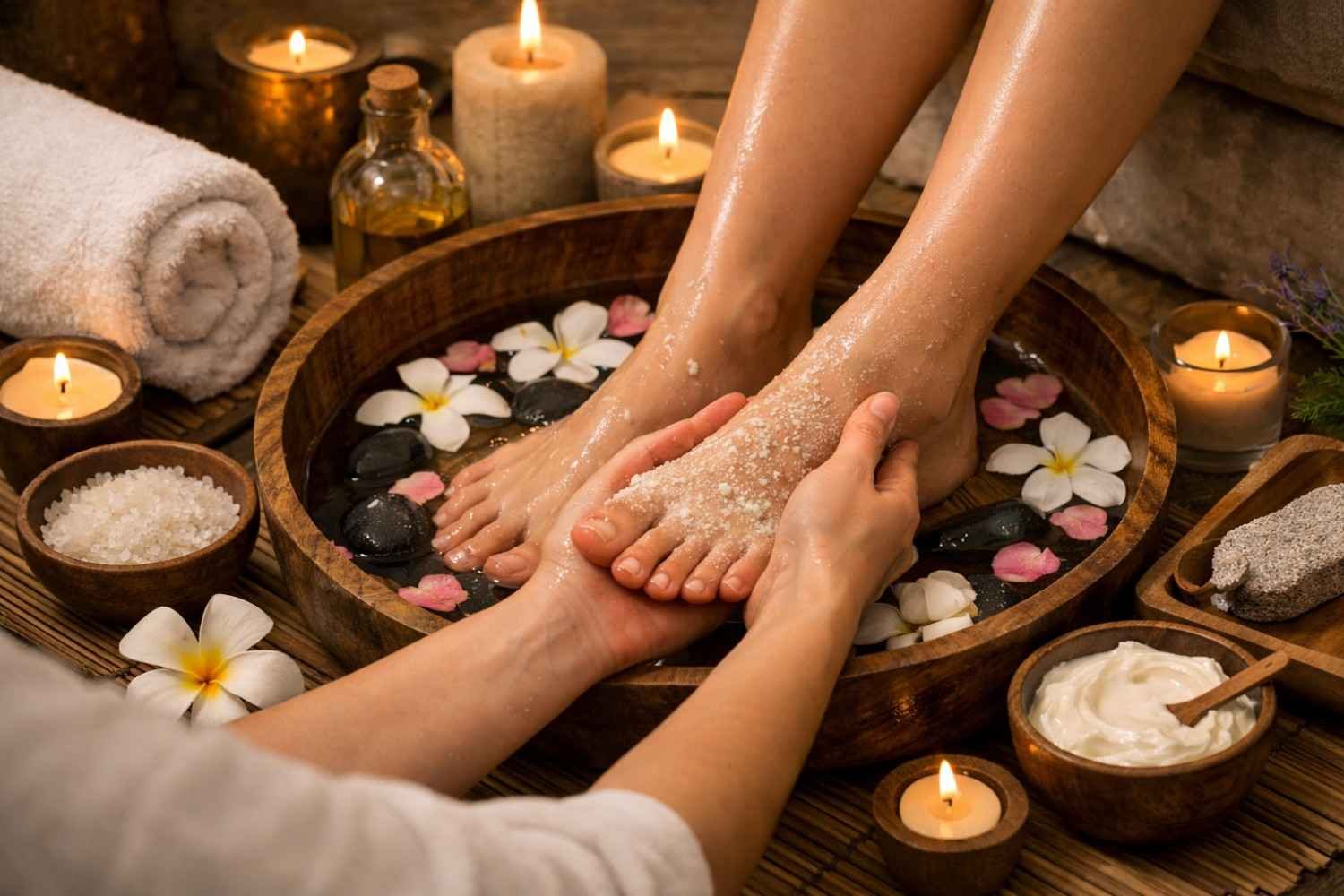
You do not need a luxury spa appointment every time your feet hurt. A simple home foot spa routine can help maintain comfort between professional visits.
Start with a warm Epsom salt soak for 10 to 15 minutes if your feet are not swollen or inflamed. Then use a gentle scrub to smooth rough areas. After drying your feet, massage the arches, heels, toes, and ankles with a rich foot cream. You can also use an electric foot massager with rolling nodes and heat to mimic some of the pressure of a professional massage.
Finish with a cooling foot gel if your feet feel hot, or a thick moisturizer and clean cotton socks if your heels feel dry. Elevating your feet for 10 minutes can also help reduce that heavy end-of-day feeling.
When Should You Choose a Professional Foot Spa Treatment?
A professional foot spa treatment is worth it when your feet feel consistently sore, dry, rough, or overworked. Spa professionals can combine soaking, exfoliation, massage, paraffin wax, hydrating masks, and hot towel wraps in a way that feels more complete than a quick at-home routine.
Book a professional service before vacations, weddings, holidays, sandal season, or after a physically demanding week. If you stand all day for work, getting regular foot care every four to six weeks can help your feet feel softer and more refreshed.
When Should You Avoid Foot Spa Treatments?
Spa care can feel amazing, but it is not right for every situation. Avoid deep massage, hot soaks, paraffin wax, or aggressive scrubbing if you have open wounds, severe swelling, unexplained bruising, athlete’s foot, skin infections, numbness, or a recent injury.
People with diabetes, poor circulation, nerve problems, or blood clot risk should be extra careful with heat and pressure. If foot pain is sharp, severe, one-sided, or does not improve, it is better to speak with a healthcare professional.
FAQs About Foot Spa Care
1. What is the best treatment for tired feet after standing all day?
A warm Epsom salt foot soak followed by foot massage and moisturizing is one of the best options for tired feet after standing all day. If your feet feel swollen or hot, use a cooling foot gel instead of heat.
2. Are foot soaks good for sore feet?
Foot soaks can help sore feet feel relaxed and refreshed. Warm water works best for general tiredness, while cool water may feel better for swelling or heat. Keep soaking time around 10 to 15 minutes.
3. Is reflexology better than a regular foot massage?
Reflexology focuses on pressure points, while a regular foot massage focuses on muscle relaxation. Both can feel helpful, but a regular massage may be better if your main goal is simple relief from sore arches and heels.
4. How often should I get spa treatments for tired feet?
Most people can schedule spa treatments for tired feet every four to six weeks. If you stand all day or deal with dry heels, you can also use a weekly home foot spa routine to maintain results.
Final Thoughts
I believe foot care should be part of regular self-care, especially if your daily routine keeps you standing, walking, commuting, or working long hours. Your feet carry your entire body through every shift, errand, workout, and travel day, so they deserve more attention than a quick rinse in the shower.
The best results come from combining smart spa care with simple home habits, including options often found among the best spa services for stress and anxiety. A warm soak, gentle scrub, targeted massage, paraffin wax, hot stone calf work, cooling gel, or electric foot massager can all help your feet feel lighter and more relaxed.
When you choose the right treatment for how your feet actually feel, every step becomes more comfortable.