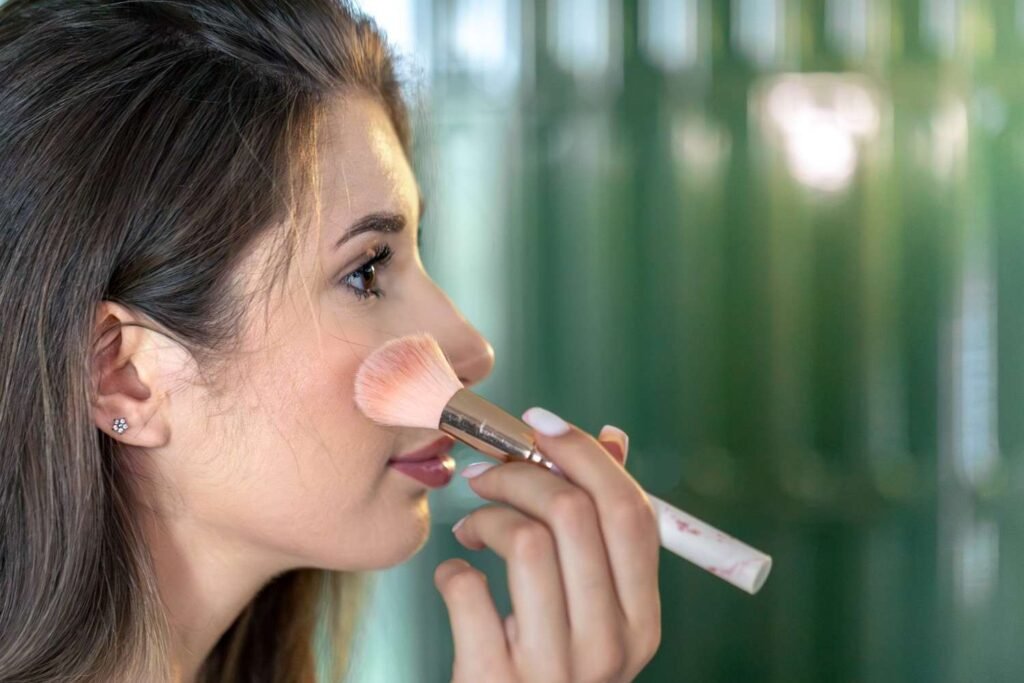
The area around my nose is usually the first place where a good makeup day can go wrong. Foundation may look smooth across my cheeks and forehead, but a few dry flakes near the nostrils can make the entire base look uneven.
That is why I changed my makeup routine for dry patches around nose to focus less on coverage and more on preparation. Instead of trying to hide rough texture under extra foundation, I hydrate the area carefully, use lighter layers, and press products into the skin so I do not disturb visible flakes.
This approach has made my base look much smoother and more natural, especially during dry US winters and in heavily air-conditioned indoor spaces.
Why Does Foundation Look Flaky Around the Nose?
The nose can be tricky because dryness and oiliness can exist at the same time.
The center of my nose may become shiny during the day, while the folds around my nostrils feel rough and dehydrated. Frequent nose blowing, cleansing, rubbing, seasonal allergies, glasses, retinoids, exfoliating acids, and dry indoor air can make the problem more noticeable.
Foundation then catches on loose skin instead of creating an even surface.
That is why I treat the dry creases differently from the oilier bridge and tip of my nose.
How Should I Prep Dry Patches Before Applying Makeup?
Skin preparation makes the biggest difference in how my makeup looks later.
Gently Remove Only Loose Flakes
If I have obvious loose skin, I do not attack it with a harsh scrub. Instead, I gently press or wipe the area with a soft, damp washcloth.
I avoid aggressively exfoliating irritated skin immediately before applying makeup. Strong physical scrubbing or an intense resurfacing treatment can leave the area red and make foundation look even more noticeable.
If I use chemical exfoliation regularly, I prefer doing it as part of my nighttime skincare routine rather than immediately before an important makeup application.
Apply Hydration While Skin Is Slightly Damp
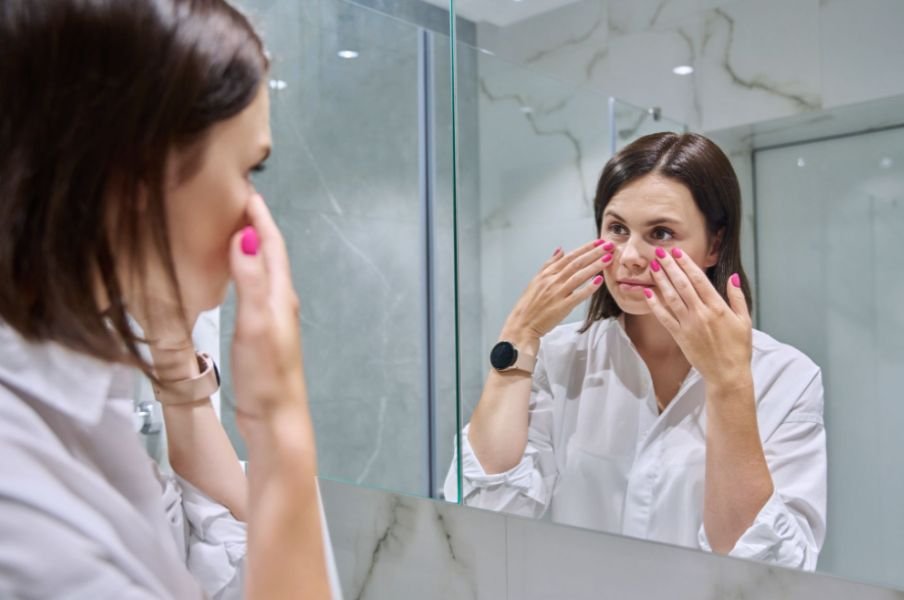
After cleansing, I like to leave the skin slightly damp and press in a lightweight hydrating serum. A hyaluronic acid serum can work well here because it fits easily beneath makeup without requiring a thick layer.
I focus the serum around the sides and creases of my nose rather than saturating my entire face.
Then I apply moisturizer to seal in hydration.
When my skin is easily irritated, I also keep my skincare and makeup steps gentle to avoid making dryness or redness more noticeable. Following a makeup routine for sensitive skin can help me choose suitable products and build a comfortable base without adding unnecessary irritation around the nose.
I prefer a nourishing but fast-absorbing moisturizer that leaves my skin comfortable rather than greasy. I let it absorb for approximately three to five minutes before moving on.
That short wait helps prevent skincare and foundation from mixing into a slippery layer.
Should I Use Primer on Dry Skin Around My Nose?
I do not automatically apply the same primer everywhere.
If my forehead and nose bridge become oily, I may use an oil-controlling primer there. However, I avoid applying strongly mattifying primer directly over flaky nostril creases.
On dry patches, I use a tiny amount of hydrating or dewy primer.
I press it into the skin with my ring finger rather than dragging it back and forth. Using too much primer can cause pilling, so a small amount is usually enough.
What Foundation Works Best for Dry Flaky Skin?
For dry areas, I prefer formulas with some flexibility. Dewy skin tints, hydrating liquid foundations, serum foundations, and creamy complexion products generally make more sense than piling thick matte makeup over visible flakes.
The most important rule, however, is not the product name. It is the amount.
I apply foundation to the rest of my face first and leave my nose until last.
Then I use whatever foundation remains on my damp beauty sponge to cover the sides of my nose. This creates an extremely thin layer rather than depositing a fresh pump directly onto dry skin.
That simple change has helped me prevent a lot of foundation buildup.
How Do I Apply Foundation Without Making Nose Flakes Worse?
I always think “press, don’t drag.”
Rubbing a brush or sponge repeatedly across dry skin can disturb flakes that were barely visible before makeup.
Instead, I gently bounce a damp makeup sponge against the area. The pointed end makes it easier to reach beside the nostrils and inside small nose creases.
If I use a brush, I choose a soft one and tap rather than aggressively buffing in circles.
With either method, I stop blending once the coverage looks even. Overworking foundation can cause it to separate from the moisturizer and primer underneath.
How Should I Conceal Redness Around Dry Nostrils?
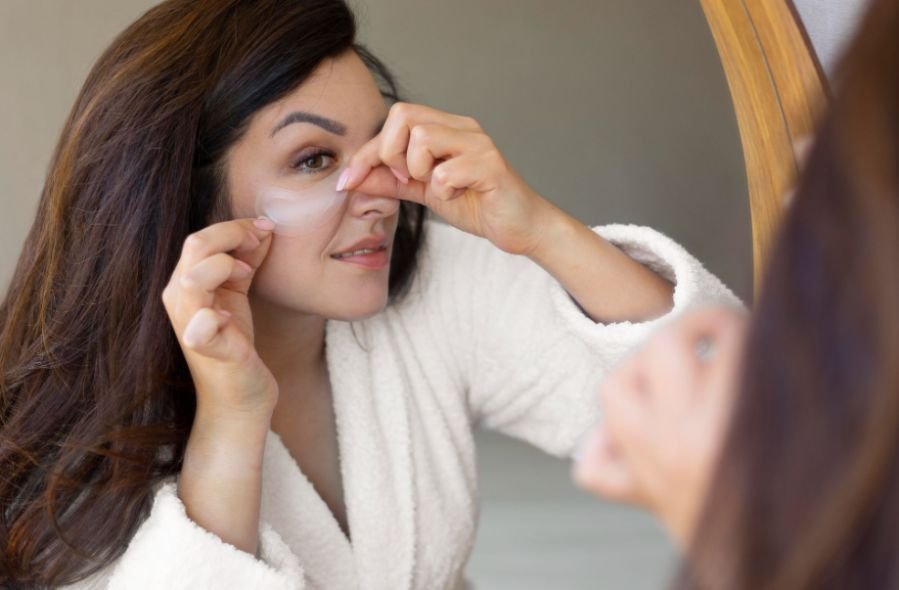
Redness often appears around the same area as dryness, but I do not cover it with another heavy layer of foundation.
Instead, I use a small amount of creamy or serum-style concealer only where I can still see redness.
I tap the concealer into place with my finger or the pointed end of a damp sponge.
Pinpoint concealing keeps the overall base thin while giving me additional coverage exactly where I need it.
Should I Put Setting Powder Over Dry Nose Patches?
I usually skip powder directly over visibly dry nostril creases.
Powder absorbs oil, which can be useful on the center of the nose but can make dehydrated skin look rougher.
If my bridge or nose tip becomes shiny, I use a small fluffy brush and press on the smallest amount of translucent setting powder possible.
I avoid baking the nose area because heavy powder can emphasize texture that was barely visible after foundation.
Can Setting Spray Make Dry Makeup Look Smoother?
This is one of my favorite finishing steps.
I mist a light layer of hydrating setting spray across my face rather than coating the skin until it feels wet.
While the finish is still slightly damp, I gently press my clean damp beauty sponge over the nose.
This can help foundation, concealer, and any small amount of powder look more integrated instead of sitting in separate visible layers.
For weddings and other special occasions, I pay extra attention to skin preparation and lightweight makeup layers so my base looks smooth in photographs and lasts throughout the event.
These bridal makeup ideas for modern brides offer inspiration for creating an elegant finish while choosing makeup techniques that complement the skin rather than emphasizing dry patches around the nose.
When I want my makeup to stay fresh through a long celebration or special occasion, I focus on lightweight layers, proper skin preparation, and a setting spray that helps hold everything together.
These long-lasting makeup tips for events can help me maintain a polished finish without piling on extra foundation that might emphasize dry patches around my nose.
How Do I Fix Flaky Foundation Around My Nose During the Day?
When makeup starts breaking apart around my nose, my first instinct used to be adding more foundation.
That usually made everything worse.
Now I gently remove excess buildup first using a clean fingertip, tissue, or sponge. If the area feels particularly dry, I tap on the tiniest amount of moisturizer and allow it to settle.
Then, if redness still needs coverage, I add a trace of concealer.
This repair method works especially well after spending hours inside an air-conditioned US office, heated building, airplane cabin, or other dry environment.
Why Does My Foundation Separate Even Though My Nose Is Dry?
Foundation separation does not always mean the skin needs more moisturizer.
Sometimes I have simply layered too many products.
Serum, moisturizer, sunscreen, primer, foundation, concealer, and powder can create a complicated base. If one layer has not absorbed before the next goes on, the products may pill or separate.
Oil can also contribute. It is completely possible to have dehydrated flakes beside the nostrils and excess sebum on the center of the nose.
I manage those areas separately instead of treating my entire nose as either dry or oily.
What Common Mistakes Make Dry Nose Makeup Look Worse?
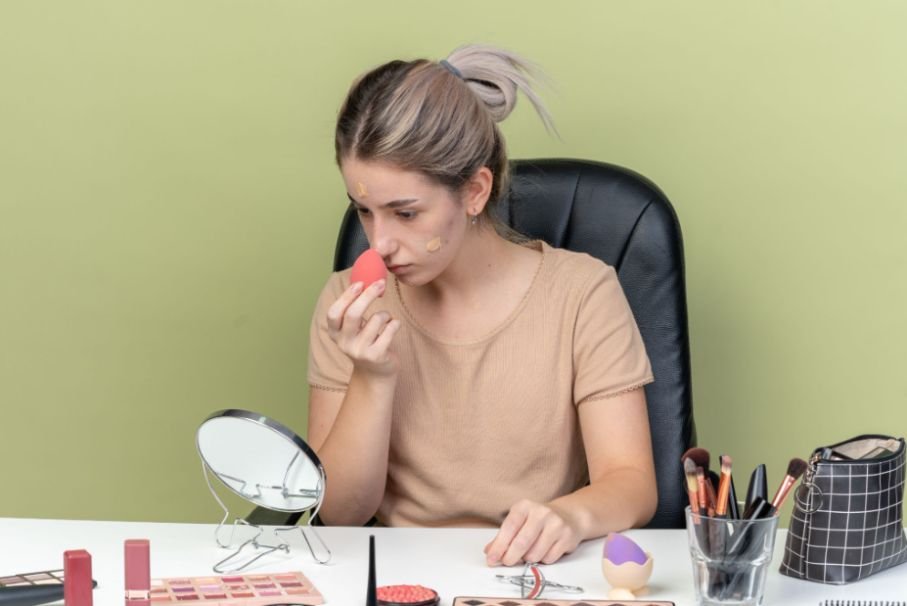
For me, the biggest mistake is attempting to bury texture under more coverage. Foundation can even out color, but it cannot physically erase raised flakes.
I also avoid aggressive last-minute exfoliation, thick matte foundation, excessive primer, heavy powder, and repeated rubbing with brushes.
The smoother my skin prep and the thinner my complexion products, the more natural my makeup tends to look.
Frequently Asked Questions
1. What is the best makeup routine for dry patches around nose?
I start with gentle cleansing and light hydration, allow moisturizer to absorb for three to five minutes, apply a small amount of hydrating primer if necessary, and use leftover foundation on a damp sponge around my nose. I finish with minimal powder and a light hydrating setting spray.
2. Why does foundation look crusty around my nostrils?
Foundation can look crusty when it sticks to loose skin or when too much foundation, concealer, or powder builds up around the nostrils. Dehydration and repeated blending can make the texture more noticeable.
3. Should I exfoliate flaky skin before makeup?
I only remove obviously loose flakes very gently. I avoid aggressive scrubbing immediately before makeup because irritation can make texture and redness worse.
4. Can I use hyaluronic acid under foundation?
Yes. I prefer applying a lightweight hydrating serum to slightly damp skin and following it with moisturizer. I allow the skincare to absorb before starting foundation.
5. Can I use powder if my nose is oily and flaky?
Yes, but I use it selectively. I may powder the oily bridge or tip while leaving visibly dry nostril creases unpowdered.
Final Takeaways
My approach to dry nose makeup changed once I stopped treating foundation as the solution to every texture problem.
A better makeup routine for dry patches around nose starts before foundation ever touches the skin. I concentrate on comfortable hydration, allow skincare time to settle, use makeup sparingly, and press products into place instead of dragging them across flaky areas.
I also treat my nose in zones. The oily bridge may need a tiny amount of powder while the dry creases beside my nostrils need moisture and minimal coverage.
Most importantly, I resist the temptation to keep adding product when texture appears. Thin, flexible layers almost always look more natural than trying to hide dryness beneath heavy makeup.
If the area remains persistently red, itchy, painful, cracked, or unusually scaly even without makeup, I would focus on addressing the skin itself rather than continually covering it.