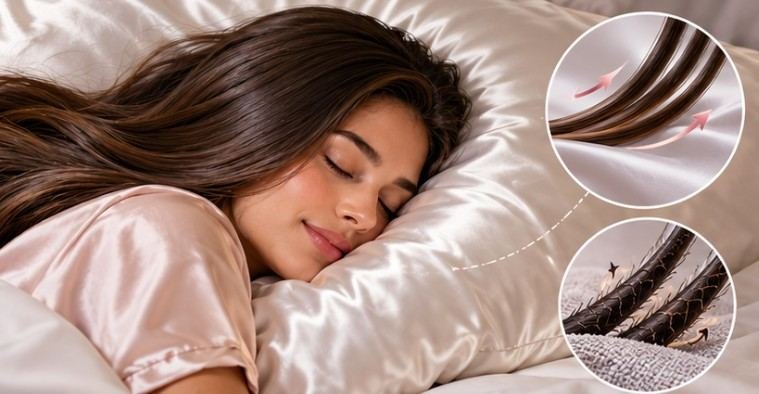
Eight hours of sleep can quietly undo a full day of careful hair care. Every time you roll across a pillow, strands rub, bend, stretch, and sometimes become trapped beneath your shoulders. Add damp hair or a tight ponytail, and that ordinary nighttime movement can become a surprisingly effective recipe for breakage.
Learning how to protect hair while sleeping is therefore less about buying an elaborate overnight treatment and more about controlling three things: friction, moisture, and tension. A few changes to your pillowcase, hairstyle, and bedtime routine can help reduce tangles, preserve curls, and prevent fragile ends from deteriorating.
Why Hair Gets Damaged While You Sleep
Hair may look smooth, but each strand has an outer cuticle made from overlapping cells. Repeated friction gradually wears that protective surface.
A 2025 review indexed by the National Library of Medicine found that hair friction increases as the strand becomes weathered and loses protective surface lipids. Chemical processing, heat styling, brushing, humidity, and age can accelerate that process.
That matters at night because your head may move against bedding dozens of times without you noticing.
Previously bleached, relaxed, colored, heat-damaged, curly, or very long hair can be especially vulnerable because its cuticle may already be compromised.
The American Academy of Dermatology also warns that repeated pulling from tight ponytails, buns, braids, and similar styles can produce breakage and eventually contribute to traction-related hair loss.
The Best Nighttime Hair Protection Routine
You do not need ten products beside your bed. A good routine can take less than five minutes.
Start With Dry—or Mostly Dry—Hair
Going to sleep immediately after washing is one of the habits worth changing. Wet hair absorbs water and becomes more elastic. That increased flexibility sounds beneficial, but it also means the strand can stretch farther while rubbing against a pillow or becoming trapped beneath your head.
Dermatologist Timothy Schmidt, MD, of University of Utah Health explains that wet hair is more fragile and vulnerable to mechanical damage during sleep. The institution recommends allowing hair to partially air-dry or using cool airflow rather than relying on intense heat.
Cleveland Clinic dermatologist Shilpi Khetarpal, MD, similarly notes that wet strands are more likely to stretch, snap, and break as they rub against bedding.
If nighttime washing is unavoidable, blot water gently with a microfiber towel or soft T-shirt instead of aggressively rubbing it.
Reduce Pillow Friction
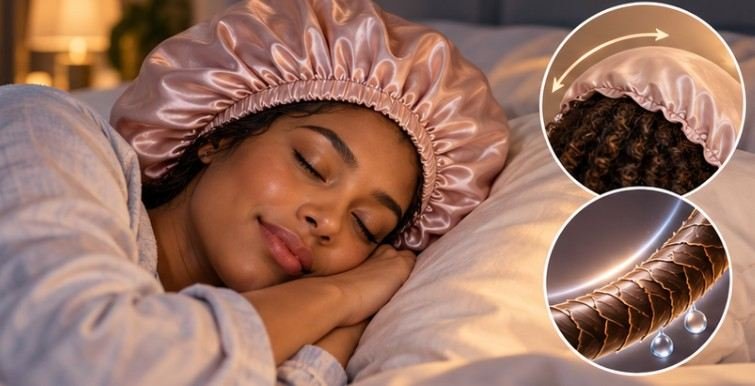
Replacing a conventional cotton pillowcase with silk or satin is one of the easiest nighttime changes. The advantage is not that silk somehow repairs damaged hair. Its smoother surface simply creates less resistance as strands move across the pillow. That can be particularly helpful for curls, coils, long hair, fragile edges, and chemically processed strands.
University of Utah Health specifically recommends considering silk or satin bedding because reduced friction may help limit breakage. A satin bonnet, scarf, or sleep cap works according to the same principle while also keeping longer hair contained.
You generally do not need both a premium silk pillowcase and an expensive bonnet. Choose whichever solution you will consistently use.
Choose an Overnight Hairstyle That Does Not Pull
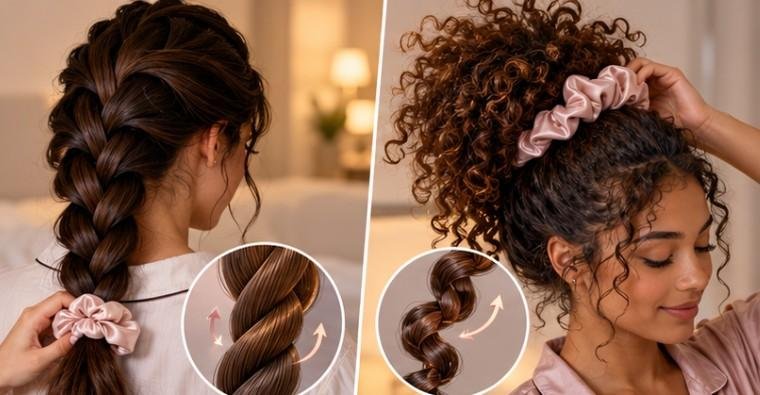
The best sleep hairstyle is secure enough to prevent tangling but loose enough that you barely notice it.
| Hair Type or Goal | Nighttime Option | Avoid |
| Straight or fine hair | Loose low braid | Tight ponytail |
| Long hair | Loose braid or soft low bun | Hair trapped beneath shoulders |
| Curly or wavy hair | Loose pineapple | Tight topknot |
| Coily/textured hair | Loose twists or bonnet | High-tension styles |
| Fragile or damaged hair | Loose braid plus satin protection | Rubber elastics |
Use a silk or satin scrunchie rather than a thin elastic band. The tie should hold the hair without creating a deep indentation.
If your scalp feels sore, your edges feel stretched, or you experience relief when removing the style, it is too tight.
This matters especially for anyone already experiencing breakage around the hairline. Johns Hopkins Medicine identifies tight hairstyles as an important contributor to traction alopecia and recommends reducing tension in braids and other protective styles. For additional daytime and recovery strategies, see this guide to hair breakage treatment.
Should You Apply Oil Before Bed?

Sometimes—but more is not automatically better.
If your ends feel rough, one or two drops of a lightweight oil or a small amount of leave-in conditioner can reduce dryness and improve slip. Concentrate on mid-lengths and ends rather than saturating your scalp.
AAD dermatologists recommend using only as much leave-in conditioner as necessary and applying it primarily where hair feels dry, brittle, frizzy, or tangled. They also note that a small amount of argan oil can help persistent dryness.
Heavy overnight oiling every night may leave fine hair greasy and encourage product buildup. Your goal is lubrication, not soaking.
MedlinePlus also emphasizes gentle grooming, conditioning, and avoiding excessive heat when managing fragile hair shafts.
Adjust the Routine to Your Hair Texture
There is no single bedtime method that works perfectly for everyone. Straight, fine hair usually benefits from minimal product and a very loose braid. Too much oil or leave-in treatment can flatten it by morning.
Wavy hair may do better with a loose pineapple or braid that keeps the wave pattern intact without stretching it.
Curly and coily hair often benefits most from reducing friction and protecting moisture. A satin bonnet, loose pineapple, or large twists can help maintain definition overnight.
The AAD makes an important distinction around detangling: although wet hair is generally delicate, tightly curled or textured hair may be easier to detangle safely while damp and conditioned.
Anyone building a more complete nighttime routine for textured hair can also use this curly hair care routine as a starting point.
The 60-Second Bedtime Hair Test
Before getting into bed, run through four quick checks. Ask yourself whether your hair is still noticeably wet. Then check whether your hairstyle pulls anywhere along the scalp. Feel the ends for extreme dryness, and finally consider what surface your hair will spend the next seven or eight hours rubbing against.
If the hair is mostly dry, tension-free, lightly conditioned when necessary, and protected from excessive friction, you have addressed the biggest controllable nighttime risks. That is far more useful than piling on additional products.
Common Nighttime Hair Mistakes
A protective style is not protective simply because it has a name. Very tight braids, buns, or ponytails can create more mechanical stress than sleeping with hair loose. Likewise, wrapping soaking-wet hair tightly beneath an impermeable cap may keep the scalp damp for hours.
Cleveland Clinic notes that prolonged warmth and moisture can create conditions favorable to yeast and bacteria, potentially contributing to scalp problems in susceptible people.
Avoid sleeping with hard clips, bobby pins, or accessories positioned where your head presses against the pillow. They can create localized pulling or snap strands during movement.
And remember that breakage is not always caused by your pillow.
Persistent snapping, unusual thinning, bald patches, itching, scaling, or sudden shedding deserves medical attention. Johns Hopkins Medicine and Cleveland Clinic both emphasize addressing underlying scalp or hair-loss concerns rather than assuming every problem is cosmetic.
Frequently Asked Questions
1. Is it better to sleep with hair up or down?
Long hair usually benefits from being loosely contained in a braid, pineapple, or soft bun. Short hair can often remain down, especially on a satin or silk pillowcase.
2. Is a bonnet better than a silk pillowcase?
Neither is universally better. Bonnets keep hair contained, while smooth pillowcases reduce friction without covering the head. Curly, coily, and long hair may particularly benefit from a bonnet.
3. Can I sleep with slightly damp hair?
Slightly damp hair is less risky than soaking-wet hair, but dry hair is preferable when possible because wet strands are more vulnerable to stretching and mechanical breakage.
4. Should I oil my hair every night?
Usually not. Apply a small amount only when your lengths or ends need extra lubrication. Frequent heavy oiling can cause buildup, especially on fine or naturally oily hair.
Make Your Pillow Work for Your Hair
The surprising part of learning how to protect hair while sleeping is how little effort it actually requires. Hair does not need an elaborate overnight treatment; it needs fewer opportunities to rub, stretch, snag, and snap. Go to bed with mostly dry hair. Remove unnecessary tension. Use a smooth sleep surface or bonnet, and lightly condition dry ends instead of coating the entire scalp.
Do those consistently and your eight hours in bed stop becoming eight hours of unnoticed wear. The best nighttime hair routine is ultimately the one that leaves your hair almost undisturbed until morning.