Low-porosity hair can feel dry even while sitting underneath a layer of oil. That frustrating contradiction explains why simply adding more product often makes the problem worse.
A useful hair oiling routine for low porosity hair starts with moisture, not oil. The goal is to get water-based hydration onto the strand first, then use a carefully measured amount of oil to improve softness, lubrication, and moisture retention without creating a greasy coating.
The biggest mistake is treating low porosity as if it simply means “very dry hair.” Low-porosity strands usually have a relatively compact cuticle surface, so product selection, quantity, washing, and application technique matter just as much as the oil itself.
What Low Porosity Actually Changes
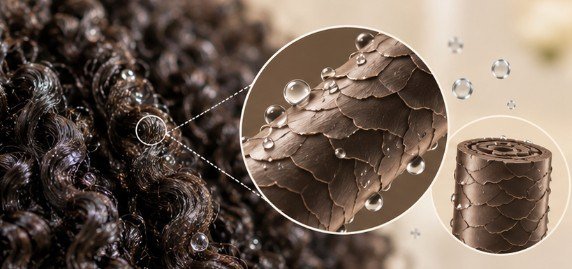
A hair shaft contains an outer cuticle surrounding the cortex and, in some hairs, a central medulla. George Washington University’s histology resources describe the cuticle as the outer region of the shaft, while the cortex forms much of its internal structure.
Think of low porosity as a description of how readily the fiber becomes wet and interacts with conditioning products. Hair that behaves as low porosity may take longer to become fully saturated in the shower, develop buildup quickly, or feel coated after rich creams and oils.
That does not mean its cuticle is literally waterproof. Water, conditioners, and some oils can still interact with the strand.
The practical problem is usually excess layering.
If water, leave-in conditioner, cream, butter, and several oils are applied one after another, low-porosity hair may become limp, sticky, dull, or strangely dry-feeling because so much material remains on the surface.
Oil Does Not Replace Water
Oil and water perform different jobs. Hair oils can lubricate fibers, reduce friction, improve shine, smooth roughness, and, depending on their chemistry, interact with or penetrate the hair shaft. They do not provide the same hydration as water.
That is why I prefer a simple order:
Water → lightweight conditioner if needed → small amount of oil.
The American Academy of Dermatology similarly recommends applying leave-in conditioner to damp hair and using only as much product as necessary. It also advises concentrating leave-in products on the hair rather than the scalp to reduce buildup. For low-porosity hair, that principle matters even more.
A Hair Oiling Routine for Low Porosity Hair in 6 Steps
1. Start With Clean Enough Hair
Oil works poorly when it is being layered over several days of styling cream, silicone, dry shampoo, sweat, and previous oil.
Wash according to your scalp and styling needs. If your hair has become unusually waxy, flat, or resistant to water, an occasional clarifying shampoo may help remove accumulated residue.
Clarifying frequency should depend on buildup rather than an arbitrary calendar. Someone using several styling products may need it more frequently than someone with a minimalist routine.
2. Add Water Before Reaching for Oil
For leave-in oiling, work with freshly washed damp hair or lightly mist dry hair with water. If your strands need additional conditioning, use a small amount of water-based leave-in first.
Your hair should feel hydrated before the oil touches it. If it already feels greasy, gummy, or coated, adding another layer is unlikely to solve the problem.
3. Divide the Hair Into Sections
Sections make it easier to distribute very small quantities evenly. Two sections may be enough for fine or short hair. Thick, curly, or coily hair may be easier to manage in four or more sections.
The purpose is not to saturate every strand with visible oil. You are trying to create a thin, even film.
4. Start With Drops, Not Palmfuls
Rub a few drops between your palms and lightly smooth them over the mid-lengths and ends.
Fine hair may need only two or three drops for an entire section. Dense or long hair will naturally require more, but increase the amount gradually.
Cleveland Clinic dermatologist Shilpi Khetarpal, MD, similarly recommends starting with a small quantity and notes that hair oiling can benefit some dry, coarse hair types while weighing down finer hair.
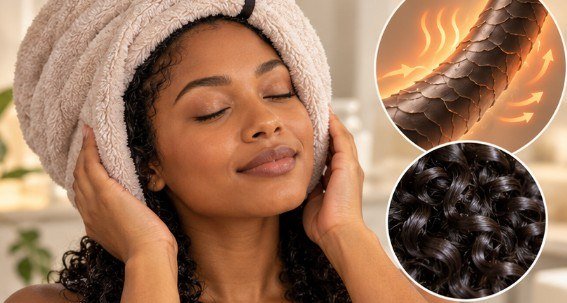
5. Use Gentle Warmth, Not Intense Heat
You may see recommendations to heat oil aggressively to “open” low-porosity hair. That is unnecessary and can become counterproductive.
A warm shower, comfortably warm towel, or mildly warm conditioning cap can make a conditioning session pleasant and help products spread. Avoid extremely hot oil or prolonged high-temperature treatment.
The American Academy of Dermatology cautions people with fragile or thinning hair against hot-oil treatments because excessive heat can contribute to damage.
6. Decide Whether You Are Sealing or Pre-Oiling
These are two different routines.
For sealing, leave a tiny amount of lightweight oil on damp hair after conditioning.
For pre-shampoo oiling, apply oil before washing, allow it to remain for roughly 20–60 minutes, then shampoo. This approach can work particularly well for people who like the benefits of oil but hate oily-looking finished hair.
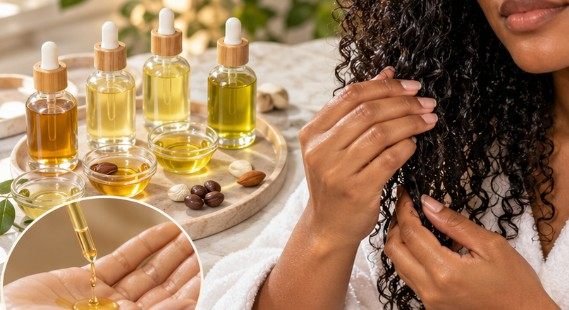
Which Oils Make the Most Sense?
There is surprisingly little clinical research comparing jojoba, argan, grapeseed, and almond oils specifically on low-porosity hair. Claims that one particular oil is scientifically proven to be “best for low porosity” therefore deserve some skepticism.
What we can evaluate practically is weight, spreadability, and the amount needed.
| Oil | Practical use | Watch for |
| Jojoba | Light finishing or sealing | Too much can still create buildup |
| Argan | Shine, frizz control, ends | Rich formulas may weigh down fine hair |
| Grapeseed | Lightweight sealing | May not feel substantial enough for very coarse hair |
| Sweet almond | Softness and lubrication | Nut-allergy concerns require caution |
| Coconut | Often better as a pre-wash treatment | Can feel stiff or heavy on some hair |
The coconut-oil story is especially interesting.
An often-cited PubMed study comparing coconut, sunflower, and mineral oil found that coconut oil reduced protein loss in damaged and undamaged hair. Researchers attributed this partly to coconut oil’s molecular structure and affinity for hair proteins.
So coconut oil should not automatically be placed on a universal “avoid” list for low porosity. If it leaves your hair stiff or coated, use less, switch oils, or reserve it for pre-shampoo treatments.
Try the Two-Wash Test Instead of Guessing
A practical way to build your routine is to compare two wash days. On the first wash, apply your normal conditioner and no finishing oil. Note softness, frizz, shine, tangling, and how quickly the hair feels dry again.
On the second wash, keep everything identical but add a very small amount of one oil to damp lengths.
If the second routine produces softer hair with less friction and no greasy residue, oil is helping. If the hair becomes dull, sticky, heavy, or difficult to wet during your next shampoo, reduce the quantity before buying another product. Change only one variable at a time.
How Often Should Low-Porosity Hair Be Oiled?
Once weekly is a reasonable starting experiment, but there is no scientifically established schedule that every low-porosity head needs to follow. Some people can use a drop or two after every wash. Others get their best results from occasional pre-shampoo treatments.
Your hair is probably receiving too much oil if strands begin clumping unnaturally, roots become flat, water seems to bead excessively during washing, or shampooing once no longer removes the coated feeling. Scalp symptoms matter too. Oiling the scalp is not essential for benefiting the hair fiber.
People with dandruff or seborrheic dermatitis should be especially cautious about repeatedly coating the scalp. Mayo Clinic recommends regular scalp cleansing for dandruff and notes that product buildup can make the scalp oilier.
What If Your Goal Is Hair Growth?
Oil can improve lubrication and reduce breakage, which may help you retain length, but coating the hair shaft does not automatically make follicles produce hair faster.
For a broader look at what actually influences length retention and growth, see this guide on how to grow hair faster.
Essential oils also require different considerations from carrier oils. If you are considering rosemary specifically, read this breakdown of rosemary oil for hair growth before applying concentrated essential oil directly to your scalp.
Frequently Asked Questions
1. What is the best oil for low-porosity hair?
Jojoba, argan, grapeseed, and sweet almond oils are popular lightweight choices. The best option is the one that improves softness without leaving your hair coated, limp, or difficult to wash.
2. Should I oil low-porosity hair when it is wet or dry?
For everyday sealing, damp hair generally makes more sense because water provides hydration first. Pre-shampoo oil treatments are different and may be applied before washing.
3. Is coconut oil bad for low-porosity hair?
Not necessarily. Research shows coconut oil can penetrate hair and reduce protein loss. However, some people find it heavy or stiffening, making small pre-wash applications preferable.
4. Can I oil low-porosity hair every day?
Usually, daily oiling is unnecessary. If your hair becomes greasy, dull, sticky, or increasingly resistant to wetting, reduce both the quantity and frequency.
The Routine Should Leave Less Behind
A successful hair oiling routine for low porosity hair is surprisingly restrained. Instead of trying to force moisture into the strand with heavier layers, start with water, condition only as much as necessary, and make oil the finishing tool rather than the foundation.
Experiment with one lightweight oil, use drops instead of handfuls, and judge the result after your next wash rather than immediately after application.
Low-porosity hair rarely needs a more complicated routine. It usually needs a more precise one. The winning amount of oil is not the amount your hair can tolerate—it is the smallest amount that noticeably makes it better.