A facial can make your skin look immediately brighter, but covering that fresh glow with foundation a few hours later may work against what you just paid for.
So, can you wear makeup after a facial? After a standard cleansing or hydrating facial, waiting about 24 hours is the safest general rule. That gives temporary redness, sensitivity, and irritation time to settle. But the answer changes significantly if your appointment included extractions, strong exfoliation, dermaplaning, microdermabrasion, or a chemical peel.
The important point isn’t that your pores are somehow “open.” It’s that recently treated skin may be more sensitive to friction, heavy products, applicators, and potential contaminants.
Why Makeup Immediately After a Facial Can Be a Bad Idea
Facials vary enormously. A soothing hydration treatment is very different from a session involving acids, blades, abrasive exfoliation, or extensive extractions.
Even ordinary exfoliation can cause inflammation when the skin is sensitive or when too much of the outer layer is removed. Harvard Health notes that aggressive physical or chemical exfoliation may cause irritation and even irritant contact dermatitis.
Putting makeup over that temporary irritation adds another layer of products plus rubbing, blending, brushing, and removal later in the day.
Your Skin Barrier Needs a Quiet Period
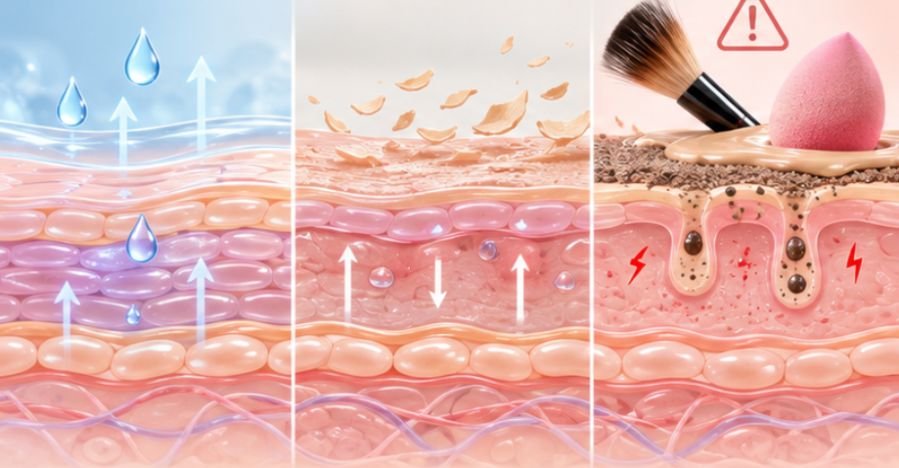
The outermost layers of skin help slow water loss while limiting the entry of irritants and other foreign substances. After a treatment that exfoliates or resurfaces the face, keeping the routine simple gives that protective function time to normalize.
This is why post-facial advice often sounds boring: gentle moisturizer, sunscreen, no scrubs, no picking, and fewer products.
Boring is useful here.
Your Makeup Tools Matter Too
Makeup itself is not automatically “dirty,” but contamination is a legitimate consideration. The U.S. Food and Drug Administration explains that microbiological safety in cosmetics is important. Cosmetic products can become contaminated with harmful bacteria or fungi through consumer use and recommends keeping containers clean and washing hands before applying cosmetics.
An old foundation sponge that has been sitting damp in a makeup bag is therefore a poor match for freshly exfoliated or extracted skin.
How Long Should You Wait?
There is no universal 24-hour rule covering every facial. Treatment intensity matters more than the word “facial” on the appointment menu.
| Treatment | Practical Makeup Window |
| Gentle cleansing or hydrating facial | Preferably wait about 12–24 hours |
| Facial with multiple extractions | About 24 hours or until redness and tenderness settle |
| Dermaplaning | Often safest to wait until skin is calm; 24 hours is a conservative approach |
| Microdermabrasion | Wait until redness and sensitivity have resolved; follow provider instructions |
| Light chemical peel | Often the next day, depending on the peel |
| Medium chemical peel | Usually about 5–7 days |
| Deep chemical peel | At least 14 days or until your dermatologist approves |
The final three rows illustrate why generic advice such as “wait 48 hours after every peel” can actually be misleading.
The American Academy of Dermatology reports that makeup may sometimes be worn immediately after a very light peel or the following day, while medium peels generally require five to seven days and deep peels at least 14 days.
Mayo Clinic gives similar guidance, chemical peel aftercare recommendations noting that cosmetics can typically be used the next day after a light peel and after approximately five to seven days following a medium peel.
What About Dermaplaning and Microdermabrasion?
These treatments deserve more caution than an ordinary moisturizing facial.
Dermaplaning removes surface skin cells along with fine facial hair. Cleveland Clinic notes that redness, swelling, and tenderness can occur afterward and lists infection, scarring, and changes in pigmentation among possible complications.
Microdermabrasion and facial treatments also removes part of the superficial dead-cell layer. Johns Hopkins Medicine notes that the face can remain slightly red after treatment. Instead of relying only on the clock, pay attention to the condition of your skin.
For those addressing uneven texture or lingering blemish marks, choosing an appropriate treatment is equally important.
A spa facial for acne scars may be worth exploring, but the treatment should suit your skin’s condition and sensitivity. If your facial involves exfoliation or resurfacing, allow your skin to recover fully before applying makeup, and follow your skincare professional’s aftercare instructions.
The 30-Second Makeup Readiness Test
Before reaching for foundation, check your face in good light.
If your skin is still noticeably warm, bright red, swollen, stinging, tender, peeling, or raw around extraction sites, skip makeup.
Then lightly apply your normal moisturizer. If even a familiar bland moisturizer burns or stings unusually, your skin probably isn’t ready for layers of cosmetics.
Finally, follow the instructions given by your esthetician or dermatologist. Procedure-specific guidance should override a general timeline you find online.
If You Absolutely Need Makeup the Same Day
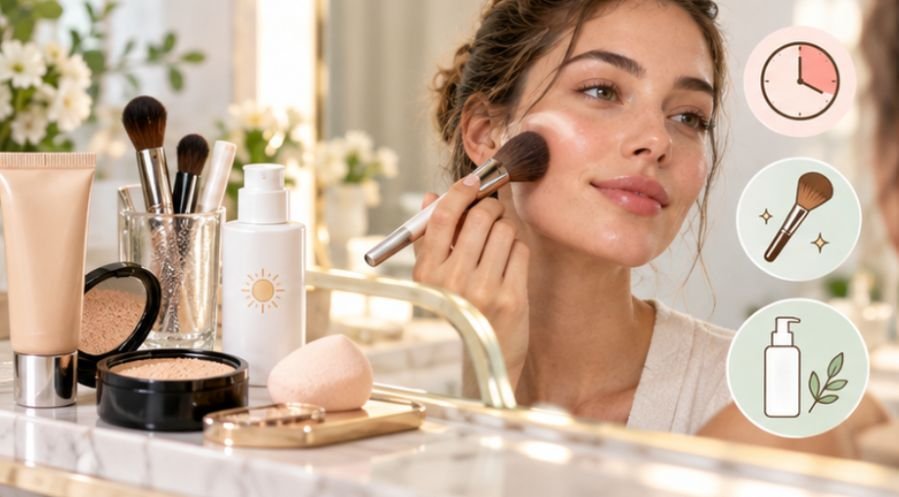
Sometimes a facial falls before a wedding, work event, dinner, or photography session.
If the treatment was mild and your provider hasn’t told you to avoid cosmetics, give your skin as much makeup-free time as possible. Six to 12 hours is better than applying foundation immediately after leaving the treatment room, although waiting until the following day remains the safer choice.
Keep the routine minimal.
Choose a lightweight skin tint or non-irritating complexion product rather than multiple layers of primer, full-coverage foundation, concealer, powder, and setting spray. Use freshly cleaned brushes or a new disposable applicator and avoid rubbing aggressively.
Skip products that sting or contain ingredients your skin normally finds irritating.
Removing the makeup gently matters just as much. Avoid scrubs, cleansing brushes, exfoliating acids, and aggressive double cleansing that night.
Don’t Forget What Your Facial Left on the Skin
Another reason to delay makeup is simply to avoid unnecessarily removing or covering the finishing products your provider applied.
Many facials finish with moisturizer, soothing ingredients, or sun protection. Washing the face again immediately so you can create a full makeup base defeats some of the purpose of the treatment.
When planning a spa day, the order of each service can also influence how your skin responds to subsequent treatments. This guide to what order you should do spa treatments outlines a practical sequence for arranging spa services thoughtfully, helping you avoid unnecessary irritation and preserve the benefits of each treatment.
Exploring spa services for self-care can help you curate a restorative treatment routine that prioritizes relaxation while avoiding the unnecessary combination of services that may aggravate freshly treated skin.
Post-Facial Mistakes That Matter More Than Makeup
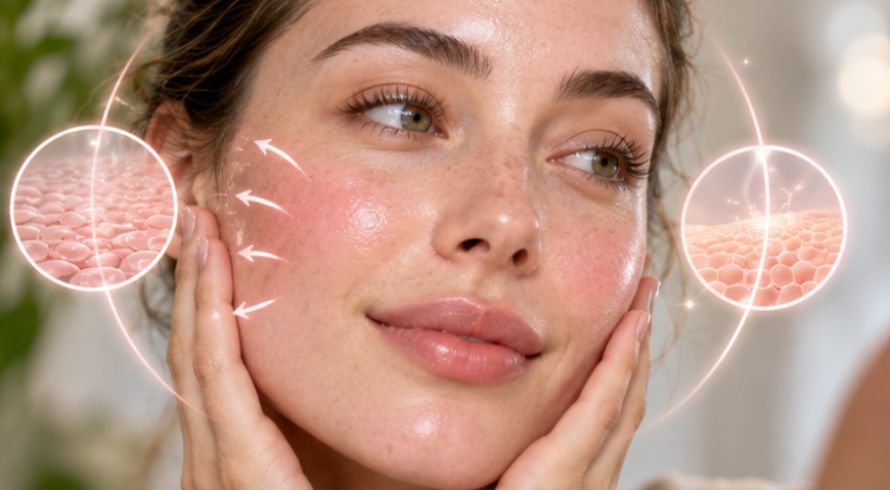
Wearing foundation too soon receives plenty of attention, but several other habits can cause more irritation.
Avoid picking at extraction sites or peeling skin. Don’t introduce a strong retinoid, glycolic acid, salicylic acid, or abrasive scrub simply because your face suddenly feels smooth enough to tolerate everything.
Sun protection is particularly important following exfoliating and resurfacing treatments. The American Academy of Dermatology advises daily broad-spectrum, water-resistant SPF 30 or higher following many dermatologic treatments because treated skin may be vulnerable to discoloration from sun exposure.
If redness worsens instead of improving, swelling becomes significant, blisters develop, or the skin shows signs of infection, contact the professional who performed the treatment or a dermatologist.
Frequently Asked Questions
1. Can you wear makeup after a facial the same day?
After a gentle facial, you technically may be able to, but waiting until the next day is usually kinder to freshly treated skin. More intensive treatments require longer recovery periods.
2. How soon can I wear foundation after extractions?
Give irritated extraction sites roughly 24 hours when possible. Wait longer if areas remain red, swollen, sore, or visibly broken.
3. Can I wear mineral makeup after a facial?
Light mineral makeup may be preferable to heavy coverage when makeup is unavoidable, but it does not eliminate irritation or contamination risks. Apply it only with clean tools.
4. Can I wear makeup after a chemical peel?
It depends on peel depth. Light peels may allow makeup the following day, while medium and deep peels can require several days or weeks of healing.
Give the Glow a Chance to Last
The real answer to can you wear makeup after a facial has less to do with a rigid countdown and more to do with what happened to your skin during the appointment.
For an ordinary hydrating facial, keeping your face makeup-free until the following day is a sensible default. After exfoliation, extractions, dermaplaning, or resurfacing, let redness and tenderness guide you—and follow your provider’s instructions.
A fresh facial doesn’t need to be immediately “finished” with foundation. Sometimes the best post-treatment beauty routine is simply moisturizer, appropriate sun protection, clean hands, and a quiet night for your skin.