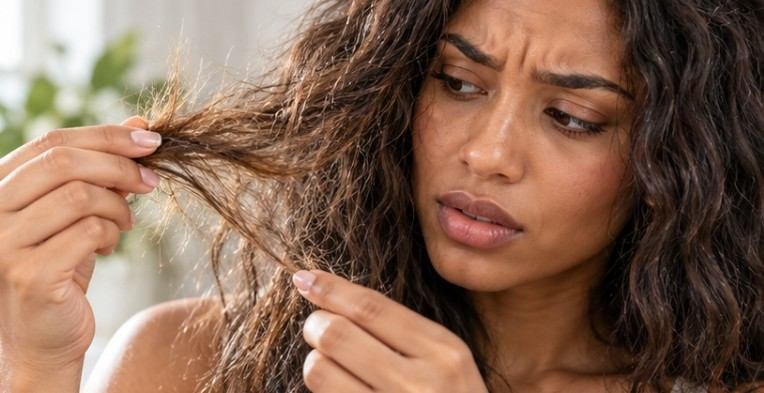
Short curtain bangs can go from perfectly feathered to strangely flat in a matter of minutes. The reason is simple: short fringe has less weight to pull it into position, so root direction, heat placement, brush size, and even the way the hair cools can dramatically change the finished shape.
Learning how to style curtain bangs short hair successfully is therefore less about curling the ends and more about controlling the roots first. Once the root pattern sits correctly, creating that soft cheekbone-framing sweep becomes surprisingly easy.
The good news is that you do not need salon-level tools. A blow-dryer, small round brush, lightweight styling product, and five focused minutes can usually create the shape.
Why Short Curtain Bangs Behave Differently
Curtain bangs are designed to separate near the center and gradually sweep away from the face. On longer fringe, gravity helps create that movement naturally. Short bangs have less weight, which makes cowlicks, flat roots, oily hair, and overly strong curls more noticeable. That is why immediately dividing damp bangs down the middle often backfires.
Hairstylists interviewed by Vogue recommend drying curtain fringe forward before creating the final center separation. This prevents the roots from setting into a rigid middle part and helps the sides flow more naturally into the haircut. The technique matters even more with bobs, pixie cuts, bixies, and short layered hairstyles because there is less surrounding length available to blend an incorrectly styled bang.
The Best Tools for Styling Short Curtain Bangs
You do not need a crowded bathroom counter. A small-to-medium round brush works particularly well because shorter hair needs a smaller barrel to maintain tension. Vogue notes that smaller barrels provide greater control for bangs and short layers.
A blow-dryer with a concentrator nozzle also helps direct airflow exactly where you want it instead of blasting the fringe in multiple directions.
Add a lightweight heat protectant and, if necessary, a small amount of mousse or volumizing product. Heavy oils, thick creams, and sticky gels can collapse short bangs quickly because there simply is not much hair supporting the style.
Heat protection also matters beyond appearance. The American Academy of Dermatology’s hair-styling guidance recommends reducing excessive heat exposure and using flat irons on dry hair at low or medium settings.
The Five-Minute Blow-Dry Method
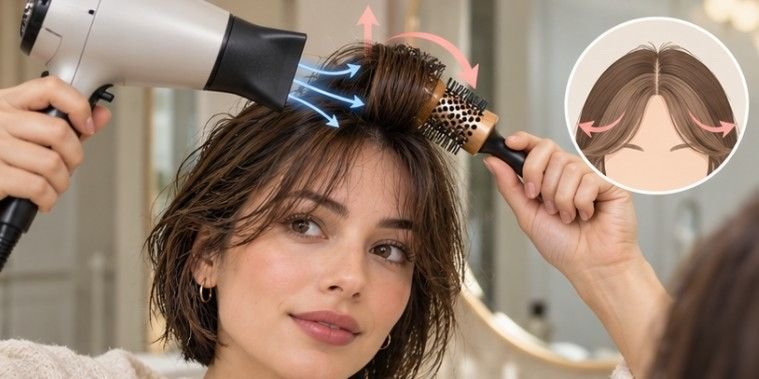
1. Reset the Bangs With Water
You do not need to wash your entire head every morning.
Instead, dampen the bangs from the roots through the ends. This is especially helpful after sleeping because simply heating dry bangs often reinforces whatever direction they developed overnight.
Blot away excess water rather than aggressively rubbing the hair. The University of Iowa Health Care’s hair-fragility guidance explains that reducing unnecessary physical stress is important when trying to prevent fragile hair from breaking.
2. Break Up the Cowlick First
Before reaching for the round brush, solve the root problem. Comb or brush the entire fringe toward the left while directing dryer airflow toward the roots. Then move the bangs toward the right and repeat. Finally, direct the bangs forward over the forehead.
This side-to-side movement temporarily disrupts the hair’s preferred direction and gives you greater control over where the finished part sits. Do not worry if the bangs look ridiculous halfway through. You are resetting them, not finishing them.
3. Create Root Lift Before the Curtain Shape
Take the entire bang section and place the round brush underneath it. Pull the section slightly forward while directing warm airflow down the hair.
Rotate the brush gently rather than tightly wrapping the hair around it. Short curtain bangs usually need elevation, not a full curl. Too much rotation produces a rounded “bubble bang” rather than a relaxed curtain. Once the hair is roughly 80% to 90% dry, divide it loosely near the center.
4. Sweep Each Side Away From the Face
Now comes the movement that makes curtain bangs recognizable. Place the round brush beneath one section, lift slightly, and rotate the hair backward away from the face. Direct the dryer along the hair rather than straight at the scalp. Repeat on the opposite side.
For additional movement, slightly overdirect each section toward the opposite side before sweeping it back. This builds tension and gives short fringe a softer outward bend instead of simply hanging downward.
Let the Bangs Cool Before Touching Them
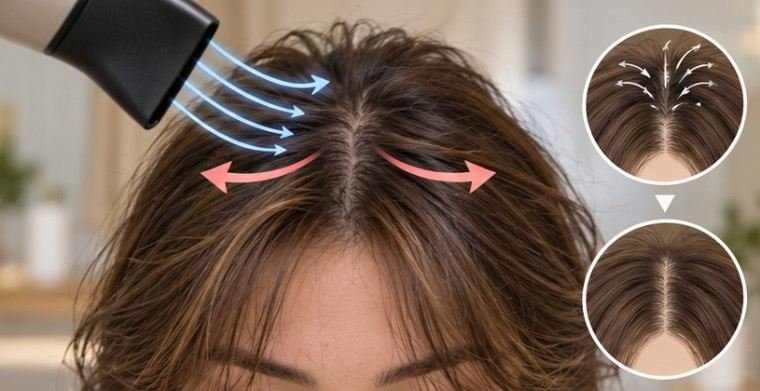
One of the easiest styling improvements requires doing absolutely nothing for about a minute. Warm hair remains flexible. If you immediately brush through your bangs, you may pull out the shape you just created.
Let each side cool in position. You can hold the curve with a creaseless clip or loosely place the entire fringe around a small Velcro roller. Then release and separate the hair gently with your fingertips.
Flat Iron Method for Quick Touch-Ups
A flat iron can rescue second-day curtain bangs when there is no reason to completely wet and blow-dry them.
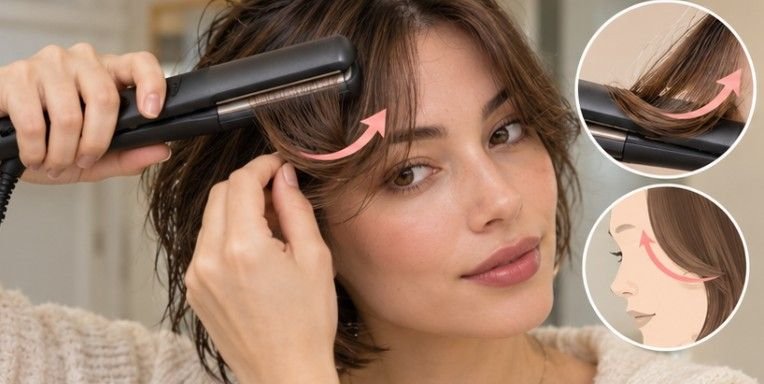
Make sure the hair is completely dry first. Clamp a small section near the middle of the strand rather than pressing directly against the scalp. Turn the iron slightly away from your face while gliding downward, creating a loose C-shaped movement.
The goal is not a curl. Think of the iron as redirecting the hair. Use the lowest temperature that produces the result you need. Research examining repeated hair-dryer exposure found progressively greater surface damage as temperatures increased. The National Library of Medicine’s PubMed record on hair-dryer damage provides additional details about that study.
Never flat-iron damp bangs. Thermal injury from applying very hot tools to wet strands has been documented in medical literature.
Adjust the Technique for Your Hair Texture
Straight or Fine Hair
Concentrate on root lift rather than adding lots of product. A pea-sized amount of mousse or root spray is generally more useful than oils or smoothing creams. If bangs become greasy quickly, refreshing just the fringe may work better than washing the entire haircut.
Wavy Hair
Do not automatically straighten out the texture. Apply lightweight styling product, encourage the natural bend with your fingers, and diffuse on lower airflow. You can smooth only the root area if you want greater control around the part.
Curly or Coily Hair
The objective should usually be shaping rather than forcing curls completely straight. Diffuse, finger-coil, or gently stretch the bang section depending on the desired finish. Curtain fringe also needs enough length to account for shrinkage.
If texture management is your main challenge, a consistent curly hair care routine can make daily fringe styling much more predictable.
FAQs
1. How do you style curtain bangs on very short hair?
Wet the roots, dry the fringe forward and side-to-side, then use a small round brush to sweep each side away from the face. Let the finished shape cool before separating it.
2. Why do my curtain bangs keep going flat?
Common causes include heavy styling products, drying the roots downward, oily fringe, or skipping the cooling stage. Focus on root lift and use lightweight products.
3. Can I style short curtain bangs without heat?
Yes. Dampen them, position the fringe with your fingers or creaseless clips, and allow it to air-dry. Natural waves and curls often respond particularly well to this approach.
4. How often should I trim curtain bangs?
It depends on their starting length and desired shape, but short curtain bangs usually need more frequent reshaping than longer face-framing layers once they begin falling into the eyes.
Style Your Hair The Way You Like
Short curtain bangs rarely fail because you cannot curl them correctly. Most styling problems begin several minutes earlier, when the roots dry in the wrong direction. Reset that foundation first. Dry the fringe forward, neutralize cowlicks, create gentle lift, sweep the ends away from your face, and give the hair time to cool. Keep heat moderate and products light.
Once those habits become automatic, how to style curtain bangs short hair stops feeling like an unpredictable morning experiment. The perfect curtain shape is not created by adding more curl; it comes from teaching a very small section of hair exactly where you want it to fall.