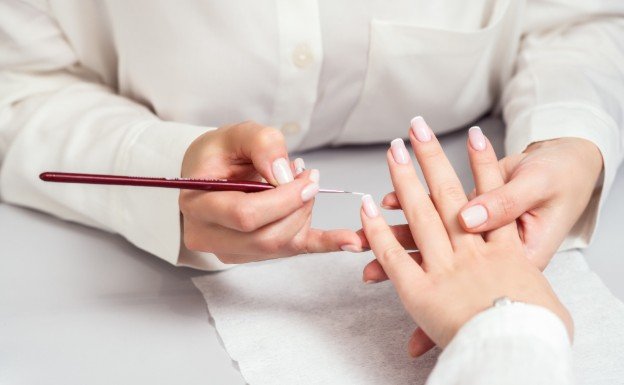
A manicure photo can catch my attention, but I prefer to consider how the shape will work on actual hands before reaching for a file. Short nails vary in width, strength, and available length, so copying a silhouette without checking those details can produce a different result. When explaining how to choose a nail shape for short nails, I start with the nail already there.
Round and squoval are practical starting points for very short nails. Oval offers a more elongated outline when enough length remains, while square creates a defined finish. The right choice balances appearance, comfort, and maintenance.
Check What Your Nails Can Support
Separate Nail Length From Nail-Bed Length
Your nail bed is the area beneath the attached nail plate. The free edge is the portion extending beyond your fingertip. A short manicure on long nail beds can look different from the same shape on shorter, wider beds.
Look at your unpolished nails from above. Notice their proportions and how much free edge remains. If the tips barely extend beyond your fingertips, avoid forcing a pronounced taper. You may remove the length needed to create it.
Consider Strength and Existing Damage
Check for peeling tips, recurring corner breaks, or uneven lengths. Let your shortest intact nail guide the manicure rather than reshaping every finger around the longest one.
A shape cannot repair existing damage. For fragile nails, preserving usable length and smoothing catching edges matters more than achieving a dramatic outline.
Compare the Main Shapes for Short Nails
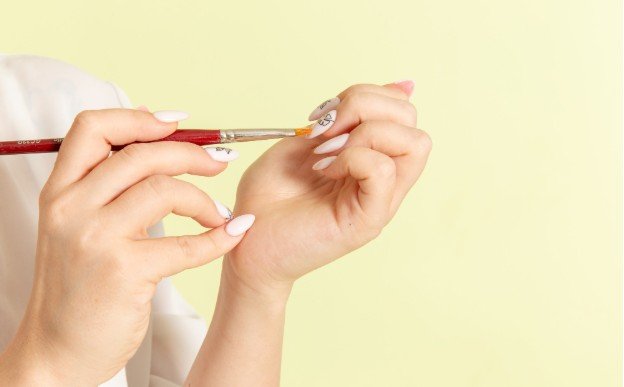
Round: A Practical Choice for Minimal Length
Round nails follow the fingertip’s curve, with a gently rounded edge. They suit people who want a simple manicure without pronounced corners. To file your nails without causing splits, use a fine file and light pressure as you gently shape the curve.
Keep the outline balanced rather than narrowing the sides aggressively. Round works particularly well when there is little free edge available, although its appearance still depends on your natural proportions.
Squoval: A Flat Tip With Softer Corners
Squoval combines a mostly straight tip with rounded corners. It preserves the defined appearance of square nails while reducing corners that may catch on clothing.
Choose it if you like a structured manicure but find sharp edges inconvenient. Start with a straight tip, then soften each corner gradually. Excessive rounding will turn the silhouette into something closer to round.
Oval: A More Elongated Outline
Oval has gently tapered sides and a rounded tip. Compared with round, its outline appears longer and narrower.
It can create a lengthening effect, but very short nails may lack enough free edge for a distinct oval. Preserve the attached sides of the nail and avoid removing excessive material simply to imitate a reference photograph.
Square: A Crisp, Defined Finish
Square nails have straight sides and a flat tip. They can look especially defined on naturally longer, narrower nail beds, but anyone can prefer the style.
Consider whether the corners snag or repeatedly break during everyday activities. If that happens, softening them into squoval may make the manicure more comfortable without abandoning the flat tip.
Match the Shape to Your Routine
Appearance is only part of how to choose a nail shape for short nails. Typing, cooking, exercising, cleaning, and handling fabrics can reveal whether a shape feels practical.
If corners frequently catch, try round or squoval. If your main goal is visual length, consider oval when your nails have enough free edge. If you enjoy a graphic, straight finish, square remains an option.
Short fingers and wide nail beds do not require one prescribed shape. Curved outlines may soften width visually, but personal preference matters. Your cuticle contour can offer an aesthetic reference without becoming a strict rule.
Know When Almond and Coffin Need More Length
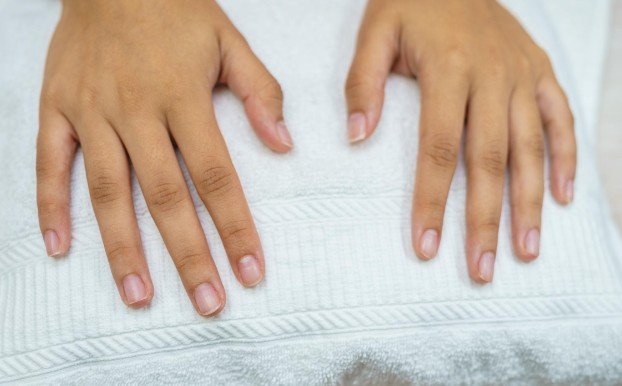
Almond narrows toward a soft point, while coffin tapers toward a flat tip. Both need enough length for their defining outlines.
A short almond manicure may be achievable on some nails, but nails ending at the fingertip usually cannot support a clear almond taper through filing alone. Coffin has similar limitations.
Check whether inspiration photographs show natural nails, overlays, extensions, or press-ons. Added structure and length can explain why a pictured manicure looks different from what your existing nails can achieve.
File Carefully and Explain Your Choice Clearly
Shape dry nails with a fine-grit file suitable for natural nails. Use gentle strokes, pause frequently, and compare both sides. Avoid aggressive sawing or digging into the sidewalls.
Bring a reference photograph showing a similar length. For squoval, you could request, “Keep my current length, leave the tip mostly straight, and soften the corners.”
Maintain smooth edges between manicures rather than repeatedly filing away length. If a nail develops pain or persistent changes, seek professional advice instead of reshaping around the problem.
Frequently Asked Questions
1. How do I learn how to choose a nail shape for short nails?
Check available length, nail-bed proportions, strength, and daily activities. Compare round, squoval, oval, and square before considering more tapered shapes.
2. Which shape makes short nails look longer?
Oval can create an elongated outline when sufficient length remains. Polish and design also affect the visual result.
3. Can I change square nails to round immediately?
Sometimes, but rounding removes material. Soften the corners first if preserving length is your priority.
Finding Your Best Fit
I believe the best nail shape is one that looks polished and feels comfortable throughout your day. For short nails, I would begin with round or squoval, then consider oval if there is enough free edge to create a gentle taper. Square can also work beautifully when you enjoy a defined tip and your corners stay intact.
My advice is to make small adjustments rather than remove too much length at once. Notice how your nails feel while typing, getting dressed, and handling everyday tasks. If an edge catches repeatedly, soften it before deciding you need an entirely different shape.
Bring a reference photo with a similar nail length to your next appointment, and explain what you want to preserve. A balanced shape that suits your existing nails can make a short manicure feel complete without needing extra length.