If your skin feels tight, parched, or sandpaper-rough ten minutes after applying skincare, you are applying your humectants wrong. Learning how to use hyaluronic acid serum on damp skin properly transformed my daily routine from perpetual tightness to all-day plumpness.
Hyaluronic acid is not an oil, and it is not a traditional moisturizer. It is an osmotic sponge. Applied to bone-dry skin, it draws moisture straight from your deeper dermis and evaporates into the air, leaving your face tighter than before.
The Biological Sponge Mechanism: Why Dry Skin Repels Hyaluronic Acid
Hyaluronic acid (HA) can bind up to 1,000 times its molecular weight in water, as documented by Harvard Health Publishing. However, the molecule itself creates zero new moisture. It redistributes existing moisture based on atmospheric and osmotic gradients.
+———————————————————+
| THE MOISTURE PATHWAY |
| |
| [Damp Skin Surface] |
| │ |
| ▼ |
| [Hyaluronic Acid Humectant] ─── Locks Hydration In |
| │ |
| ▼ |
| [Lipid Barrier / Moisturizer] ── Blocks Evaporation |
+———————————————————+
When you apply this humectant to wet tissue, it grabs the surface water droplets, anchors them to the stratum corneum, and plumps the intercellular matrix. Apply it to dry tissue, and it reverses that flow. It pulls stored water from the viable epidermis outward, accelerating transepidermal water loss (TEWL).
Multi-Molecular Weights and the Risk of Reverse Moisture Leaching
Modern skincare formulas rarely use a single molecular weight. Brands combine high, medium, and low molecular weights. Clinical evaluations compiled by the National Center for Biotechnology Information demonstrate that low molecular weight hyaluronic acid penetrates deeper into epidermal layers, while high molecular weight chains form a non-occlusive film on the exterior.
When ambient air is dry and surface moisture is absent, low-weight chains pull water upward from your deeper tissue stores. If you want to repair damaged skin moisture barrier integrity, external water must sit on the surface before these active chains make contact.
The 40% Humidity Rule: When Humectants Turn Against You
I discovered this dynamic during winter travel. In heated rooms where indoor relative humidity fell below 35%, my standard serum application left my cheeks flaky.
When ambient humidity dips below 40%, the air actively pulls moisture from any unprotected surface. Without ambient moisture or a damp skin canvas, topical hyaluronic acid speeds up evaporation. In low humidity, your surface hydration prep must be twice as deliberate.
The 4-Step Application Sequence That Never Fails

Mastering this daily ritual requires understanding textures rather than staring at a stopwatch.
CLEANSE (Non-stripping)
──> MIST / LEAVE DEWY (Not dripping)
──> PAT HA SERUM (Gliding press)
──> OCCLUSIVE SEAL (Within 30 seconds)
Step 1: The Non-Stripping Cleanse
Start with lukewarm water and a low-pH, sulfate-free cleanser. Hot water strips your natural sebum sheath, breaking the intercellular lipids before you even reach for your serum. Rinse thoroughly until no surfactant residue remains.
Step 2: Calibrating the Exact Dampness Ratio
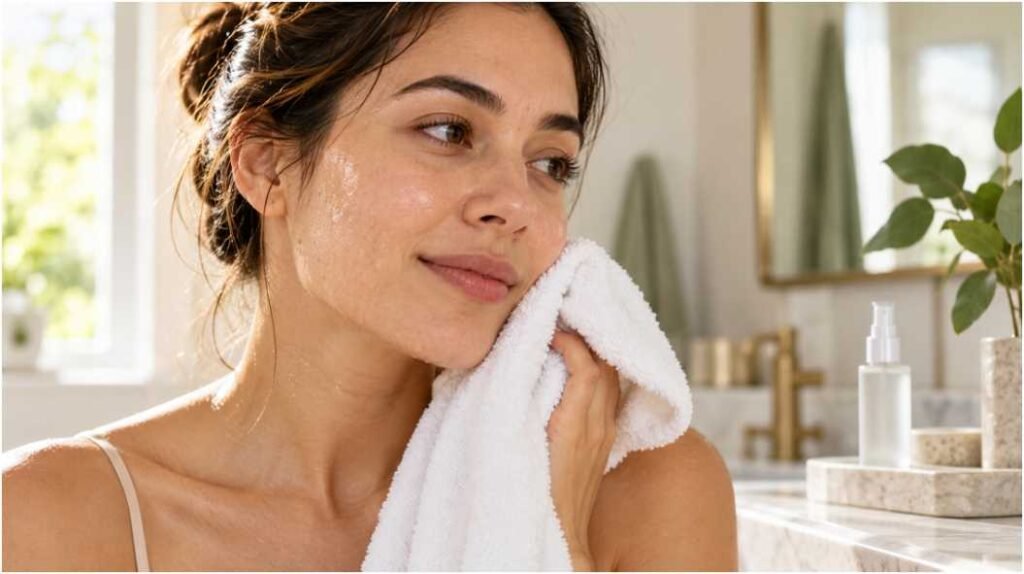
Never towel-dry your face completely. At the same time, avoid applying serum onto dripping wet skin, which dilutes the active formulation and disrupts preservation stabilizers.
Gently pat away running droplets with clean palms. Your face should feel dewy and cool, with a visible sheen. If your skin dries out while brushing your teeth or styling your hair, saturate the area with an alcohol-free essence or thermal water mist before touching your serum bottle.
Step 3: The Gliding Press Application
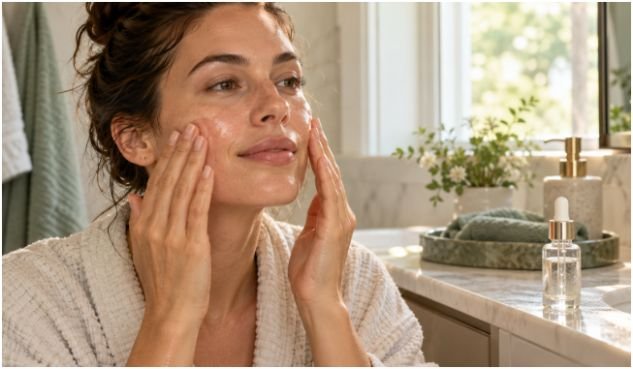
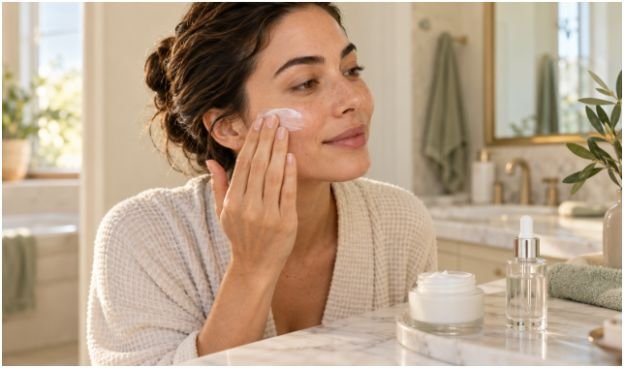
Dispense two to three drops into your palms. Rubbing vigorously shears the polymer structure and creates tacky friction. Instead, press your palms across your forehead, cheeks, jawline, and neck.
Glide your hands outward in smooth strokes. The serum should spread effortlessly over the water layer without drag.
Step 4: The 30-Second Barrier Lock
The American Academy of Dermatology emphasizes sealing humectant products with an emollient cream right away to trap hydration. Do not wait for your skin to dry down completely.
Apply your moisturizer within 30 seconds, while your skin remains cool and tacky. This traps the reservoir beneath an occlusive film of ceramides, squalane, or fatty acids.
How to Sequence Active Treatments Without Neutralizing Hydration
Incorporating other targeted treatments requires proper pH and molecular alignment.
| Step | Morning Protocol | Evening Protocol | Key Function |
| 1 | Gentle rinse + towel blot | Double cleanse | Surface prep |
| 2 | L-Ascorbic Acid (dry skin) | Hydrating mist | Target tone / restore dew |
| 3 | Thermal water mist | Hyaluronic acid serum | Moisture reservoir |
| 4 | Hyaluronic acid serum | Active treatment (Retinoid) | Cellular turnover buffer |
| 5 | Light emulsion + SPF 50 | Ceramide barrier cream | Occlusive sealant |
Layering with L-Ascorbic Acid and Niacinamide
Water-soluble antioxidants have distinct pH requirements. Pure Vitamin C (L-ascorbic acid) operates at an acidic pH below 3.5 and penetrates best on clean, dry skin.
Apply your Vitamin C directly after cleansing. Allow it to absorb for three minutes. Mist your skin with water or an essence to restore dampness, then press in your hyaluronic acid serum.
Niacinamide operates at a neutral pH and plays well directly alongside humectants. You can safely combine these steps when you layer serums for glass skin look finishes without destabilizing your products.
Buffering Retinoids at Night
Retinoids trigger irritation when applied directly onto wet skin because moisture accelerates chemical absorption.
To buffer effectively, apply your hyaluronic acid serum to damp skin first, seal it with a lightweight fluid lotion, and wait five minutes until dry to the touch. Apply your retinol as the third layer. This sandwich approach prevents retinoid flaking while maintaining cellular hydration.
Stop Making These Costly Moisture Mistakes
- Applying onto bone-dry skin: This forces the humectant to draw water upward from your deeper dermis, triggering tightness.
- Skipping the occlusive topcoat: Leaving hyaluronic acid exposed allows all captured water to evaporate into ambient air.
- Using excessive product: Applying more than three drops leaves a gummy, pilling residue under makeup.
- Rubbing instead of pressing: Aggressive friction disrupts uniform film distribution across the stratum corneum.
Frequently Asked Questions
1. Can I spray water over hyaluronic acid if it dries too quickly?
Yes, misting thermal water over drying hyaluronic acid reactivates the humectant sponge before you seal it with moisturizer.
2. Is hyaluronic acid suitable for oily, acne-prone skin types?
Yes, it delivers oil-free hydration that prevents sebaceous glands from overproducing sebum due to surface dehydration.
3. Can I mix hyaluronic acid drops directly into my daily moisturizer?
Yes, mixing two drops into your moisturizer creates an instant hydrating emulsion when you are short on time.
4. Why does my hyaluronic acid serum pill under my sunscreen?
Pilling happens when you apply too much product or fail to pat it in before applying thicker silicone-based formulas.
Glow Hard or Go Home: Your Final Moisture Protocol
Skincare marketing often treats hydration like magic, but it is straightforward physical chemistry. Humectants hold onto moisture, while occlusives keep it from escaping.
Keep your mist bottle next to your serum, apply only onto dewy skin, and lock in your barrier within 30 seconds. That simple habit keeps your skin plump, resilient, and comfortable all day long.