The most important thing to know about a body wrap is that the dramatic-looking layers of mud, seaweed, film, and thermal blankets are not literally “pulling toxins” from your body. What they can do is create an occlusive, warming environment that leaves skin feeling softer, smoother, and temporarily more hydrated.
So, what is a body wrap spa treatment exactly? It is a professional body-care service in which a mask, cream, clay, mud, algae blend, or other topical product is applied over large areas of skin before the body is wrapped in sheets, plastic film, warm towels, or a thermal blanket.
Depending on the spa, the session may also include exfoliation, a shower, moisturizer, and a short scalp or foot massage.
What Actually Happens During a Body Wrap?
A body wrap typically follows a fairly predictable sequence, although the products and amount of heat vary between spas.
1. You Change and Prepare for the Treatment
Most spas provide privacy so you can undress to your comfort level. Disposable underwear may be offered because many wrap products can stain clothing.
Your therapist should explain what will be applied, whether heat is involved, and how much of your body will be covered. This is the right moment to mention allergies, eczema, psoriasis, pregnancy, heat intolerance, recent waxing, sunburn, or medications that make your skin more sensitive.
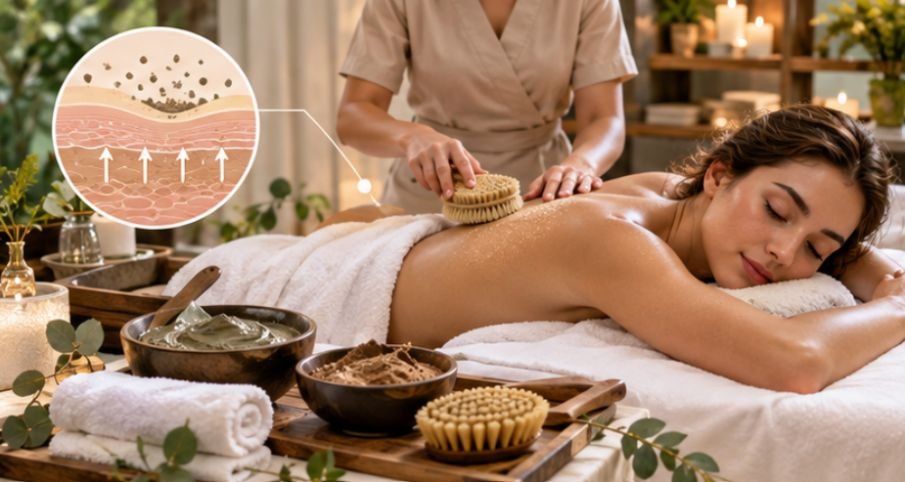
2. The Skin May Be Exfoliated
Many treatments begin with a salt, sugar, enzyme, or other exfoliating scrub designed to remove loose cells from the skin’s surface.
Exfoliation can make skin feel smoother, but stronger is not automatically better.
Because exfoliation can temporarily increase skin sensitivity, it is equally important to adjust your skincare routine after treatments that affect the skin’s surface. Before applying foundation or other cosmetics following a facial, review this guide on whether you can wear makeup after a facial to understand appropriate waiting periods and why post-treatment skin needs time to recover.
The American Academy of Dermatology warns that excessive exfoliation can cause redness, irritation, and increased sensitivity, particularly in people with dry or reactive skin.
You may therefore want to skip the scrub if you recently shaved, waxed, used strong acids or retinoids, or already have irritated skin.
3. A Body Mask Is Applied
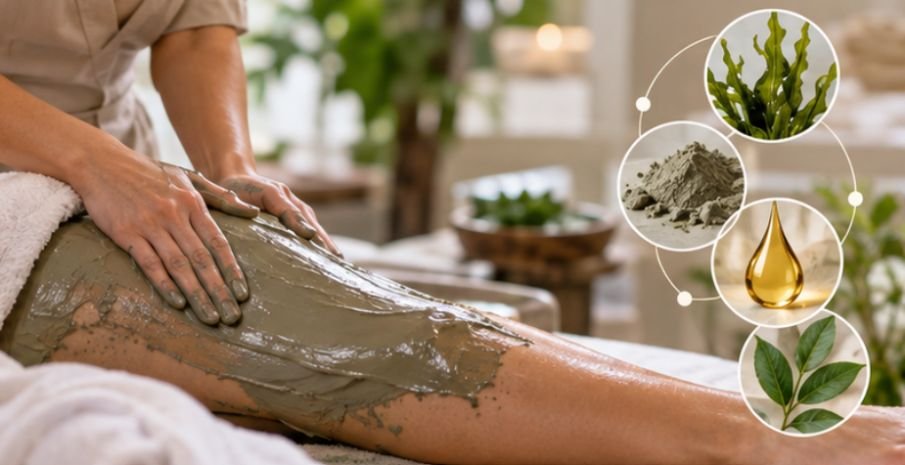
Next comes the ingredient that defines the treatment. A therapist may spread mud, mineral clay, seaweed, algae, botanical creams, oils, honey-based preparations, or deeply moisturizing products over the arms, legs, abdomen, back, and sometimes the chest. The formula matters more than the name of the treatment.
For dry skin, for example, moisturizing ingredients are generally more relevant than an aggressively “detoxifying” clay formula. Dermatologists note that ingredients such as glycerin, hyaluronic acid and ceramides can help support hydration, while fragrance may irritate sensitive skin. The American Academy of Dermatology’s moisturizer guidance offers useful context when evaluating spa products.
4. Your Body Is Wrapped
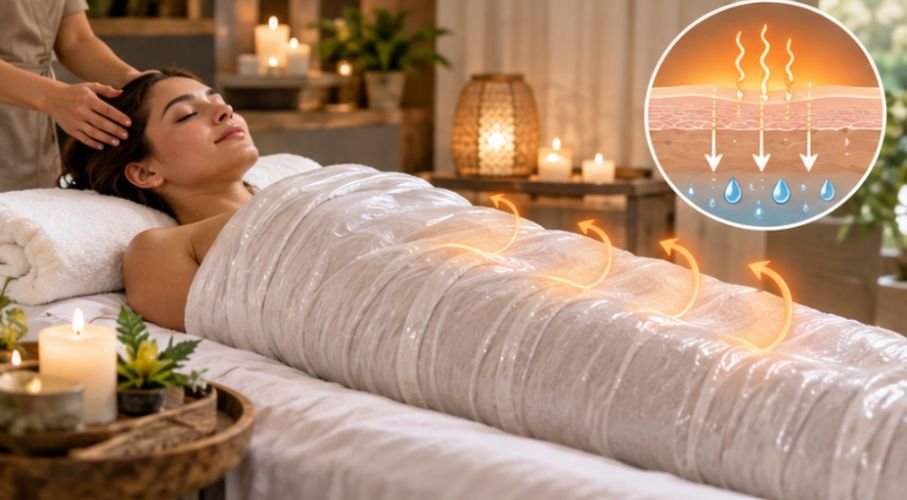
This is the stage most people picture. The therapist may wrap you in plastic film, cotton sheets, warm towels, or a reflective thermal blanket. The covering reduces evaporation and keeps the treatment in close contact with the skin. Warmth may also increase sweating, depending on the treatment.
You will usually remain wrapped for roughly 20 to 45 minutes. Some spas leave you to rest quietly, while others include a scalp, hand, or foot massage.
If you become lightheaded, nauseated, extremely hot, claustrophobic, or uncomfortable, tell the therapist immediately rather than trying to “push through” the treatment.
5. You Rinse and Moisturize
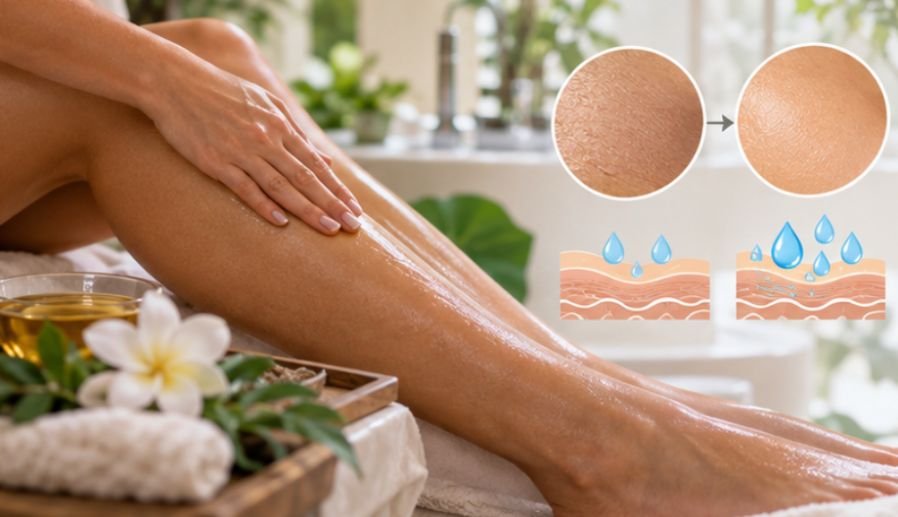
Mud, seaweed, and clay treatments usually require a shower afterward. Hydrating wraps may occasionally be removed with warm towels instead.
A moisturizer or body oil is commonly applied at the end. This step is particularly worthwhile because dermatologists recommend applying moisturizer soon after bathing while the skin still retains some water. AAD guidance for dry skin supports this approach.
The Main Types of Body Wraps
The spa menu may use elaborate names, but most treatments fall into a handful of categories.
| Type of wrap | Common ingredients | Main reason people choose it |
| Hydrating wrap | Creams, oils, glycerin-rich formulas | Dry, rough or tight-feeling skin |
| Mud or clay wrap | Mineral mud, kaolin or similar clays | Oil absorption and smoother skin feel |
| Seaweed or algae wrap | Marine extracts and mineral-rich formulas | Conditioning and spa relaxation |
| Herbal or botanical wrap | Plant extracts, oils, aromatic ingredients | Sensory relaxation and skin conditioning |
| Thermal wrap | Mask plus stronger warming or insulation | Warmth, relaxation and temporary sweating |
If your primary concern is muscle tightness rather than skin texture, a wrap may not be the best use of your spa appointment. A targeted treatment such as a spa massage for neck tension may address the problem more directly.
What Benefits Can You Realistically Expect?
The clearest benefit is cosmetic: smoother, softer, temporarily better-hydrated skin.
Occlusive treatments reduce water loss while creams and emollients sit against the skin. Exfoliation can also temporarily improve surface texture by removing loose dead cells.
The relaxation component has value as well. Spending half an hour warm, still, and disconnected from your phone may be one of the most noticeable parts of the experience.
Body treatments are sometimes combined with massage. The National Center for Complementary and Integrative Health notes that massage is generally considered low risk when appropriately performed, although rare serious adverse effects have been reported. You can review its massage therapy safety information.
Do Body Wraps Detox You or Make You Lose Weight?
This is where spa marketing often runs ahead of physiology.
Your liver, kidneys, lungs, digestive system, and other organs continually process and eliminate metabolic waste. A topical mud or seaweed treatment has not been established as a substitute for these biological systems.
A heated wrap can make you sweat, and sweating can temporarily reduce scale weight because you have lost water. It does not mean meaningful body fat has disappeared.
For comparison, Harvard Medical School notes that intense sauna heat can produce substantial sweating and recommends replacing fluids afterward. Its sauna safety guidance also advises people with certain cardiovascular conditions to speak with a physician before significant heat exposure.
Therefore, a smaller measurement immediately after a wrap should be viewed as temporary fluid or compression-related change, not permanent fat loss.
If your interest is swelling or fluid movement rather than cosmetic inch loss, learning about lymphatic drainage massage at a spa may help you understand how that service differs from a body wrap.
Who Should Be More Cautious?
A body wrap may not be appropriate over sunburn, open wounds, active rashes, infected skin, or recently irritated areas.
People with severe fragrance allergies, active eczema, significant heat sensitivity, cardiovascular concerns, or other medical conditions should tell the spa beforehand and seek medical guidance when necessary.
Pregnant clients should also inform both their healthcare professional and spa therapist, especially before treatments involving sustained heat, strong essential oils, or unfamiliar active ingredients.
The goal is comfort and skin care—not enduring discomfort because a treatment is marketed as therapeutic.
Frequently Asked Questions
1. How long does a body wrap spa treatment take?
Most appointments take roughly 45 to 90 minutes when preparation, exfoliation, wrapping, resting, rinsing, and moisturizing are included. The wrapped resting period itself commonly lasts about 20 to 45 minutes.
2. Do you wear clothes during a body wrap?
Usually not regular clothing. Spas commonly provide disposable underwear, robes, towels, or draping while preserving privacy throughout the service.
3. Does a body wrap reduce belly fat?
No body wrap has been shown to selectively remove belly fat. Any immediate drop in measurements or weight is more likely related to sweating, fluid changes, or temporary compression.
4. Is a body wrap good for dry skin?
A moisturizing wrap can temporarily make dry skin feel softer and smoother. Choose gentle, fragrance-free formulas if your skin is sensitive and avoid aggressive exfoliation when skin is already irritated.
The Takeaway
Understanding what is a body wrap spa treatment makes the service much easier to judge realistically. Underneath the luxurious mud, warm blankets, and spa terminology, it is essentially an extended body-mask treatment combined with occlusion, relaxation, and often exfoliation.
Its strongest reasons for booking are softer-feeling skin, moisturization, relaxation, and the sensory experience—not dramatic detoxification or permanent weight loss. Ask what ingredients are being used, match the wrap to your skin rather than its marketing name, and speak up if heat or irritation becomes uncomfortable. A good body wrap should leave you relaxed and comfortable, not wondering whether discomfort means it is “working.”