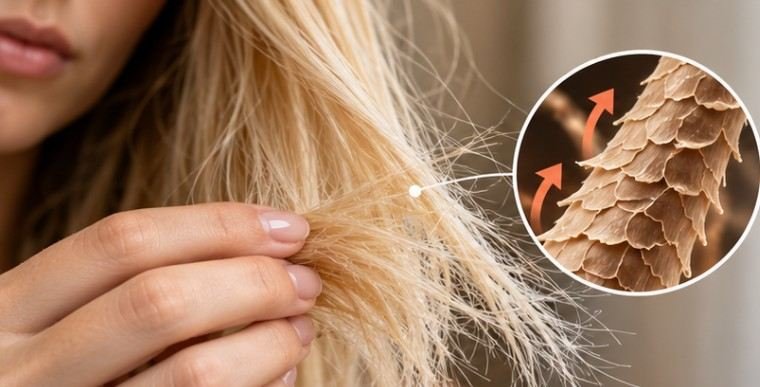
Bleached hair can look fine on wash day and then suddenly start snapping around your shoulders, crown, or ends. That is because bleach does more than remove pigment: repeated oxidation can weaken the cuticle and damage proteins deeper inside the hair fiber.
Learning how to stop bleach damage hair breakage therefore requires more than adding a moisturizing mask. You need to reduce new structural damage, improve lubrication and flexibility, and stop treating weakened strands like healthy hair.
The reassuring part is that breakage can often be reduced dramatically. The damaged section cannot biologically heal itself, but careful treatment can protect it while stronger new hair grows in.
Why Bleached Hair Suddenly Starts Breaking
Hair is mostly keratin, a protein structure strengthened partly by chemical bonds. During bleaching, alkaline ingredients help open and swell the hair while oxidizing agents such as hydrogen peroxide break down melanin.
Research published through the National Institutes of Health found that increasingly severe peroxide bleaching was associated with greater protein oxidation, protein loss and damage extending beyond the outer cuticle into the cortex.
A newer microscopy study likewise found that excessively bleached hair developed torn cuticle scales, exposed cortical areas and structural changes inside the fiber.
This explains why damaged blond hair may become unusually porous, rough, stretchy when wet or brittle once dry. The problem is no longer simply a lack of surface moisture.
First, Stop Adding Damage
The fastest way to slow breakage is surprisingly unglamorous: temporarily stop the processes causing it. That means postponing another bleach session, high-lift color, relaxer, perm or aggressive color correction. The American Academy of Dermatology notes that lightening hair by more than three shades generally requires stronger peroxide exposure and causes more damage.
Heat deserves the same caution. Bleached hair already has less structural margin for error, so daily flat-ironing or high-temperature blow-drying can compound weakness.
Johns Hopkins dermatology guidance recommends minimizing heat styling and stopping chemical treatments when breakage or shedding continues.
Use Repair Treatments With Realistic Expectations
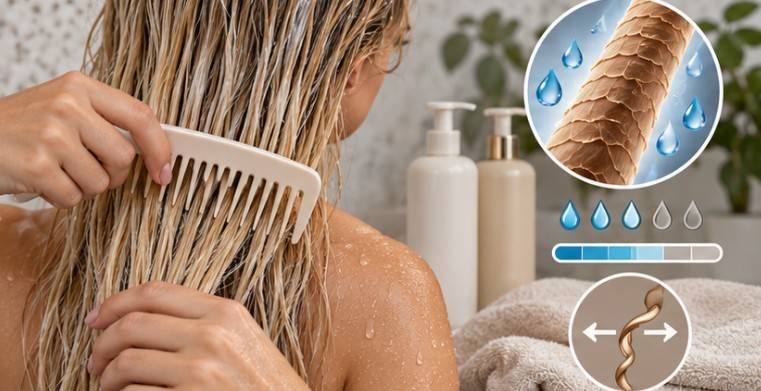
Bond-building products have become one of the biggest categories in damaged-hair care. Products such as K18 Leave-In Molecular Repair Hair Mask and Redken Acidic Bonding Concentrate are marketed specifically toward chemically compromised hair.
They can be useful parts of a routine, particularly when they improve manageability, reduce friction and help strands feel stronger. But no cosmetic treatment literally converts a heavily oxidized strand back into untouched virgin hair.
That distinction matters.
Hair outside the follicle is nonliving material. A treatment can temporarily reinforce, condition, coat or improve its mechanical behavior, but badly split or fractured sections eventually have to be trimmed.
Use whichever treatment you choose according to its directions rather than stacking several protein, bonding and strengthening products at once. Hair that becomes unusually stiff, rough or tangled may benefit from simplifying the routine and emphasizing conditioning.
Build a Low-Breakage Washing Routine
There is no universal rule that everyone with bleached hair must shampoo exactly twice or three times weekly. Washing frequency should reflect your scalp oiliness, texture, exercise habits and styling routine.
The American Academy of Dermatology recommends washing according to how oily or dirty the scalp becomes and applying shampoo mainly to the scalp rather than aggressively scrubbing the lengths. Conditioner should follow each wash.
Cleveland Clinic similarly notes that chemically processed hair can be more fragile and that conditioner helps reduce dryness and breakage.
For damaged lengths, concentrate conditioner from the midshaft downward. Once or twice weekly, depending on how dry the hair feels, replace your regular conditioner with a richer mask.
The Five-Minute Breakage Check
After washing, examine a few shed or broken strands before reaching for another treatment.
| What you notice | What it may suggest | What to change |
| Short pieces without roots | Hair-shaft breakage | Reduce heat and friction |
| Rough, tangling ends | Cuticle damage | Increase conditioning and trim splits |
| Hair stretches excessively when wet | Severe chemical compromise | Pause bleach and handle minimally |
| Full-length hairs with bulbs | Shedding rather than simple breakage | Consider medical causes if excessive |
| Burning, crusting or scalp sores | Possible chemical injury | Seek professional medical care |
This quick distinction is important because breakage and hair loss are not the same problem.
Treat Wet Hair Like Fragile Fabric
Water makes hair swell, and damaged strands can be particularly vulnerable during detangling. Do not scrub your hair with a bath towel. Gently squeeze out water, then use a microfiber towel or soft cotton T-shirt.
Detangle slowly from the ends upward. A wide-tooth comb or fingers generally creates less concentrated force than yanking a brush through knots.
For straight hair, allowing it to dry slightly before combing can reduce stress. Tightly curled or textured hair may be easier to detangle while damp and coated with conditioner. The American Academy of Dermatology specifically advises adapting detangling technique to hair texture rather than following one rule for everyone.
Eliminate Everyday Friction
Someone trying to understand how to stop bleach damage hair breakage often focuses entirely on products while continuing to create mechanical damage every day.
Tight ponytails, slick buns, extensions and repeated pulling can place extra stress on compromised strands. Swap thin elastics for soft scrunchies, loose braids or claw clips where appropriate.
At night, loosely securing long hair can prevent tangling. A smooth pillowcase or bonnet may also reduce rubbing, although the most important factor is simply avoiding sustained tension and aggressive detangling the next morning.
Long salon appointments can also leave more than your hair feeling stressed. If neck and shoulder discomfort is part of your post-appointment routine, our guide to spa massage for neck tension covers that separate issue; massage itself, however, does not repair chemically damaged hair shafts.
Be More Careful Around Sun, Pools and Summer Heat
Bleached hair has already lost some of the pigment that normally provides protection against ultraviolet exposure.
The American Academy of Dermatology explains that lighter and chemically lightened hair can be particularly vulnerable to UV-related hair dryness and brittleness. Wearing a hat and using suitable leave-in protection can reduce exposure.
Chlorinated pools add another stressor. Cleveland Clinic recommends wetting hair with clean water before swimming, applying leave-in conditioner or oil, using a swim cap when practical and rinsing promptly afterward.
That is especially useful for heavily highlighted or platinum hair during US summer pool season.
When Should You Cut Damaged Hair?
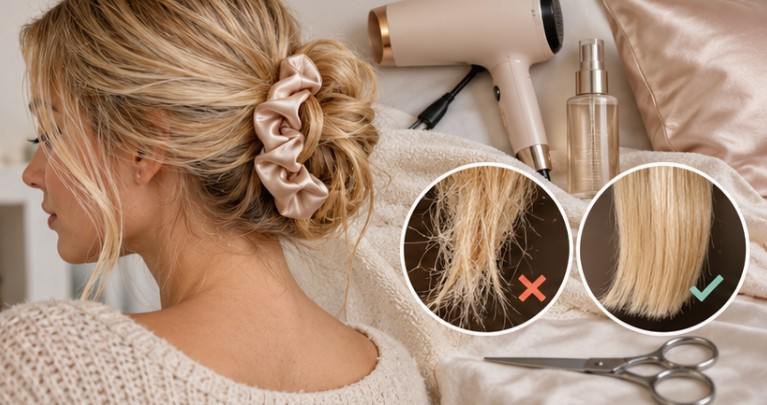
You do not necessarily need a dramatic haircut. Small trims or “dusting” can remove ends that repeatedly split and snag while preserving most of your length. What matters is removing sections that have deteriorated past the point where conditioning keeps them manageable.
If the last several inches feel transparent, continually form white dots, split repeatedly or snap during gentle handling, preserving every centimeter can actually make day-to-day breakage harder to control.
Know When Breakage May Be Something Else
Not every strand in the shower was broken by bleach. Hair can also shed because of nutritional deficiencies, thyroid problems, hormonal changes, illness, medications and several forms of alopecia. Harvard Health notes that strong chemicals, heat and pulling can contribute to traumatic hair loss, but they are only some of many possible causes.
See a board-certified dermatologist if you develop bald patches, scalp inflammation, significant thinning, persistent excessive shedding or breakage that continues despite several weeks of gentler care.
FAQs
1. Can bleach-damaged hair fully repair itself?
No. Existing hair fibers are nonliving. Treatments can improve strength, lubrication and appearance, but severely damaged sections cannot biologically regenerate. New growth is the truly undamaged hair.
2. Should I use protein treatments on bleached hair?
They may help some damaged hair, but more is not automatically better. Alternate strengthening products with moisturizing conditioners and reduce use if your hair becomes stiff or unusually rough.
3. How long should I stop bleaching damaged hair?
There is no universal timeline. Avoid further bleaching until breakage has clearly stabilized and a competent colorist has assessed the condition of your hair.
4. Does cutting hair stop bleach breakage?
Trimming removes split or severely weakened sections and can prevent damaged ends from continuing to snag. It does not reverse chemical damage higher on the strand.
Give the Hair Fewer Chances to Break
The most effective recovery routine is less about finding one miracle bottle and more about removing repeated stress.
Pause aggressive chemical services, keep heat low, condition consistently, detangle patiently and trim sections that cannot be preserved. Bond-building and strengthening products can support that routine, but they work best when you stop repeatedly injuring the same fiber.
That is the practical answer to how to stop bleach damage hair breakage: protect the hair you still have while giving healthier new growth time to replace the most compromised lengths. The less damage you create tomorrow, the more length you can realistically keep.