When your skin loses its quick rebound, you are dealing with two separate biological breakdowns. For years, I treated sagging and crepey texture as a single issue, applying thick lipid creams and expecting lifted cheeks. It never worked. Comparing ceramides vs peptides for mature skin elasticity requires recognizing that bounce is split across two distinct anatomical layers.
Ceramides fortify the protective roof, while peptides re-anchor the internal frame. Choosing the wrong one leaves your skin either soft yet hollow, or firm yet parched and flaky.
Two Different Biological Engines of Skin Snap-Back
Skin elasticity relies on two distinct mechanisms: dermal tensile recoil and epidermal turgor. Tensile recoil lets skin snap back when pinched; turgor keeps surface tissue plump and smooth under hydrostatic pressure.
+———————————————————–+
| EPIDERMIS: Stratum Corneum (Hydration & Barrier) |
| -> CERAMIDES prevent Transepidermal Water Loss (TEWL) |
+———————————————————–+
|
Dermal-Epidermal Junction
|
+———————————————————–+
| DERMIS: Extracellular Matrix (Structural Architecture) |
| -> PEPTIDES signal Fibroblasts to generate Collagen |
+———————————————————–+
Ceramides and Epidermal Bilayer Turgor
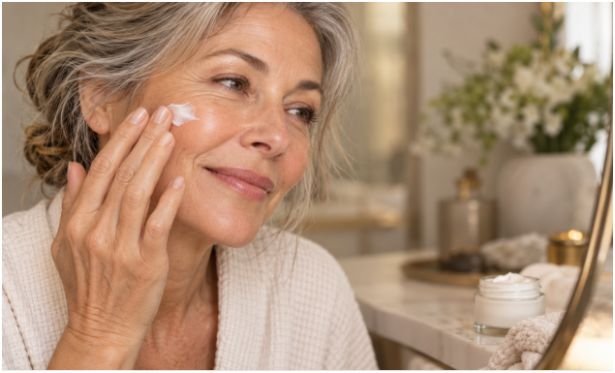
Ceramides make up roughly 50% of the intercellular lipids in the stratum corneum. As peer-reviewed research indexed on the National Center for Biotechnology Information (NCBI) shows, these waxy sphingolipids form the lamellar sheets that bind corneocytes together. Without them, transepidermal water loss (TEWL) accelerates rapidly.
When your skin dehydrates at the cellular level, corneocytes shrink like dried sponges. The surface deflates, deepening micro-wrinkles and causing false sagging. Ceramides restore surface turgor by locking water into the upper layers. They do not generate collagen fibers, but they keep surface tissue supple and elastic.
Peptides and Deep Dermal Tensile Strength
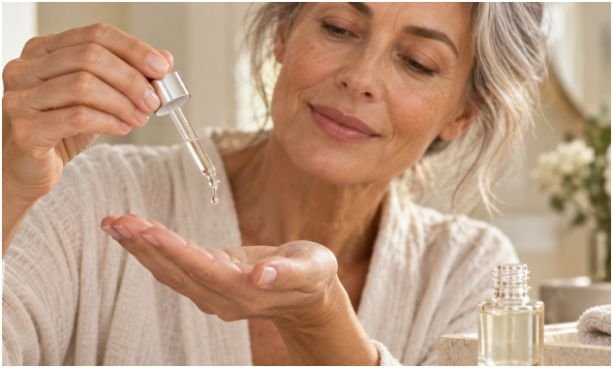
Peptides are short chains of amino acids that serve as biological messengers. As estrogen declines and intrinsic aging advances, fibroblast activity slows down, depleting structural collagen I, III, and elastin.
Clinical investigations published in the Journal of Investigative Dermatology demonstrate that specific synthetic signal peptides cross the stratum corneum to stimulate pro-collagen production. Unlike ceramides, peptides do not replenish barrier lipids. Instead, they prompt skin cells to rebuild the extracellular scaffold, restoring genuine dermal tensile strength and bounce.
The Biological Showdown: Where Each Molecule Delivers Real Lift
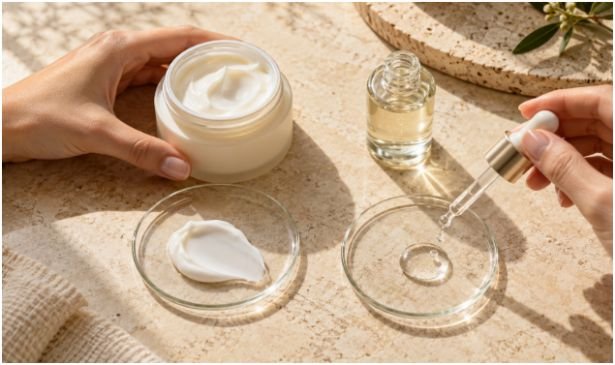
Understanding where each molecule works best helps clarify which active your skin needs most right now.
| Evaluated Parameter | Ceramides (Intercellular Lipids) | Peptides (Amino Acid Chains) |
| Primary Target Layer | Stratum corneum (Epidermis) | Dermal-Epidermal Junction & Dermis |
| Primary Mechanism | Seals moisture and repairs lipid bilayer | Signals fibroblasts to build collagen |
| Elasticity Type Restored | Hydrostatic volume and surface turgor | Dermal snap-back, tensile resistance |
| Visible Timeline | 24 to 48 hours for barrier comfort | 8 to 12 weeks for structural lifting |
| Best Clinical Indication | Windburn, irritation, rough flaking | Thinning dermal matrix, jawline laxity |
Structural Remodeling at the Dermal-Epidermal Junction
The dermal-epidermal junction (DEJ) is the basement membrane connecting the dermis to the epidermis. In youthful skin, this boundary forms tight, undulating folds that provide mechanical support. As we age, the DEJ flattens out, causing the epidermis to slide and sag over the underlying dermis.
Peptides—especially palmitoyl tetrapeptide-7, copper tripeptides (GHK-Cu), and oligopeptides—specifically target collagen IV and VII along this junction. Ceramides cannot reconstruct these interlocking anchor fibrils. If your primary concern is laxity along the jawline and nasolabial folds, peptides must anchor your routine.
Transepidermal Water Loss and Cellular Collapse
You cannot stimulate collagen effectively in chronically inflamed skin. The American Academy of Dermatology (AAD) notes that barrier degradation creates sustained micro-inflammation. This process upregulates matrix metalloproteinases—enzymes that chew through newly formed collagen.
Ceramides prevent this cycle. By restoring lipid bilayers, ceramides halt barrier damage and quiet inflammation. This shields newly formed structural proteins, ensuring the collagen your peptides trigger survives.
Drugstore Staples vs Medical-Grade Formulations
Not all formulations deliver these actives effectively. Delivery vehicle and molecular stability dictate actual performance.
Over-the-Counter Convenience: CeraVe, Fig.1, and The Ordinary
Over-the-counter options offer accessible entry points for daily care:
- CeraVe Skin Renewing Night Cream: Combines three essential ceramides (1, 3, 6-II) with biomimetic peptides and hyaluronic acid. It is an affordable evening cream that hydrates well, though its peptide concentration remains modest.
- Fig.1 Ceramide Refillable Moisturizer: Utilizes skin-identical lipids alongside a targeted peptide complex. Its airtight, refillable pump protects active peptides from oxidation.
- The Ordinary Multi-Peptide + Copper Peptides 1%: A dedicated, water-based serum packed with direct signal peptides. It works exceptionally well layered beneath a standard ceramide cream to stimulate collagen.
Clinical Engineering: SkinCeuticals 2:4:2 and Revision Skincare D·E·J
Medical-grade cosmeceuticals deploy patented delivery technologies and exact lipid stoichiometry:
- SkinCeuticals Triple Lipid Restore 2:4:2: A clinical standard backed by peer-reviewed studies on SkinCeuticals Clinical Research. It provides a precise physiological ratio: 2% pure ceramides, 4% natural cholesterol, and 2% fatty acids. This 2:4:2 ratio integrates directly into aged stratum corneum membranes, accelerating barrier recovery by days.
- Revision Skincare D·E·J Face Cream: Specifically formulated for structural sagging. It pairs bio-compatible ceramides with a multi-peptide complex designed to restore the wavy architecture of the dermal-epidermal junction.
- SkinMedica TNS Ceramide Treatment Cream: Combines human fibroblast conditioned media (growth factors) with synthetic ceramide analogs to repair thinning, post-procedure skin.
The Layering Protocol: Structuring Your Regimen
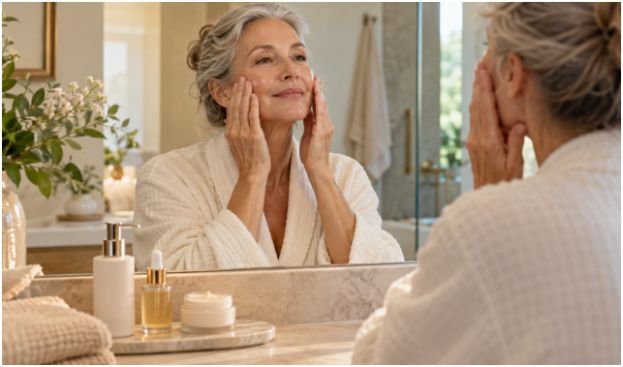
You do not need to choose between these two powerhouses. They perform best when layered in sequence.
Morning / Evening Routine Order:
[Cleanser]
└──> [Water-Based Peptide Serum] (Target: Deep Dermis)
└──> [Hydrating Hyaluronic Acid]
└──> [Lipid-Rich Ceramide Cream] (Target: Stratum Corneum)
- Cleanse gently: Wash with a non-foaming cream cleanser to avoid stripping lipids.
- Apply signal peptides first: Dispense a water-based peptide serum onto clean, slightly damp skin. Water-light peptides require unobstructed contact with the skin surface to penetrate deeply.
- Hydrate strategically: If you use humectants, use hyaluronic acid serum on damp skin right after your peptide serum to draw water into the upper epidermis.
- Lock in with ceramides: Apply a lipid-rich ceramide cream over your serums. The lipids form an occlusive blanket, trapping moisture and sealing the peptide messengers underneath.
If you balance long work hours with frequent travel, streamlining this into an efficient skincare routine for busy professionals around an all-in-one night cream saves time while maintaining complete cellular support.
Frequently Asked Questions
1. Can I mix copper peptides with standard ceramide creams?
Yes, ceramides act as non-reactive lipids that pair safely with copper peptides.
2. Which active fixes crepey skin texture faster?
Ceramides smooth dehydration-induced crepiness in days, while peptides take two to three months to build true skin thickness.
3. Are ceramides or peptides better for sensitive, thinning skin?
Ceramides soothe sensitivity immediately, but combining them with gentle signal peptides rebuilds long-term epidermal thickness best.
4. Should I apply my peptide serum before or after my ceramide cream?
Always apply your water-based peptide serum first so its amino acids penetrate before the thick ceramide cream seals the surface.
The Final Verdict: Stop Choosing, Start Sequencing
Pitting ceramides against peptides creates a false choice. Ceramides restore surface turgor and stop chronic dehydration from breaking down tissue; peptides supply the biochemical signal to rebuild underlying collagen and elastin.
If your skin feels fragile, rough, and parched, prioritize a physiological ceramide moisturizer immediately. Once your barrier calms down, layer a targeted signal peptide serum underneath every morning and night. Rebuilding true mature skin elasticity requires sealing the surface while feeding the frame.