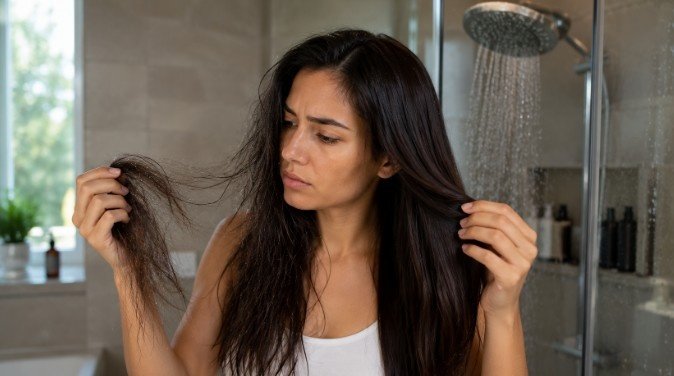
The telltale sign arrived on Tuesday morning: my everyday moisturizer burned like fire. My cheeks turned rough, hot, and blotchy after an overzealous week with a 0.5% tretinoin formula and glycolic acid toners. If your face feels tight, stings under tap water, and refuses to hold hydration, your lipid matrix is cracked open. You are experiencing acute transepidermal water loss (TEWL). When readers ask me how to repair damaged skin moisture barrier quickly, my answer is consistent: strip your regimen down to zero actives and restore physiological lipids within hours, not weeks.
A compromised stratum corneum leaves your deeper dermal layers exposed to environmental pathogens and rapid moisture evaporation. You cannot exfoliate away flaking caused by barrier damage. Trying to scrub or acid-wash that texture away only strips the cellular glue holding your face together. True, rapid repair requires an immediate tactical pause, physiological lipid replenishment, and biological occlusion.
The 72-Hour Rescue Arc
| Time Period | Action |
| Hours 0–24 | Stop all active ingredients. Use a water-only morning rinse. |
| Hours 24–48 | Restore lipids using the 3:1:1 ratio. |
| Hours 48–72 | Retain moisture through controlled nighttime occlusion. |
Triage Mode: The First 72 Hours of Moisture Barrier Recovery
When your skin barrier fails, your skin shifts from an intact defense shield into an open wound. Immediate triage prevents prolonged contact dermatitis and chronic inflammation.
Cut Every Single Active Immediately
Put away your retinoids, L-ascorbic acid, direct acids (AHA, BHA, PHA), and exfoliating tools. Even soothing botanical extracts like tea tree, peppermint, or essential oils trigger stinging right now. Store these products away from your bathroom counter so you are not tempted to experiment.
If you usually run a comprehensive weekly rotation, shelf it until your stratum corneum returns to balance. You can gradually adapt your schedule later using an intentional skin cycling routine schedule for sensitive skin. For now, pure basic repair takes precedence.
Stop Cleansing in the Morning
Surfactants dissolve your natural intercellular lipids. Even mild, sulfate-free cleansers degrade damaged skin proteins.
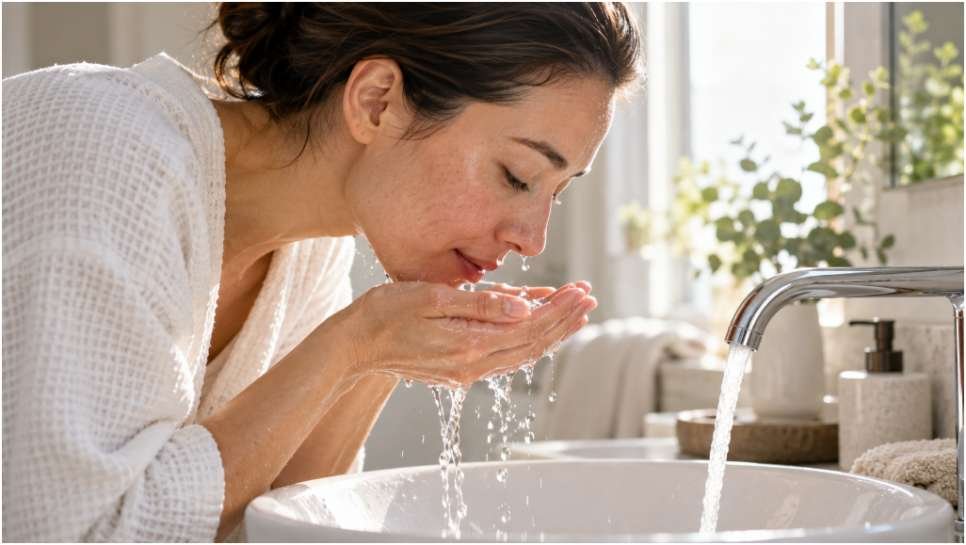
For the next five mornings, rinse your face using only tepid tap water. Do not use hot water, which dissolves surface sebum instantly. Pat your skin lightly with a clean, lint-free microfiber cloth, leaving it noticeably damp before your next step.
The Lipid Math: Why Standard Ceramide Creams Fail
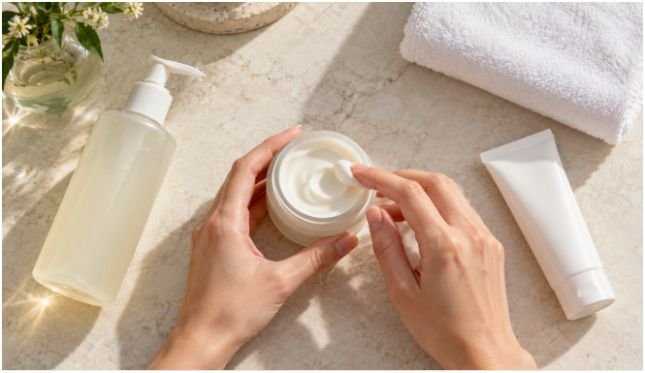
Many commercial moisturizers boast ceramides on their front labels, yet they do little to relieve raw skin. That is because isolated ceramides cannot rebuild your intercellular matrix on their own.
Natural Stratum Corneum Lipid Matrix
| Lipid Component | Percentage | Listed Parts |
| Ceramides | 50% | 3 |
| Cholesterol | 25% | 1 |
| Free fatty acids | 15% | 1 |
The listed percentages total 90% and do not mathematically correspond to a 3:1:1 ratio.
Look for the 3:1:1 Golden Ratio
Your stratum corneum lipids naturally exist in a strict ratio: roughly 50% ceramides, 25% cholesterol, and 10–15% free fatty acids. Research cataloged by the National Center for Biotechnology Information demonstrates that barrier recovery accelerates when topical treatments mimic this physiological 3:1:1 equimolar balance.
Creams that contain ceramides alone without cholesterol and fatty acids can actually delay natural barrier recovery. Examine your product’s ingredient list for:
- Ceramide NP, AP, or EOP
- Cholesterol
- Stearic acid, palmitic acid, or linoleic acid
When these three components sit together in an emulsion, they slip right into the gaps between your corneocytes like mortar between brick walls.
Skip High-Strength Niacinamide Until Healing Begins
Niacinamide stimulates endogenous ceramide synthesis in clinical trials. However, modern serums often formulate it at 10% or higher. On an intact barrier, that concentration controls sebum. On an inflamed, broken barrier, it triggers intense flushing, burning, and histaminic flares.
Avoid stand-alone niacinamide serums entirely during acute barrier crisis. If your base barrier cream contains a low, stabilizing dose (under 3%), that is acceptable. Anything higher should wait until raw sensitivity clears up completely.
A Clinically Tested 4-Step Healing Routine
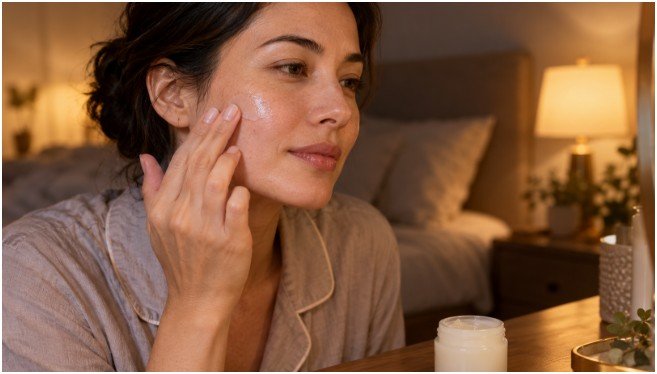
During my worst barrier collapse, I tested this tight four-step system. It eliminates irritants and cuts trans-epidermal water loss to near zero within 48 hours.
MINIMALIST HEALING PROTOCOL
===================================
AM:
- Splash with cool/tepid water
- Apply humectant + barrier cream to wet skin
- Mineral sunscreen (Zinc Oxide 15%+)
PM:
- Gentle non-foaming cream cleanser
- Barrier cream with 3:1:1 lipid ratio
- Micro-slug dry zones with pure petrolatum
Step 1: Low-Friction Cleansing (PM Only)
At night, remove dirt and mineral sunscreen with a non-foaming, fragrance-free cleansing lotion. Avoid cleansing oils packed with heavy emulsifiers or fragrant essential oils. Massage the cleanser using the pads of your fingers for no more than 30 seconds. Splash away with lukewarm water. Never scrub with washcloths, sponges, or cleansing brushes.
Step 2: Humectant Saturation on Wet Skin
Humectants like glycerin and sodium hyaluronate draw water into dry skin cells. However, applying humectants to bone-dry skin in a low-humidity room actually pulls moisture out of your deeper dermal layers.
Spray thermal spring water or leave tap water on your face. Apply a pure glycerin-based or panthenol (provitamin B5) serum over that damp surface. Panthenol speeds up epidermal cell turnover while soothing inflammation.
Step 3: Lipid Emulsion Layering
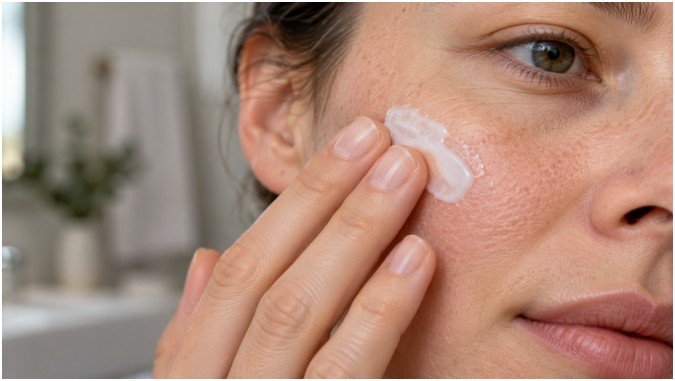
Before your humectant serum evaporates, apply a generous layer of your 3:1:1 physiological lipid cream. Press the product gently into the skin rather than rubbing it vigorously. Rubbing creates friction and generates heat, which triggers localized stinging across inflamed nerve endings.
Step 4: Strategic Nighttime Occlusion
The American Academy of Dermatology highlights petroleum jelly as one of the most effective tools for protecting compromised skin. Petroleum jelly forms a hydrophobic shield that slashes transepidermal water loss by over 98%.
Take a half-pea-sized amount of pure white petrolatum. Warm it between your clean fingertips and gently press it over your flakiest zones (typically the cheeks, jawline, and around the nose).
Crucial rule: Only slug over bland, non-active moisturizers. Never apply petrolatum over lingering exfoliating acids or retinoids, as the airtight seal drives those actives deeper and causes chemical burns.
| Step | AM Routine | PM Routine | Target Mechanism |
| Cleanse | Tepid water rinse only | Non-foaming lotion cleanser | Preserves natural sebum & removes debris |
| Hydrate | Panthenol mist on damp face | Glycerin serum on damp face | Saturates dehydrated surface cells |
| Rebuild | 3:1:1 lipid barrier cream | 3:1:1 lipid barrier cream | Restores lipid envelope integrity |
| Shield | 100% Zinc oxide SPF 30–50 | White petrolatum micro-layer | Halts UV damage & blocks moisture loss |
Daytime Defense: The Sunscreen Rule
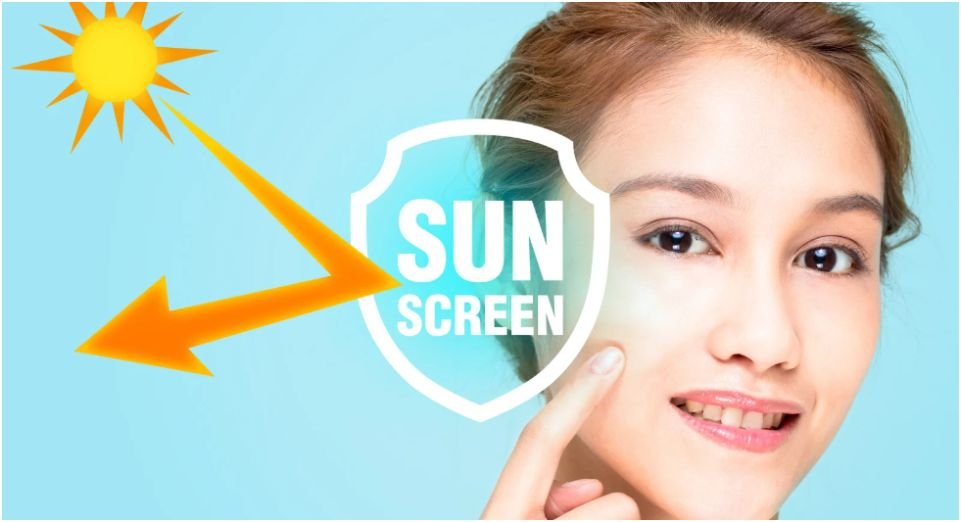
Do not expose healing skin to raw sunlight. Damaged stratum corneum tissue lets UV rays penetrate deep into vulnerable epidermal layers, creating long-term post-inflammatory erythema (PIE).
Use a pure physical sunscreen formulated with zinc oxide. Chemical sunscreen filters (such as avobenzone, octisalate, and homosalate) convert UV rays into heat inside your skin. That thermal reaction frequently causes stinging on damaged tissue.
Zinc oxide sits on top of your face, acts as a physical shield, and carries natural anti-inflammatory qualities. A clean mineral sunscreen provides a calm base if you need to build a light morning skincare routine for glowing skin under makeup down the road once sensitivity recedes.
Reintroducing Actives Without Relapse
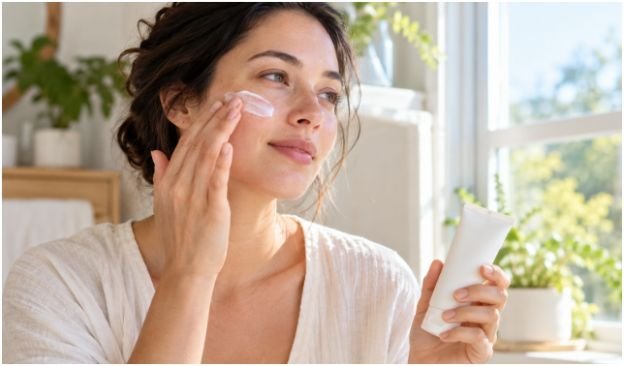
Give your skin a minimum of 14 days of strict barrier rest before touching an active serum again. That window matches your stratum corneum’s natural turnover cycle.
BARRIER HEALTH TEST:
- Does cool tap water sting your cheeks?
- Does your basic moisturizer cause redness or heat?
- Does your skin feel tight after patting dry?
If you answered “YES” to any question, do not touch an active yet.
When your face feels supple, soft, and completely calm, bring back actives one by one:
- Reintroduce your gentlest active first (like a low-dose L-ascorbic acid derivative or an azelaic acid cream).
- Use it just twice a week at night.
- Apply your barrier moisturizer before your active (the buffer method) to slow down penetration.
- Wait 72 hours between applications to monitor delayed sensitivities.
Frequently Asked Questions
1. Can drinking extra water repair a damaged skin barrier?
Drinking water supports general physiological hydration, but it cannot fix broken surface lipid matrices without topical lipid replenishment.
2. How do I know if my skin barrier is broken or if I am purging?
A broken barrier burns, flakes across non-breakout areas, and turns red, whereas purging produces small, standard breakouts in your usual trouble zones without widespread stinging.
3. Is hyaluronic acid safe to use on a compromised skin barrier?
Hyaluronic acid is safe only when applied to dripping-wet skin and sealed immediately with an occlusive moisturizer.
4. Can slugging cause breakouts on damaged skin?
Slugging can clog pores if you are naturally acne-prone or if you trap lingering exfoliants, dirt, or pore-clogging oils underneath the petrolatum layer.
Ditch the 10-Step Shelves: Less Really Is More
Step away from your serums, peels, and vibrating cleansing brushes. Your skin is a living biological organ that heals itself remarkably well when you stop stripping its natural defenses.
Rebuilding a cracked barrier does not demand expensive miracle balms; it simply requires giving your face a clinical break. Keep your routine dull, gentle, and heavily shielded for the next two weeks. Your skin will reward your patience with smooth, calm resilience.