
I know how easily lunch can disappear between morning emails and an afternoon deadline. You plan to eat after one more task, then suddenly it is almost quitting time. Learning how to stop skipping meals during busy workdays starts with making food easier to access and giving meals a realistic place in your schedule.
You do not need elaborate meal prep or a perfect eating routine. A protected break, a few convenient foods, and a backup plan can make eating regularly more manageable, whether you commute, work remotely, or cover changing shifts.
Find Out Why You Keep Missing Meals
Before changing your routine, identify what interrupts it. Forgetting lunch during focused work requires a different solution from having no food packed or struggling to leave a customer-facing role.
For several workdays, briefly note which meals you miss and what happened beforehand. Perhaps breakfast disappears during school drop-off, or a recurring noon meeting pushes lunch aside.
Choose the most common obstacle first. Solving one repeated problem is more practical than trying to reorganize every meal overnight.
Protect a Meal Break Before Your Calendar Fills

Treat lunch as something to schedule rather than something that happens when work finishes. Block a realistic window on your calendar and use a reminder that gives you time to wrap up.
Choose a fallback window, too. If a meeting runs through your planned break, knowing when you will eat next prevents an ordinary delay from becoming an entirely missed meal.
Ask for Coverage When Necessary
For retail employees, teachers, and healthcare workers, calendar reminders cannot create staffing coverage. Discuss available meal breaks with your supervisor and coordinate with coworkers when possible.
A simple request such as, “Can we arrange coverage so I can take my lunch break?” makes the practical need clear.
Make Breakfast Easy Enough for Rushed Mornings
Breakfast does not need cooking or a complicated recipe. Overnight oats, whole-grain toast with peanut butter, or Greek yogurt with fruit can reduce morning decisions.
If you cannot comfortably eat immediately after waking, pack something for your first available break. The goal is a workable first meal rather than forcing yourself to follow someone else’s clock.
Prepare Before the Morning Rush
Put your breakfast container beside your packed lunch in the refrigerator. Keep utensils and napkins in your work bag. These small preparations reduce the number of things you must remember while getting out the door.
Build Lunch Around Convenient Ingredients
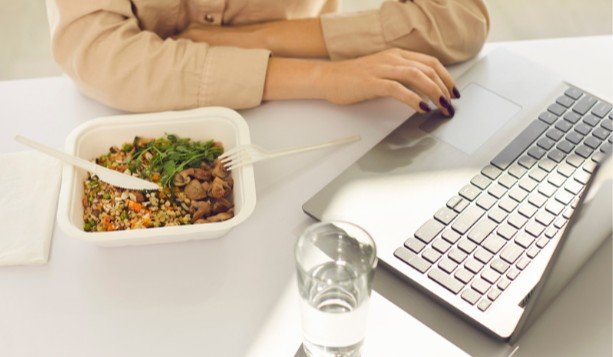
A reliable lunch can be assembled instead of cooked from scratch. Combine a protein food, a carbohydrate source, and fruit or vegetables, adding a source of fat when appropriate.
For example, pair canned chickpeas with microwaveable rice and frozen vegetables. Another option is a turkey sandwich with an apple and baby carrots. Keeping dinner preparation simple can free up time to create a relaxing evening routine for better sleep.
When considering how to stop skipping meals during busy workdays, choose meals you can realistically repeat. Familiar food that is ready to eat is often more useful than an ambitious recipe you never prepare.
Cook Once and Pack the Extra Portion
When making dinner, prepare an additional serving and pack it before clearing the kitchen. Leftover chili, pasta with beans, or chicken with rice can become tomorrow’s lunch.
Convenient grocery options also count. Frozen meals, bagged salads, canned beans, and precut produce can reduce preparation work.
Keep Backup Food Where You Work
Even good plans occasionally fail. A forgotten lunch or unexpected shift extension is easier to handle when food is already available.
Stock a small supply of whole-grain crackers, nut or seed butter, nuts, roasted chickpeas, and shelf-stable fruit cups. Combine foods when possible rather than expecting one small snack to replace a substantial meal.
Plan for Limited Kitchen Access
Without a refrigerator or microwave, choose stable foods labeled for room-temperature storage and follow package instructions after opening.
For perishable lunches, use workplace refrigeration or an insulated bag with cold sources. Do not leave yogurt, meat, or other refrigerated foods sitting at your desk all morning.
Review your backup supply regularly so empty packages and expired items do not undermine the plan.
Pair Reminders With Food You Can Actually Eat

An alarm works best when the next step is easy. Set a reminder that names the action, such as “Take lunch from the fridge and start your break.”
If you regularly dismiss alerts, connect eating with an existing event: finishing the morning team call, arriving at the office, or beginning your scheduled break.
Avoid treating coffee or water as replacements for food. Keep drinks available, but make a separate plan for meals.
Adjust the Routine to Your Workday
Remote workers can keep lunch prepared before logging in and close their laptops during the break. Commuters may benefit from packing breakfast and lunch together the night before.
For changing shifts, organize eating opportunities around waking, starting work, and available breaks. Everyone does not need identical meal times.
If you already missed lunch, eat when you can and make a practical plan for your next meal. There is no need to respond with guilt or deliberately restrict food later.
Know When You Need More Support
Occasionally missing a meal is different from repeatedly struggling to eat enough. Persistent appetite loss, unintentional weight loss, or ongoing difficulty meeting your needs deserves professional attention.
A healthcare professional or registered dietitian can help identify contributing factors. If you take medication that requires food or affects blood sugar, ask your clinician how to handle delayed meals safely.
Frequently Asked Questions
1. What is the easiest way to learn how to stop skipping meals during busy workdays?
Start with your most frequently missed meal, schedule a realistic break, and prepare an easy option beforehand.
2. Can a snack help when lunch is delayed?
Yes. A substantial snack can bridge the gap, but plan another eating opportunity rather than routinely replacing lunch with a small bite.
3. Do I need to eat at exactly the same time daily?
No. Aim for a flexible routine that fits your work schedule, appetite, and individual health needs.
Give Your Next Meal a Place in the Day
I would start with one change: preparing tomorrow’s lunch and deciding when to eat it. Once that feels manageable, I would add a backup option for days when meetings run late or plans change.
I remind myself that eating regularly does not require homemade food at every meal. Leftovers, a simple sandwich, or a convenient grocery option can all make a busy day easier to manage.