
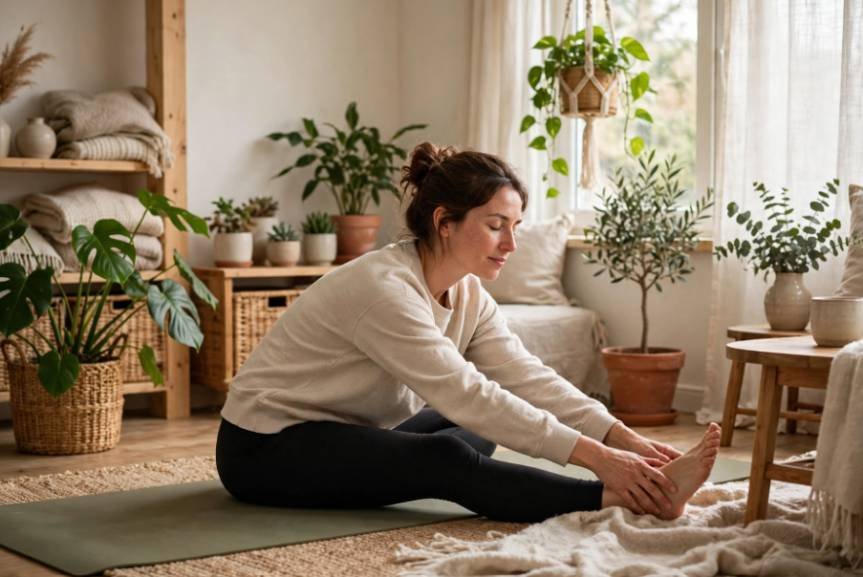
Starting a mindfulness routine doesn’t require expensive equipment, special training, or hours of meditation. Just two to five minutes of focused attention can help you begin developing greater awareness of your thoughts and surroundings.
When I first explored mindfulness, I discovered that simple activities like breathing, walking, and drinking coffee could become meaningful opportunities to slow down.
These easy mindfulness exercises for beginners at home offer practical ways to manage everyday stress, strengthen attention, and reconnect with the present moment. Whether you’re working remotely, managing household responsibilities, or looking for quiet time, you can practice these techniques without changing your entire schedule.
What Is Mindfulness, and Why Should Beginners Practice It?
Mindfulness involves paying attention to your current experiences without immediately judging or reacting to them.
Instead of worrying about upcoming responsibilities, I focus on what I can notice, feel, or hear in the present moment.
Research suggests that regular mindfulness practice may help reduce perceived stress, improve emotional awareness, and support psychological well-being.
The goal isn’t to eliminate thoughts or achieve perfect relaxation. It’s to recognize distractions and gently bring attention back to the present.
What Are the Best Mindfulness Breathing Exercises for Beginners?
Breathing exercises provide a convenient starting point because breathing creates a natural focus for attention.
1. Practice Diaphragmatic or Belly Breathing
Belly breathing encourages slower, more comfortable breathing while increasing awareness of physical sensations.
I sit comfortably or lie on my bed, placing one hand on my stomach. Then, I inhale gently through my nose and notice my belly rising.
As I exhale, I allow my stomach to relax naturally.
Repeating this process for two to five minutes helps me focus on breathing rather than distracting thoughts.
2. Try Box Breathing for Better Focus

Box breathing uses a structured four-part rhythm that can help organize attention.
I inhale for four comfortable counts, hold my breath for four, exhale for four, and pause for another four counts.
I repeat the cycle four or five times without forcing my breathing.
Beginners can shorten the counts or skip the pauses if breath-holding feels uncomfortable. Anyone experiencing dizziness should return to normal breathing.
3. Reset Your Attention With Three Mindful Breaths
When my schedule feels overwhelming, I pause and take three gentle, intentional breaths.
I notice the sensation of air entering my nostrils and leaving my body.
Whenever my attention wanders, I return to the next breath.
This brief practice works well between video meetings, household tasks, or other daily responsibilities.
How Can Body Awareness and Sensory Grounding Improve Mindfulness?
Body awareness and sensory grounding exercises help shift attention toward physical sensations and the surrounding environment.
4. Complete a Quick Body Scan Meditation
Body scan meditation for beginners involves observing physical sensations without attempting to change them.
I sit or lie comfortably and slowly move my attention from my head toward my toes.
I notice areas of warmth, tension, tingling, or relaxation.
If my shoulders feel tight, I simply acknowledge that sensation.
This three-to-five-minute exercise helps me become more aware of physical tension throughout the day.
5. Practice the 5-4-3-2-1 Grounding Technique
The 5 senses mindfulness exercise helps redirect attention toward immediate surroundings.
I identify five things I can see, four things I can touch or physically feel, three sounds I can hear, two smells I notice, and one taste.
For example, I might notice sunlight through a window, the texture of my sweater, or the sound of a ceiling fan.
This exercise provides a structured way to reconnect with the present environment.
6. Release Tension With Progressive Muscle Relaxation
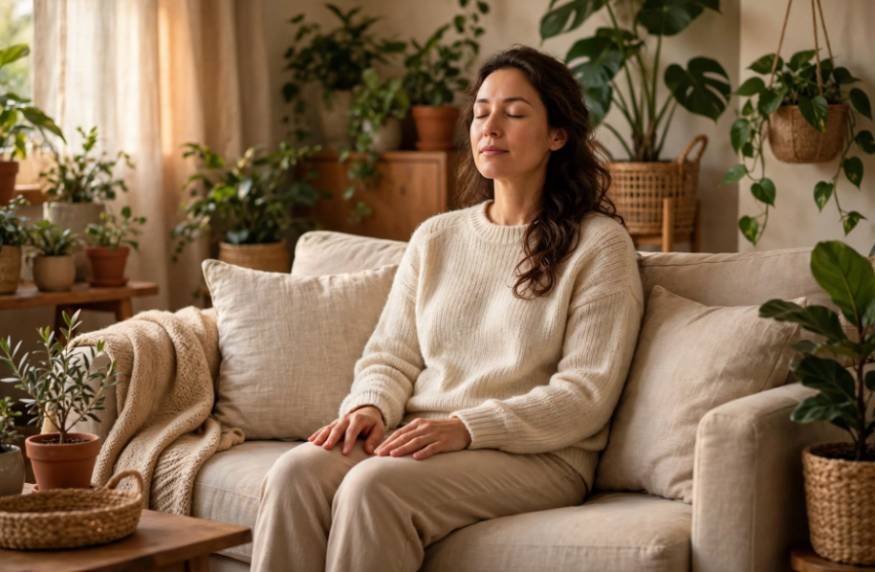
Progressive muscle relaxation combines gentle muscle tension with intentional release.
I begin by gently tightening my hands for approximately five seconds.
Then, I release the tension and notice the difference for 15 to 20 seconds.
I repeat the process with comfortable muscle groups, such as my shoulders or legs.
I avoid tensing painful or injured areas. This technique helps me recognize the difference between tension and relaxation.
How Can You Practice Mindfulness During Everyday Activities?
Some of the simplest mindfulness exercises involve activities you’re already doing.
Mindfulness can also complement other ways of unwinding after a busy day; explore these relaxing activities to do after work for more ideas to make your evenings peaceful and enjoyable.
7. Practice Mindful Eating or Drinking
I turn an ordinary coffee break into a mindfulness activity by putting my phone away.
Before drinking, I notice the aroma, warmth, and appearance of my coffee.
Then, I take a slow sip and pay attention to its flavor.
The same approach works with breakfast, lunch, or an afternoon snack.
Mindful eating encourages me to notice textures and sensations rather than rushing through meals.
8. Try Mindful Walking Around Your Home
Mindful walking provides an alternative for people who dislike sitting still.
I walk slowly through my hallway, living room, or backyard.
Instead of thinking about my destination, I notice how my feet lift, move, and touch the ground.
I also pay attention to my posture and natural breathing.
Five minutes of mindful walking can turn an ordinary movement break into intentional practice.
9. Turn Household Chores Into Mindfulness Activities
Washing dishes, folding laundry, and cleaning countertops can become opportunities for present-moment awareness.
While washing dishes, I notice the water temperature, the movement of my hands, and the texture of the sponge.
When folding laundry, I focus on the fabric rather than mentally reviewing unfinished tasks.
This approach helps me practice mindfulness without adding another activity to my schedule.
10. Try Mindful Listening and Gentle Stretching
Mindful listening and stretching provide practical alternatives when traditional meditation feels difficult.
I sometimes spend two minutes listening to birds, distant traffic, or other surrounding sounds without judging them.
On other days, I practice gentle shoulder rolls and arm stretches while noticing how my muscles feel.
Both activities encourage attention to the present moment without requiring complete stillness.
How Do You Build a Daily Mindfulness Routine at Home?
When learning how to practice mindfulness at home, I recommend choosing a manageable activity and repeating it consistently.
During the first two days, practice mindful breathing for two minutes. On the third day, try a body scan. On the fourth, explore sensory grounding.
Use mindful walking on the fifth day and mindful eating on the sixth. On the seventh day, repeat whichever exercise feels most comfortable.
I also find it helpful to connect mindfulness with existing routines, such as brushing my teeth, making morning coffee, or preparing for bed.
Creating a calming evening routine can make it easier to carry these mindful habits into bedtime; explore these practical ideas for creating a relaxing evening routine for better sleep.
Reducing unnecessary screen time can also make it easier to protect these mindful moments; read this guide on how to start a digital detox at home for practical ways to build healthier technology habits.
For additional guidance, beginners can explore guided audio through Calm, Headspace, or free mindfulness resources. Apps are optional rather than necessary.
What Common Mindfulness Mistakes Should Beginners Avoid?
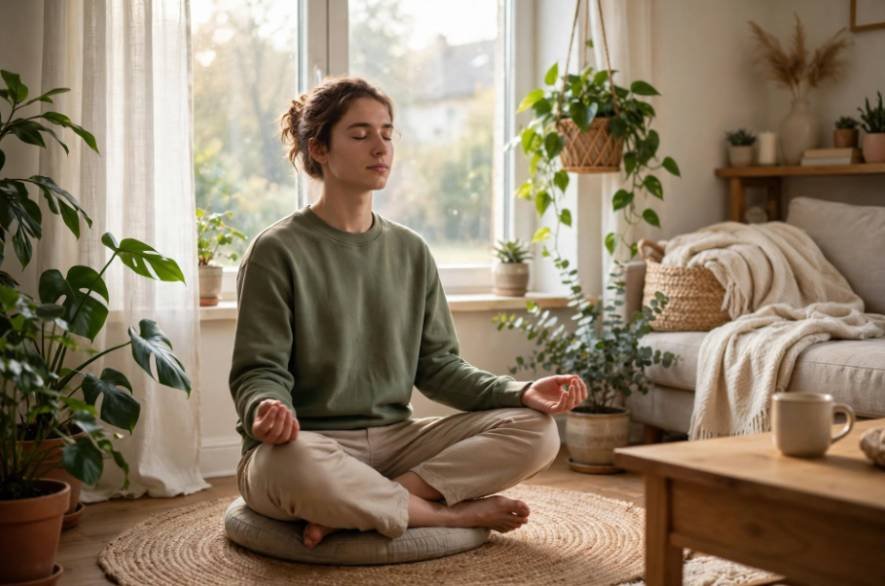
The biggest mistake I made initially was expecting my mind to become completely silent.
Mindfulness doesn’t require eliminating thoughts. When distractions appear, I acknowledge them and gently return my attention to the exercise.
Another common mistake involves practicing for too long immediately. Short sessions are often more manageable than ambitious routines that become difficult to maintain.
I also avoid treating every exercise as a test of relaxation. Some sessions feel peaceful, while others involve restlessness.
The goal is awareness, not perfection. If a practice causes discomfort, switching to mindful walking or listening may feel more appropriate.
Frequently Asked Questions
1. What Are the Easiest Mindfulness Exercises for Beginners at Home?
The easiest options include mindful breathing, body scanning, sensory grounding, and mindful walking. These activities require no special equipment and can take only a few minutes.
2. Can I Practice Mindfulness Without Traditional Meditation?
Yes. Mindful eating, listening, stretching, and household chores allow you to develop present-moment awareness without sitting through a formal meditation session.
3. How Many Minutes Should Beginners Practice Mindfulness Daily?
Starting with two to five minutes is a practical approach. Gradually increase your practice duration when you feel comfortable rather than following a rigid schedule.
4. Can Mindfulness Exercises Help Reduce Everyday Stress?
Mindfulness exercises for stress relief may help improve emotional awareness and stress management. However, individual results vary, and these practices don’t replace professional mental health care when needed.
Final Thoughts
I’ve learned that meaningful mindfulness doesn’t require a perfectly quiet home or an elaborate wellness routine. Sometimes, three intentional breaths or a short walk can create an opportunity to reconnect with the present.
The most useful easy mindfulness exercises for beginners at home are those that fit naturally into your lifestyle.
Start with one comfortable technique, practice without judging your progress, and gradually explore other activities.
With patience and consistency, even ordinary daily moments can become opportunities to develop greater awareness, focus, and calm.