Soft heels should not come with greasy footprints across the bathroom floor. When I think about how to moisturize your feet without making them slippery, I focus on quantity, placement, and timing. A rich cream can help dry skin, but applying too much before walking around creates an avoidable problem.
The simplest approach is to apply a thin layer while seated, keep cream out of the spaces between your toes, and let the product settle before standing. Save heavier treatments for bedtime. Whether you are getting ready for work or wearing sandals, these adjustments make foot care easier.
Why Moisturizer Makes Your Feet Feel Slippery
Moisturizers help the skin retain water, but some formulas leave a noticeable surface coating. Thick ointments, oils, and generously applied creams can create slickness against flooring or shoe footbeds.
Even products labeled non-greasy can make feet slippery. That description does not guarantee traction, especially when you use more than your skin needs. Sweat and damp skin can also make the finish feel wetter.
Rather than abandoning moisturizer, adjust the texture and amount. Your feet should feel comfortable after application, without a heavy coating that transfers onto everything they touch.
Choose a Formula That Fits Your Routine
Use a Comfortable Cream for Everyday Dryness
For ordinary dryness, start with a fragrance-free cream that feels manageable on your skin. Ingredients such as glycerin help hold moisture, while ceramides support the skin barrier.
Light lotions may suit mild dryness, but rough heels sometimes need a richer cream. Choose according to your skin’s condition rather than assuming the lightest product will always work best.
Try a small amount first. If the finish stays slick, use less next time or switch textures.
Treat Thick Heel Skin Separately
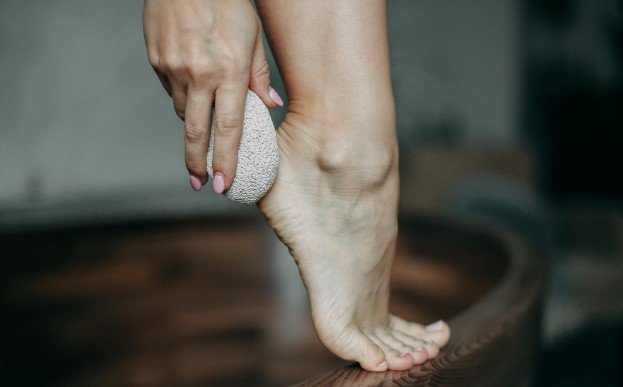
Urea-containing heel creams can moisturize and soften thickened skin. Products containing exfoliating acids may also help rough areas, but they can sting or irritate sensitive skin. Alongside heel care, keep toenails comfortable in closed-toe shoes by maintaining a manageable nail length and choosing footwear with enough toe room.
Follow the label and avoid applying these treatments to open wounds. Persistent, painful cracks need professional attention rather than increasingly strong products.
Keep rich ointments and petroleum jelly for nighttime use, when you can remain off your feet.
Apply Moisturizer After Washing
Wash with lukewarm water and a gentle cleanser. Long, hot showers and prolonged soaking can worsen dryness.
Pat your feet dry, carefully drying between the toes. Apply moisturizer soon afterward, while dry heel skin still retains a little moisture from washing. Your feet should not be dripping wet.
Keep a chair nearby so you can complete the seated routine. This also helps you reach your heels without balancing on one leg or spreading cream onto the floor.
Use Less and Place It Carefully
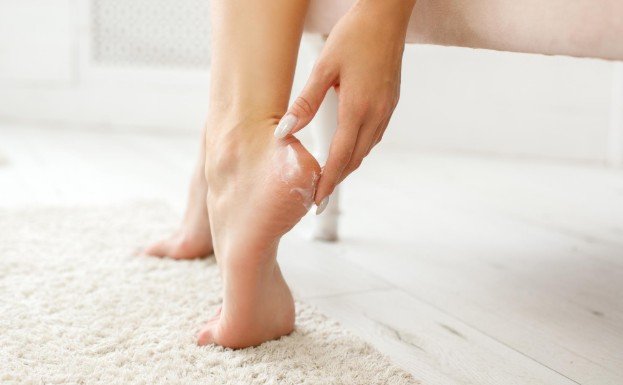
Start with enough cream to spread a thin layer over the dry areas. There is no universal amount because foot size, skin condition, and product consistency vary.
Massage it gently across dry heels, sides, tops, and soles as needed. Avoid automatically coating healthy skin with a thick layer.
Keep the spaces between your toes free of moisturizer. These areas often retain moisture already, and extra cream can encourage dampness and skin problems.
If your heels are the main concern, concentrate treatment there instead of covering the entire foot heavily.
Let the Finish Settle Before Walking
Stay seated while the product settles. Absorption time varies, so a fixed countdown cannot guarantee that your feet are ready for walking.
While seated, gently blot obvious excess with a clean towel or tissue. If your soles still feel slick, remain seated rather than testing them on tile or hardwood.
Ordinary socks can also slide on smooth floors. When you need to move, use appropriate, securely fitting footwear with traction. Do not assume socks alone remove the slipping risk.
Plan Around Sandals and Closed Shoes
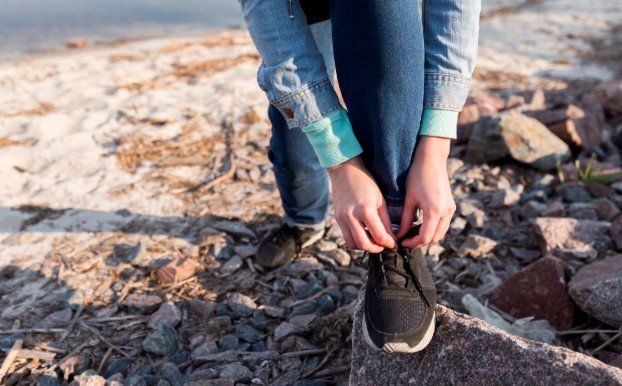
Before wearing sandals, use a modest amount and allow the finish to settle completely. Heavy ointments can transfer onto footbeds and make your feet slide inside the shoes.
For rushed mornings, move intensive heel care to the evening. A lighter daytime application may be more practical, but skip adding another layer if residue remains from overnight treatment.
With closed shoes, keep feet and socks comfortably dry. Change damp socks rather than trapping sweat beneath additional cream.
Make Bedtime Your Main Moisturizing Session
Apply your nighttime treatment after you have finished walking around. For very dry heels, a richer cream or plain petroleum jelly may help retain moisture.
Clean socks can protect bedding and keep the treatment contained. They are not a reason to walk across slippery floors immediately afterward.
Avoid plastic wrapping as an everyday shortcut. A consistent, manageable routine is preferable to excessive coating and trapped moisture.
Frequently Asked Questions
1. What is the easiest way to learn how to moisturize your feet without making them slippery?
Use a thin layer on dry areas, apply it while seated, avoid toe spaces, and wait until slick residue has settled before walking.
2. Can I moisturize my feet every day?
Yes, daily application can help dry skin. Adjust the amount to your needs and stop products that cause irritation.
3. Should I moisturize peeling skin between my toes?
Do not assume peeling means dryness. Itching, persistent peeling, or soreness may need assessment for a fungal infection or another condition.
My Final Take
I would choose a routine that fits naturally into bedtime, then use smaller daytime applications only when needed. Understanding how to moisturize your feet without making them slippery comes down to careful application and giving the finish time to settle. If cracks persist, or you have diabetes, poor circulation, or reduced sensation, get individualized foot-care advice.