Coarse, sandpaper skin paired with dry patches is a frustrating puzzle. For years, I reached for walnut scrubs to buff down rough patches, only to end up with stinging cheeks and visible flaking. Physical abrasives create micro-tears on brittle skin. Finding effective gentle chemical exfoliants for textured dry skin saved my moisture barrier and permanently smoothed my complexion.
The secret lies in choosing acid molecules that attract water instead of stripping it away. When you pick large, hygroscopic molecules, you dissolve dead cellular glue while pulling ambient hydration directly into the stratum corneum.
+——————+——————+——————–+
| Acid Type | Molecular Weight | Primary Mechanism |
+——————+——————+——————–+
| Glycolic Acid | 76 Da | Rapid, deep entry |
| Lactic Acid | 90 Da | Surface humectant |
| Mandelic Acid | 152 Da | Slow, even release |
| Gluconolactone | 178 Da | Superficial/Shield |
+——————+——————+——————–+
The Biological Problem with Scrubbing Flaky, Parched Skin
Dry skin lacks both water and essential intercellular lipids like ceramides and cholesterol. Without adequate moisture, your natural desquamation process stalls. Corneocytes, the dead skin cells on your outermost surface, fail to detach cleanly. They accumulate into microscopic piles, creating dull, uneven texture.
Aggressive physical scrubbing chips away at these clusters unevenly. It tears away healthy lipid structures alongside the dead cells. The American Academy of Dermatology notes that improper exfoliation methods cause irritation, redness, and accelerated moisture loss. You need chemical agents that weaken desmosomes—the cellular rivets holding dead skin together—without disrupting the lipid matrix beneath.
The Best Gentle Chemical Exfoliants for Textured Dry Skin
Not every acid belongs on parched skin. Small molecules like glycolic acid (76 Daltons) penetrate too fast, provoking stinging and inflammation. The three exfoliants below work because their molecular footprints restrict them to superficial, safe cell clearance.
Lactic Acid: The Hydrating Surface Polisher
Lactic acid is an alpha hydroxy acid with a distinct advantage: it functions as a natural humectant. A 5% concentration dissolves surface flakiness while pulling ambient water into newly revealed cells.
Research cataloged on PubMed demonstrates that lactic acid increases natural ceramides in the stratum corneum, reinforcing barrier defenses as it refines texture. When I use a 5% lactic serum once weekly, I notice instantaneous smoothness without the tight, plastic sheen associated with harsher peels.
Polyhydroxy Acids (PHAs): The High-Molecular Barrier Protector
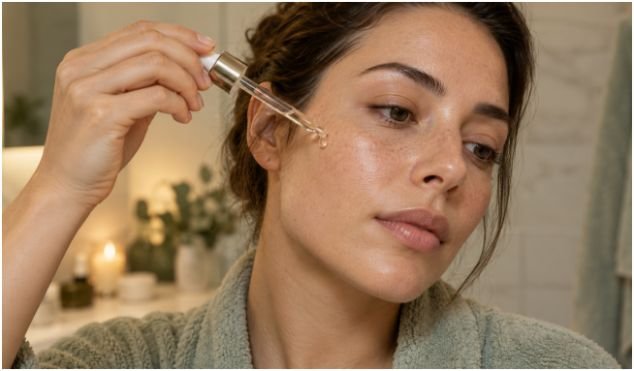
If your dry skin flushes at the mere thought of active acids, polyhydroxy acids like gluconolactone and lactobionic acid are your answer. Gluconolactone features a molecular weight of 178 Daltons. It simply cannot penetrate deep enough to trigger neurosensory stinging.
According to a clinical review in the Journal of Cosmetic Dermatology, PHAs supply antioxidant protection and strengthen the epidermal barrier against UV stress. I reach for a 3% PHA liquid whenever my skin feels reactive yet coarse. It clears surface debris while acting like a comforting hydration veil.
Mandelic Acid: The Lipophilic Option for Congested Dry Skin
Derived from bitter almonds, mandelic acid features a hefty 152-Dalton molecular weight. It enters the skin twice as slowly as glycolic acid, ensuring an even, non-sensitizing release.
Mandelic acid is uniquely oil-soluble for an AHA. If you struggle with dry skin accompanied by tiny, non-inflamed bumps or closed comedones around the jawline, this is your top candidate. It sweeps away debris inside follicle openings without parching the surrounding skin.
How I Balance Exfoliation with Moisture Recovery
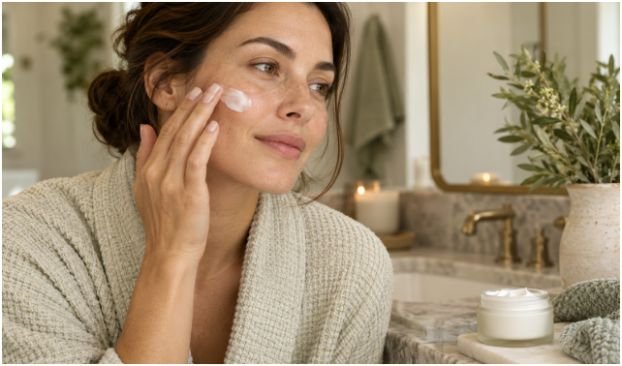
Using active acids on dry skin requires a disciplined cycle. I treat exfoliation as a deliberate reset, not a daily chore.
Mon: Hydrate & Recover
Tue: Exfoliate (PM only)
Wed: Hydrate & Recover
Thu: Hydrate & Recover
Fri: Hydrate & Recover
Sat: Exfoliate (PM only)
Sun: Hydrate & Recover
The 48-Hour Corneocyte Protocol
Applying acids to damp skin accelerates absorption rates, leading to irritation. I wash with a fragrance-free lotion cleanser, pat completely dry, and wait two full minutes before applying an exfoliant.
If my skin feels particularly fragile, I use the “buffering” technique: applying a light glycerin serum first, then smoothing two to three drops of lactic acid on top. I seal everything with a ceramide-rich barrier balm. I monitor trans-epidermal moisture over the next 48 hours. If tightness occurs, I pause all actives and focus strictly on barrier replenishment.
Coordinating Actives Across Your Regimen

Never combine chemical exfoliants with other high-potency actives in the same evening routine. If you want to introduce retinol into routine without peeling, designate specific, alternating nights for each active.
On your designated recovery evenings, feed your skin restorative formulas with peptides for mature skin alongside ceramides, squalane, and panthenol. This separation prevents cellular inflammation and keeps your barrier resilient.
Frequently Asked Questions
1. Can dry, sensitive skin tolerate chemical exfoliation every day?
No, dry skin should only be exfoliated one to two times per week to prevent barrier breakdown.
2. Which acid is gentlest for dry, flaky skin?
Polyhydroxy acids like gluconolactone are the gentlest options due to their large molecular size and humectant qualities.
3. Should I apply chemical exfoliants to damp or dry skin?
Always apply chemical exfoliants to completely dry skin to avoid rapid acid penetration and chemical stinging.
4. Does chemical exfoliation increase sun sensitivity?
Yes, alpha hydroxy acids increase photosensitivity, requiring daily broad-spectrum SPF 30 or higher.
Glow Without the Flake: Your Next Move
Rough texture on dry skin is not an invitation to sand your face raw. Respect your cellular architecture. Pick a low-percentage lactic acid or gentle PHA, limit use to one evening this week, and drown your complexion in ceramides immediately afterward.