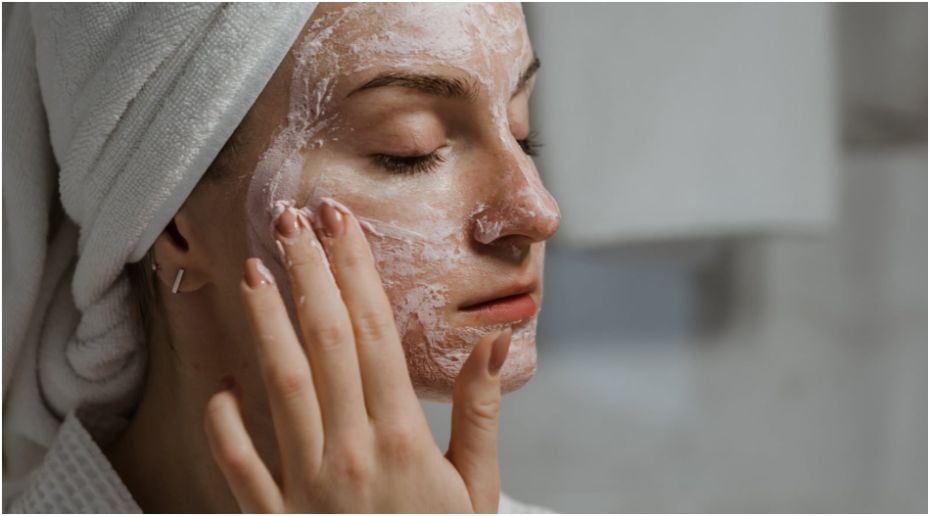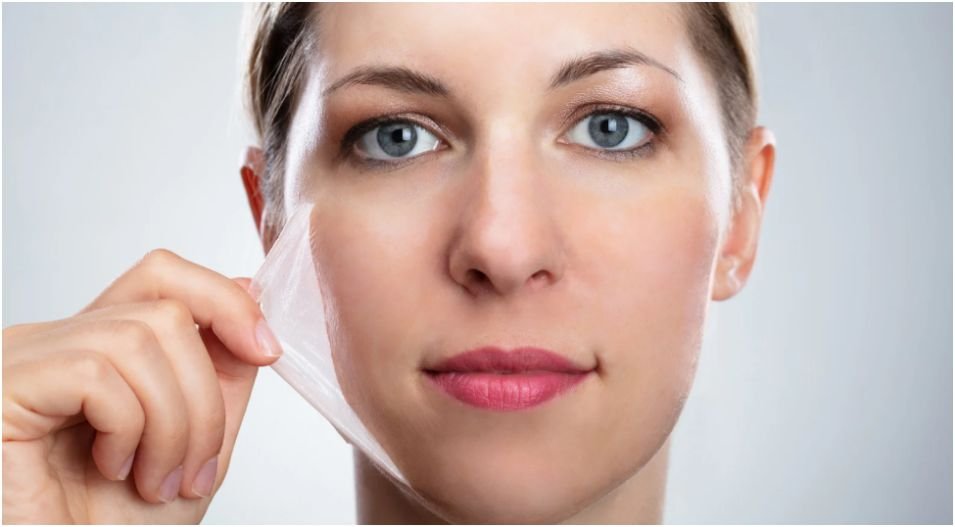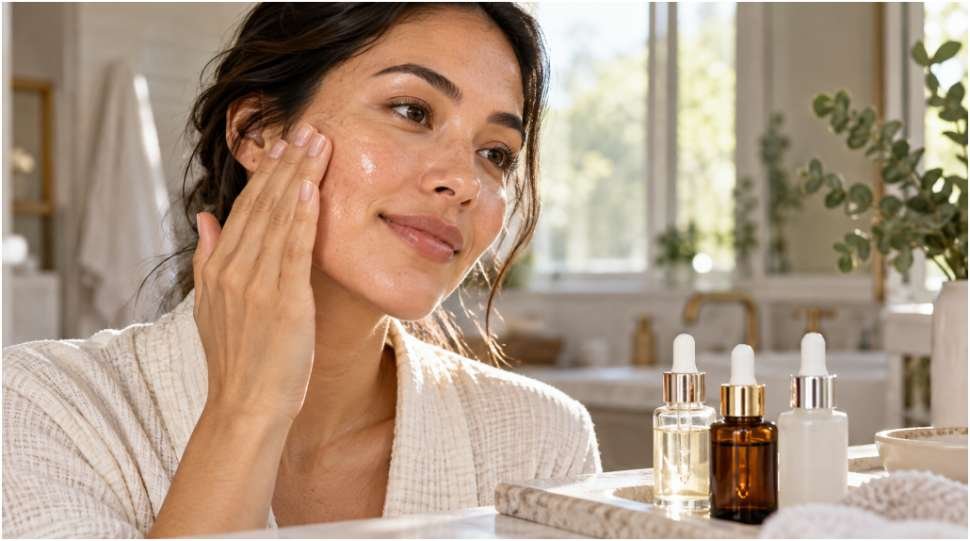
Stacking three different glow serums on your skin often ends in sticky residue, flaking, or immediate pilling. You want a seamless, translucent radiance, yet you end up brushing white product flakes off your jawline.
Learning how to layer serums for glass skin look is not about buying more bottles. It comes down to cosmetic formulation, surface tension, and molecular weight. Through years of testing various active pairings on my own barrier-compromised skin, I found that the sequence in which formulas touch your face determines whether they absorb into deeper layers or sit on top like dried glue.
Getting that lit-from-within clarity requires strict discipline with textures, active pH ranges, and dry times.
The Core Chemistry: Understanding the Viscosity Ladder
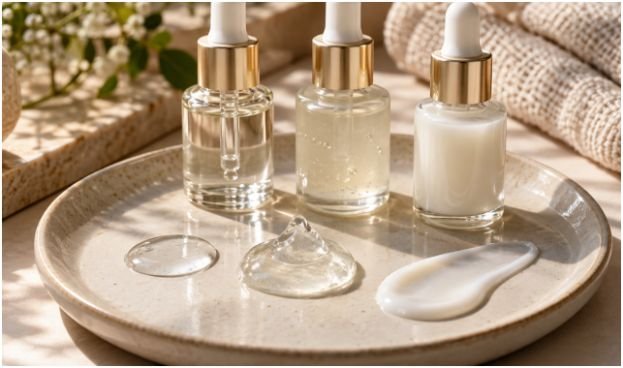
Glass skin originated as a celebration of exceptional stratum corneum hydration and smooth epidermal texture. Light reflects evenly across a smooth, hydrated surface. When you apply a thick product first, you coat the skin in film-forming occlusives that prevent lighter molecules from passing through.
Low-pH Water Solutions ──► Gel Humectants ──► Lipid Emulsions ──► Barrier Seal
(Vitamin C / PHA) (Hyaluronic / Niacinamide) (Ceramides / Cica) (Moisturizer / SPF)
Why Molecular Weight Dictates Penetration
Skincare actives enter the skin intercellularly, moving between dead keratinocytes. Peer-reviewed data on percutaneous absorption from the National Center for Biotechnology Information confirms that smaller molecular structures penetrate much faster than dense compounds.
If you apply a thick, high-molecular-weight hyaluronic acid serum first, it forms a lattice on top of the epidermis. Any watery antioxidant applied after that sits trapped on top. The lightweight product evaporates into the ambient air, wasting your active ingredients and money.
The Truth Behind pH-Dependent Actives
Acids and stabilized vitamin solutions demand an acidic surface environment. Pure L-ascorbic acid, for example, typically operates at a pH under 3.5.
Slapping a neutral humectant (pH 5.5 to 6.5) underneath a low-pH active neutralizes the acid instantly. That neutral barrier blunts its exfoliation and brightening benefits, leaving your skin dull instead of luminous.
The 3-Step Glass Skin Layering Routine
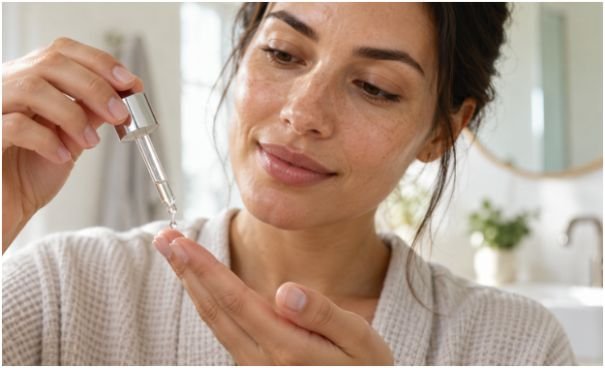
I limit my active routine to three targeted serums at most. Adding a fourth increases the concentration of carbomers, xanthan gums, and film formers, which invariably causes piling under sunscreen or foundation.
Step 1: Low-pH Brightening and Water-Thin Actives
Begin with bare, dry skin after cleansing. Your first serum must deliver targeted antioxidants or gentle resurfacing compounds directly to the epidermis.
In the morning, use a watery 10% to 15% L-ascorbic acid serum. This neutralizes environmental free radicals and suppresses pigment unevenness over time. Press 3 to 4 drops across your face and neck.
At night, substitute this with a gentle polyhydroxy acid (PHA) or a low-strength lactic acid twice a week. PHAs offer larger molecular structures that gently dissolve surface debris without triggering visible flaking. Dry skin is essential here: applying direct acids to damp skin accelerates absorption too rapidly, which can trigger tingling and contact irritation.
Step 2: High-Yield Humectants and Plumping Gels
Once your first treatment absorbs, mist your face lightly with pure thermal spring water. Humectants are hydro-seeking agents; they require ambient moisture to plump the skin.
Reach for a concentrated hydrator like low-molecular-weight hyaluronic acid, polyglutamic acid, or snail secretion filtrate. Polyglutamic acid holds significantly more water than standard hyaluronic formulations, providing an immediate glass finish.
This is also the ideal slot for a 2% to 5% niacinamide serum. Clinical guidance from the American Academy of Dermatology supports niacinamide for evening tone, reinforcing barrier lipids, and calming red undertones. Blend your humectant over damp cheeks, forehead, and chin using flat palms.
Step 3: Lipid Emulsions and Barrier Support
Your final serum should possess a milky, lightweight lotion texture. Look for nourishing formulas containing ceramides, panthenol (provitamin B5), or centella asiatica.
This layer bridges the gap between aqueous hydration and heavier occlusive moisturizers. It coats the newly saturated skin cells in biocompatible lipids, fortifying the moisture barrier so hydration cannot escape. One pump pressed across your skin smooths out rough skin cells, creating a glass-like sheen that catches natural light.
How to Stop Pilling and Formula Clumping for Good
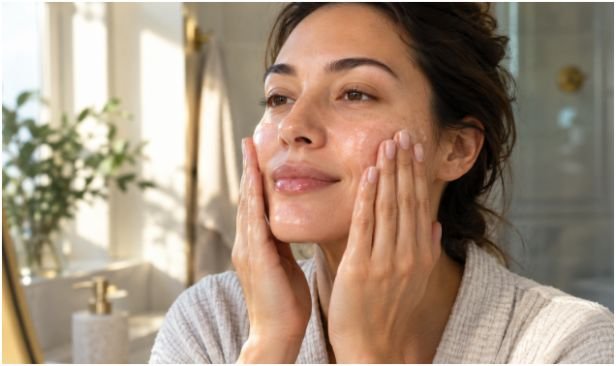
Pilling occurs when synthetic polymers, silicones, and cross-linked thickeners physically detach from the skin when rubbed. Here is the exact technique I use to keep formulas smooth and invisible:
- Use the Press-and-Roll Technique: Never rub serums in circular, friction-heavy motions. Disperse the product between your fingers, then press your palms flat against your cheeks and roll upward.
- The 45-Second Tacky Rule: Do not wait until a layer is bone dry. Apply your next step when the skin feels slightly tacky to the touch. This allows the liquid phases to meld cleanly without disturbing polymer networks.
- Eliminate High-Dose Silicones: Save dimethicone and heavy cyclopentanes for your final moisturizer or makeup primer. When placed inside mid-layer serums, silicones reject water-based formulas applied immediately after.
Critical Formula Clashes to Avoid
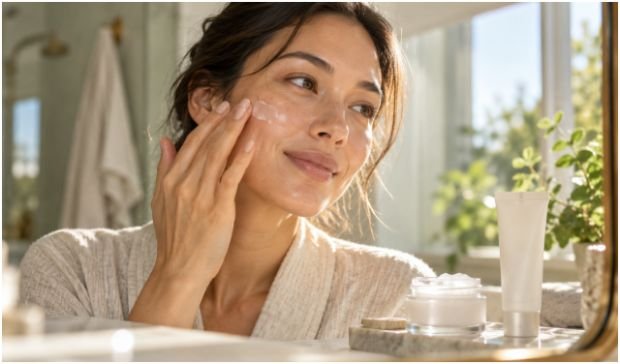
Combining conflicting actives can cause burning, flush marks, or product separation. Research highlighted in the Journal of Cosmetic Dermatology underscores the delicate balance of the stratum corneum lipid matrix during multi-step topical regimens. Keep these active rules in mind:
| Active Pairing | Interaction Risk | Best Layering Protocol |
| L-Ascorbic Acid + Retinoids | High (Irritation & pH imbalance) | Separate them: Vitamin C in the AM, Retinoid in the PM. |
| Direct Acids (AHA/BHA) + Copper Peptides | High (Chelation & Inactivation) | Acids oxidize peptides; alternate nights between these products. |
| Niacinamide + Hyaluronic Acid | None (Safe & Synergistic) | Apply together or blended in your humectant step. |
| L-Ascorbic Acid + Niacinamide | Very Low in modern formulas | Layer thin Vitamin C first, allow 60 seconds, then apply Niacinamide. |
Frequently Asked Questions
1. Can I layer serums if I have active acne?
Yes, but swap heavy lipid emulsions for soothing zinc, cica, or centella asiatica serums to keep pores clear.
2. How many serums can I layer at once for glass skin?
Cap your routine at three serums to prevent formula pilling, product waste, and barrier irritation.
3. Should I apply serums on wet or dry skin?
Apply low-pH acids to dry skin, but press humectant serums directly onto freshly misted, damp skin.
4. What is the fastest way to get glass skin?
Combine consistent hydration layering with daily broad-spectrum SPF 50 sunscreen to preserve skin smoothness and prevent sun-induced rough texture.
Glow Hard or Go Home: Your Final Moisture Lock
You can layer exceptional serums, but without an effective emollient seal, that glass glow evaporates within two hours through transepidermal water loss.
Complete your routine with a peptide-rich gel-cream and a high-protection fluid sunscreen during the day. Observe how your skin feels at midday: if your surface turns tight or sticky, drop one humectant layer and let your lipid barrier do the work.