

I prefer practical advice that fits between closing a laptop and starting the evening. When researching how to reduce neck tension after working on a laptop, I look for approaches that address both immediate discomfort and tomorrow’s work habits.
For mild tightness, start by changing position, walking briefly, and moving your neck gently within a comfortable range. Warmth may offer temporary comfort, while workstation changes can reduce awkward reaching and screen viewing. You don’t need to force a stretch or hold a perfectly rigid posture.
Why Does My Neck Feel Tight After Laptop Work?
Laptops connect the screen and keyboard, making it difficult to position both comfortably for extended work. Looking down, leaning toward small text, and reaching for a trackpad can leave your neck and shoulders working in sustained positions.
Staying still also matters. Even a carefully arranged home office cannot replace regular movement. Stress may add another layer when you unconsciously lift your shoulders during meetings or deadlines.
“Tech neck” describes screen-related discomfort; it doesn’t establish the cause of your symptoms. Persistent pain deserves an individual assessment.
1. What Should I Do Immediately After Closing My Laptop?
Begin by standing up and taking a short, comfortable walk. Move around your apartment, refill your water, or walk along the hallway before settling into another chair.
Let your arms swing naturally and allow your shoulders to relax. Avoid immediately switching to scrolling with your phone held low, which can continue the same sustained position.
This change of activity gives you an opportunity to notice your symptoms. Mild stiffness that eases with movement differs from sharp pain, dizziness, or discomfort spreading down an arm. Don’t push through those symptoms.
2. Which Gentle Movements Can Ease Neck and Shoulder Tightness?
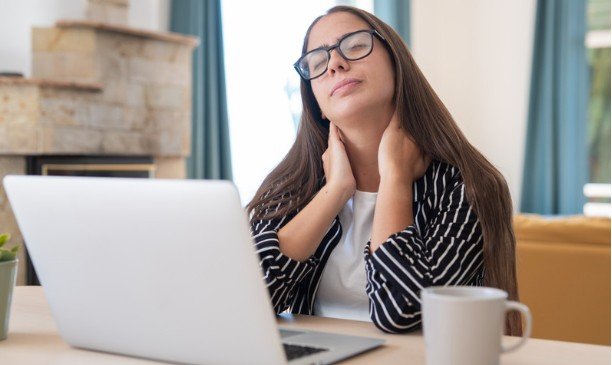
When considering how to reduce neck tension after working on a laptop, choose comfortable movements over forceful stretching. Start with a few slow repetitions and see how you respond.
How Do I Perform a Gentle Chin Tuck?
Sit or stand comfortably with your eyes facing forward. Slide your head gently backward, as though making a small double chin. Keep your head level rather than tipping it downward.
Pause briefly, then release. Begin with three to five comfortable repetitions. Stop if symptoms increase.
How Can I Loosen Tight Shoulders?
With your arms relaxed, gently draw your shoulder blades slightly toward each other. Avoid shrugging or squeezing hard. Hold briefly, release fully, and repeat a few times.
The movement should feel controlled and easy, rather than like you are forcing your shoulders into place.
Is a Side Neck Stretch Helpful?
Face forward and slowly tilt one ear toward the same-side shoulder. Keep the opposite shoulder relaxed. Stop at a mild stretch, breathe normally, and return to center before changing sides.
Avoid pulling your head with your hand. Skip any movement that produces sharp pain, tingling, dizziness, or symptoms traveling into your arm.
Should I Stretch My Chest Too?
Place your forearm against a doorway and gently turn your body away until you feel a comfortable stretch across your chest. Keep the movement small and avoid arching your lower back.
Chest mobility can complement neck and shoulder movements, especially after prolonged keyboard work.
3. Can Heat and Relaxation Help After Work?
A warm pack may temporarily soothe tense muscles. Wrap it in a towel, use gentle warmth for up to 15 minutes, and check your skin regularly. Follow the product instructions and never sleep on a heating pad.
Avoid heat over areas with reduced sensation unless a clinician says it is appropriate. If you also plan to start a daily walking routine for beginners, ask whether any precautions apply to you.
Pair the break with slow, comfortable breathing. Notice whether you are clenching your jaw or lifting your shoulders. Letting those areas relax may help with stress-related tension, although breathing exercises cannot treat every cause of neck pain.
4. How Should I Set Up My Laptop Tomorrow?

Raise the screen using a stable stand or books, keeping the top around eye level or slightly below. Position it directly ahead at a comfortable viewing distance, roughly an arm’s length away.
Use a separate keyboard and mouse when the laptop is elevated. Typing on a raised laptop can create awkward shoulder and wrist positions.
Keep frequently used items close. Support your back, rest your feet on the floor or a footrest, and increase text size if you keep leaning forward. A rolled towel can provide inexpensive lower-back support.
5. How Can I Stop Tension From Returning?
Build movement into your workday instead of saving everything for the evening. A reminder every 20 to 30 minutes can prompt you to change position, stand briefly, or walk.
Looking away from your screen helps interrupt visual concentration, but an eye break alone doesn’t replace moving your body.
Regular physical activity and appropriate strengthening can support longer-term management. If symptoms recur, a physical therapist can recommend exercises suited to your needs. Prioritize comfortable sleep and avoid assuming that an expensive pillow or chair will solve the problem alone.
When Should I Get Medical Help?
Arrange an assessment if pain persists, worsens, repeatedly returns, or interferes with sleep and normal activities. Seek prompt care for arm pain with numbness, tingling, or weakness.
Seek emergency care for sudden weakness, difficulty walking, new loss of bladder or bowel control, serious injury, or a stiff neck accompanied by fever and a severe headache. Don’t assume these symptoms come from laptop use.
Frequently Asked Questions
1. What is the first step in learning how to reduce neck tension after working on a laptop?
Change position and try a short walk, followed by gentle, comfortable movement.
2. Will a laptop stand prevent neck pain?
It may improve screen placement, but use a separate keyboard and mouse and keep moving regularly.
3. Should I stretch through neck pain?
No. Stop movements that worsen symptoms or cause sharp pain, dizziness, or tingling.
Make Your Workday Easier on Your Neck
I would start with one evening change and one workstation adjustment: move after closing the laptop, then arrange tomorrow’s screen and keyboard more comfortably. Small, repeatable habits are easier to maintain than a complicated routine. If discomfort keeps returning, I would seek personalized advice rather than stretch harder.